• TalkBass has been independent since 1998. Add your voice.
    Create a free account to reply to discussions, view embedded media, and browse with fewer display ads.
    Join freeLog in
    Want zero display ads or expanded classifieds tools? Compare plans.

Why NOT use stage volume?

Apr 11, 2005
127,255
125,172
Plymouth NC
Disclosures
Endorsing: Yamaha, Ampeg, Line 6, EMG
Of the handful of different amps I've owned, you know why this one is my favorite?
Invalid Link Removed
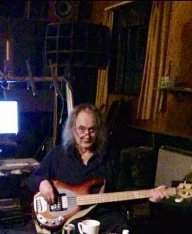
First, it photographs beautifully. Second, because I've had to do a couple stage volume gigs in these 300-800 seat theaters I've been playing for the last two weeks. I brought my Markbass LMII just in case the 25 watts the B-15N head usually pushes couldn't handle it. Turns out I didn't need it. Not only did 25 watts handle it, it was actually too loud in the house and I had to turn it down. We're not a screaming loud band but we're not exactly quiet, either. I consider our drummer medium loud.

Not only did the stack handle it, but it sounded absolutely beautiful. I had the single vertical stack going so it was virtually cancellation-free in the house. And despite not pushing it very hard, and also despite setting up hard stage left, the bass sounded perfect (well, my idea of perfect anyway) everywhere in the house. Slightly less upper mid and treble off to the side of the amp, but not at all muddy. I was shocked at how little it dropped off when you got to the back of these theaters, too. I figured it would be gone. It was quieter, but it wasn't like you had to strain to hear it.

So now I'm thinking that maybe running stage volume in smaller venues isn't such a bad thing. I asked about this a while back and the idea was shot down by everyone, but when you have a rig you love in every way, why wouldn't you want that sound going directly into the house? Naturally you'd do larger gigs with PA, but in a small room of up to 1000, why not? You would only have one point source for the bass, which greatly reduces comb filtering, and it sounds as good or better than any PA I've run through, so why not?
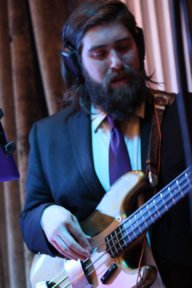
 
I run into this problem all the time. I play in smaller NYC venues and I use a Trace V6 with 2 Aguilar GS112NTs. Anytime I bring out my rig, the sound guy will freak out. I try and explain that I love the sound of my rig, and the louder it gets, the better it sounds so PA support isn't necessary but I still get the same attitude....that is until after the gig when everyone tells me how amazingly fat and clear the bass sounded throughout the room....including the sound guy....
 
i agree, when you deal with a crappy soundguy in a small to medium club that has a PA 5 times too big, they should reinforce US. if i cant fill the room, then help me out, otherwise, let me and my rig do what we do. when the soundguy freaks and my amp's volume is at 1, i (and most others) wont get to hear the full sonic range our band intends on providing. i always comply with the soundguy, for obvious reasons, but i frequently wonder why we have to run every instrument and drum into a PA when weve played larger venues with only vocal support and sounded great. sheesh...
 
To me it always makes sense to try NOT going through the PA if at all possible. We try hard to get the sound we want coming out of our speakers. Going through the PA gives the sound guy control over the sound, and a lot of times it's questionable if they are competent :smug:.
 
Playing mostly bars, PA support has never been a thought, however, we're playing a charity event Wed. night in an auditorium with 1200 in attendance and it will be the first time I'll be playing with PA support. A very reputable company has been hired to handle the sound. I know the drums will be miced, probably the guitar amps as well but not 100% sure.

I'll be bringing my LMII and both my Berg cabs. Based on Jimmy's post, should I be considering stage volume, micing the cabs, or going DI from my LMII?

If the cabs are miced, do both need to be? I see that Jimmy has only one mic attached in the pic.

If I'm going DI, do I need both cabs?

Having no experience working with professional sound guys, I don't know what the protocol is. My thought is to just bring everything and let them tell me how they want me to set up.
 
I agree with Jimmy's way of thinking on this - as a bassist whom also runs sound, I can find no practical reason why not to play at my usual volume, and let my bass rig carry the room at 500 cap and under venues... I'm not talking about insanely loud, but right around my normal rehearsal volume - which is being able to be heard with a fairly loud rock drummer... Since I do run sound on the side, and know virtually every sound man in my area, I've gotten them to dial in a good tone at the FOH via DI, then use the fader to add a little bass *if needed* - but not pester me to turn down to the point of needing bass in my monitor to be able to hear myself enough to play well... I play good sounding basses through a good sounding rig(T-Max through a PH 610) - and to me, it's counter-intuitive to turn down to the point of needing bass in my monitor... Now, *if* my bass rig is causing problems at the FOH while even out of the FOH mix, that's another matter altogether - and almost never happens...


When I run my own PA while playing, I'll often get a good bass sound through the FOH, then drop the channel fader all the way down, and add a little bass as needed - and I've gotten very positive feedback regarding our overall sound using this approach...


- georgestrings
 
To me it always makes sense to try NOT going through the PA if at all possible. We try hard to get the sound we want coming out of our speakers. Going through the PA gives the sound guy control over the sound, and a lot of times it's questionable if they are competent :smug:.
Invalid Link Removed
You got a real big one then mate?.
:ninja:
 
Like anything, there are cases where it makes sense to do this and cases where it doesn't.

I've done lots of gigs as a sound engineer where I've connected a DI or a mic for a particular instrument and found that for that venue I didn't need it in the PA. Especially in small rooms. My outlook as a sound engineer might be different than most, though. My first concern is to make sure that the performers are comfortable on stage and sometimes that means that stuff on stage is perhaps a bit louder than I'm happy with. This can often be cured by not reinforcing that instrument or by just putting a small amount in the PA. If I think someone needs to turn down, I'll ask them politely if they think they could back it off a bit and still hear themselves ok. I don't ever tell anyone that they have to turn down. My philosophy of getting the performers as comfortable as possible and then building the mix around that (I'm competent enough to deal with just about anything at FOH) makes performers like working with me and generally results in good performances and by corollary good mixes.

People need to get out of the nonsense of taking a rigid approach to things. Musicians and sound people alike.
 
Just my experience in general, as stage volume goes up being able to hear other members of the band goes down. Everyone in my band has multiple amps from stacks all the way down to the Roland Micro cube then finally we all have digital pedals with amp and cab simulation. We all scope out the venues we play and make a decision as to what we are going to play through according to seating, venue size and stage size. Playing a full stack to a crowd of 200 people in a 4000 sq.ft venue is flat out redicoulus. Stage volume is way out of control once you achieve good tone. Take that same venue and play through smaller gear and you'll achieve good tone at less volume. Our smallest gig is about this same size and I take my Line6 Studio 110 to use as my main sound source.
I do add a little through the P.A. if needed, according to how many people feel the room but not much really. Also alot depends on what the guitar player in your band plays through.
IMO getting guitar players to realize they don't need a full stack in a venue this size is the most important thing. We are going to try just running our digital pedals through the P.A. next time we play at this venue. Hopefully it works, which translates to less gear to haul and lower stage volume.
 
I've only gigged with a decent sized combo and have always run it FOH. Reason being that a 150w combo isn't nearly enough to be heard at a medium sized venue, but the amp itself does a nice job as a stage monitor.

I'm getting a fullstack this weekend, so the above statement will soon be history. :hyper:
 
The reason people get crap from sound guys is because 90% of players don't have have any idea what "too loud" is and it makes it very hard for the sound guy to get a good mix for the band as a whole. I sure most people who read this will think they're one of the few who has a perfect sense of how to control stage volume. But they probably don't. I know I don't.

And as a few have mentioned, cranking it on stage usually means it's going to be harder to hear other band members and yourself, which in turn causes people to turn up.
 
This is all very genre and scale dependent but my best method is to start with monitors and back-line, Get the band working into there own gear providing only vocal and kick drum monitors. Then approach each musician ask him to wander about the stage playing and then go and stand in the worst sound hole. Then discuss the bass eq first we dont want any active bass eq that is too extreme, if you find the bass player having the bass guitars bass control at full clockwise instead of somewhere near the center ident, the only option is mic the cab because the phase distortion caused by trying to reverse that 16 db of boost even on a midas console is not going to help a DI sound at all, let alone the distortion this adds to the VLF in the out front.
Speakers are quite good at refusing to reproduce these eq excesses.
In an ideal world, mic all dirty bass, DI straight from the bass if the bloke wants a clean relatively flat freq response, use a decent compressor in the FOH console channel insert. IE. smart c2, Urei 1176 or Neve 33609.
Then using your fabulous side fills and 16 way monitor system fill in any sound holes for the other musicians.
There is no reason why a bass player playing in a heavy rock band with a power vocalist and shouty screemo backing vocals should be asked to turn his rig down unless he is drowning the Vox and Kick
on stage, you might ask him to eq a notch to avoid boom or some resonance in the hall. Bass players today usually have a far more powerful eq provided on their rigs than even a decent PA console has.
Watch out for the usual tricks like the bass guitar volume not being absolutely dimed in the sound check and all of a sudden in the first note of the first number everything you set up on the desk is in the red. The thing the bass players don't know is this is expected and only a minor annoyance as you start the set with your fingers on the bass channel console gain controls, to turn of the red lights and return your outboard compressor settings to what you had all chosen in the sound check, Because of the arse wipe talent, reserve volume tactic.
Or its the bloke who has adrenalin variable playing pressures, light in the sound check and clanking-ley fret buzzing-ley fecking loud in the performance.
:ninja:
 
Naturally you'd do larger gigs with PA, but in a small room of up to 1000, why not?
Dispersion, which with that rig is pretty narrow above 800 Hz. OTOH since dispersion is the only benefit from running into the PA pull the bass EQ on that channel strip down, and run a mic'd send, not DI, to capture the midrange tone of the speaker and spread it through the room at a level just loud enough to fill those areas where the backline can't. An intelligent FOH guy who understands what you're trying to do will likely be the limiting factor.
 
If you can all hear the monitors well and sing in harmony play however loud you want most of the time people can't hear and then can't sing.

I too run sound at times and play bass and have been doing it for years I want people to be able hear the other problem is if you have a high stage volume every one else plays and wants to have thier stuff louder and the monitors too.

In the past when the volume was lower the vocals are always better but that is hard to come by so most of the time I go with the flow and let her rip tater chip (another words give it a crank if you don't mind if it stank)