

Enjoy the benefits of a premium membership!
Upgrade Account
-
TalkBass has been independent since 1998. Add your voice.
Create a free account to reply to discussions, view embedded media, and browse with fewer display ads.
Join free Log in
Want zero display ads or expanded classifieds tools? Compare plans.
You are using an out of date browser. It may not display this or other websites correctly.
You should upgrade or use an alternative browser.
You should upgrade or use an alternative browser.
- Status
- Not open for further replies.
More options
Who Replied?
wow, part II guys! I never imagined it. one sec on the new members  and nice job on that old natural ATK, looking good and used man, but loved
and nice job on that old natural ATK, looking good and used man, but loved

Anyone know where I can get a clear pickguard for an ATK (4)? The quilted maple atk i just got came without one and scratches easier than i thought. Not cool.
Revlimitbounce, nice deal on that natural 700 from MF.. I wanted a fretted version of my old one, so I got the blue moon 700 from a store. The thing looks sweet and the only "blemish" is the stupid B they put on the back of the headstock. now if i can get a clear pickguard...
Revlimitbounce, nice deal on that natural 700 from MF.. I wanted a fretted version of my old one, so I got the blue moon 700 from a store. The thing looks sweet and the only "blemish" is the stupid B they put on the back of the headstock. now if i can get a clear pickguard...

I thought i'd share these after sharing pics from my new Spector i got today.
This is the ATK300 i got back in 2002 Used from a friend who was quitting his job at a Guitar Center. It belinged to his bassist who got rid of it because he diddnt like the colors. It was my main bass in my former touring band and is still my go-to bass these days.
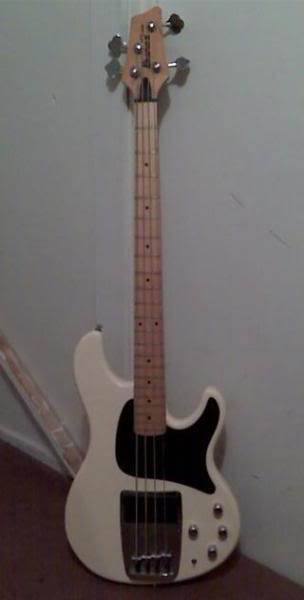
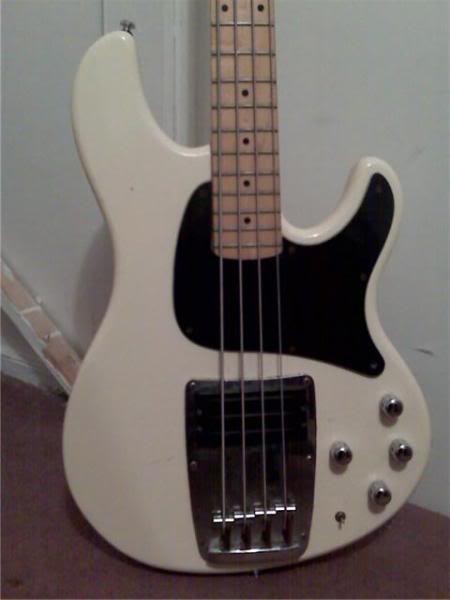
Punk Points!!
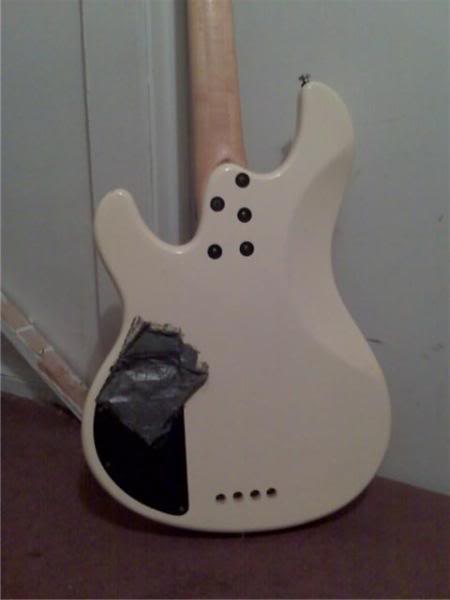
It has many battle scars but i love the bass!
How would i go about dating it? I have the serial number on the back...
This is the ATK300 i got back in 2002 Used from a friend who was quitting his job at a Guitar Center. It belinged to his bassist who got rid of it because he diddnt like the colors. It was my main bass in my former touring band and is still my go-to bass these days.
Punk Points!!
It has many battle scars but i love the bass!
How would i go about dating it? I have the serial number on the back...



Is it my imagination, trick photography or do the neck heel and body contours match hugely better than on current models?This is the ATK300 i got back in 2002...
Yeah, though the current 300s do.For bongo I don't think any of the 90's 300s have the MM style adjustment.
I was just wondering at what point that came in. Apparently recently.

Is it my imagination, trick photography or do the neck heel and body contours match hugely better than on current models?
Well it's definetly no trick on my part... and i haven't played any current ATKs to compare...

I just got a 5'er yesterday don't know the year but it sounds awsome!
I'll take some pictures later,maybe you guys can help with year...
I'll take some pictures later,maybe you guys can help with year...
I was looking forward to joining the ATK club and have to say that based on all the positive comments about this bass, that I'm quite disappointed. Its pretty craptacular in assembly quality and setup.
This is a Scratch N dent from musicians friend, but overlooking any setup problems and blems, there are some fundamental problems with build quality that peg this as a low-end Korean axe. I know that Ibanez had moved production of some of their Prestige models to Korea, and expected this would be a high quality axe, as its the "flagship" ATK. So here are the problems:
Fretwork: The maple fretboard is cracked at half or more of the frets. It appears that the frets were hammered to get them at the correct heights -- there is no traditional leveling or fretwork on the stock frets. Instead it appears that Ibanez uses force to hammer frets to the same height which has cracked the fretboard. Frets themselves are level in height, only a couple slight jags off the end. But shortcuts like this are just crap. I think a $700 guitar should have a real fret level.
Finish: Compared to my Japanese produced guitars, the poly finish is about half as thick. The quilt maple is pretty, but the clear not as substantial. This is a scratch and dent guitar and under the finish between the maple top and body, it appears there is a large dap of filler putty which they clearcoated over. It was applied in a hamfisted way and represents about 10 seconds of preparation.
Pickup: The neck pickup is jammed in the cavity and does not move up or down. I have loosed the screws, it appears they are misaligned and are causing binding on the pickup. The edges of the caviy are rough and chipped.
POTS: This is a ****ing $700 guitar, why are they using ****** 5cent pots? Really light feel, and inconsistent resistance.
Knobs: Lightweight hollow chromed tin. The japanses ibanez knobs are really heavy and firm, these are lightweights.
Hardware: I appreciate the design of the guitar as "retro", but the use of giant phillips screws to attach the bridge just looks cheap. It was designed in 1995, make some improvements for gods sake.
Setup: Huge problem, the A-string is making a loud buzzing noise. Its not contact with the frets, there is either a defective string or a fundamental problem with resonance in the guitar, or maybe a buzzing truss rod. I bought a new set of strings to see if that fixes, but Im not going to get around to that -- this is going back. Its disgusting that this would even make it through inspection as the hang tag claims. Fire that guy.
Colors: The antique burst is really not antique looking at all. Its very bright and looks like a cream puff that was toasted around the edges. The look is slightly odd.
So yeah, they cheaped out on manufacturing techiniques and hardware. I expected more for my dollar. Its a pretty guitar, but its still assembly-line Korean quality.
It sounds and plays fine, with exception of A-string. Neck relief is good. Some minor buzzing but action is decent, what I would expect for a good vintage bass. Intonation is good. 5-way selector not as versatile as claimed.
This is a Scratch N dent from musicians friend, but overlooking any setup problems and blems, there are some fundamental problems with build quality that peg this as a low-end Korean axe. I know that Ibanez had moved production of some of their Prestige models to Korea, and expected this would be a high quality axe, as its the "flagship" ATK. So here are the problems:
Fretwork: The maple fretboard is cracked at half or more of the frets. It appears that the frets were hammered to get them at the correct heights -- there is no traditional leveling or fretwork on the stock frets. Instead it appears that Ibanez uses force to hammer frets to the same height which has cracked the fretboard. Frets themselves are level in height, only a couple slight jags off the end. But shortcuts like this are just crap. I think a $700 guitar should have a real fret level.
Finish: Compared to my Japanese produced guitars, the poly finish is about half as thick. The quilt maple is pretty, but the clear not as substantial. This is a scratch and dent guitar and under the finish between the maple top and body, it appears there is a large dap of filler putty which they clearcoated over. It was applied in a hamfisted way and represents about 10 seconds of preparation.
Pickup: The neck pickup is jammed in the cavity and does not move up or down. I have loosed the screws, it appears they are misaligned and are causing binding on the pickup. The edges of the caviy are rough and chipped.
POTS: This is a ****ing $700 guitar, why are they using ****** 5cent pots? Really light feel, and inconsistent resistance.
Knobs: Lightweight hollow chromed tin. The japanses ibanez knobs are really heavy and firm, these are lightweights.
Hardware: I appreciate the design of the guitar as "retro", but the use of giant phillips screws to attach the bridge just looks cheap. It was designed in 1995, make some improvements for gods sake.
Setup: Huge problem, the A-string is making a loud buzzing noise. Its not contact with the frets, there is either a defective string or a fundamental problem with resonance in the guitar, or maybe a buzzing truss rod. I bought a new set of strings to see if that fixes, but Im not going to get around to that -- this is going back. Its disgusting that this would even make it through inspection as the hang tag claims. Fire that guy.
Colors: The antique burst is really not antique looking at all. Its very bright and looks like a cream puff that was toasted around the edges. The look is slightly odd.
So yeah, they cheaped out on manufacturing techiniques and hardware. I expected more for my dollar. Its a pretty guitar, but its still assembly-line Korean quality.
It sounds and plays fine, with exception of A-string. Neck relief is good. Some minor buzzing but action is decent, what I would expect for a good vintage bass. Intonation is good. 5-way selector not as versatile as claimed.
Send it back at their expense. This has problems well in excess of S&D limits.Its pretty craptacular in assembly quality and setup.
This is a Scratch N dent from musicians friend
Two points: S&D often means factory seconds, total lemons. It also means that these are often returns that gristleheads tried to "fix" before sending them back. Sometimes these get sold and returned five or six times. Sounds like both apply here and yours is junk.
Cor-Tek uses semi-automated long-caul fretting. When it works, it works beautifully and produces a near-perfect fretboard at low expense. When it doesn't work it's an irremediable disaster. It seems like this was the latter case and some gristlehead buyer tried to "fix" it. Can't be done. I've discussed this in other posts.
Likewise the setup. I'm sure it's been played with...but setup is never stable and even perfect setup won't hold after being shipped across the country a couple of times in winter.
Send it back and blow it off.
Send it back at their expense. This has problems well in excess of S&D limits.
Two points: S&D often means factory seconds, total lemons. It also means that these are often returns that gristleheads tried to "fix" before sending them back. Sometimes these get sold and returned five or six times. Sounds like both apply here and yours is junk.
Cor-Tek uses semi-automated long-caul fretting. When it works, it works beautifully and produces a near-perfect fretboard at low expense. When it doesn't work it's an irremediable disaster. It seems like this was the latter case and some gristlehead buyer tried to "fix" it. Can't be done. I've discussed this in other posts.
Likewise the setup. I'm sure it's been played with...but setup is never stable and even perfect setup won't hold after being shipped across the country a couple of times in winter.
Send it back and blow it off.
I could live with the filler under the clearcoat.
Assuming the buzzing on the A-string were fixed by a atring change, I could live with that if its not a fundamental resonance problem.
I could live with the flimsy pots and light knobs. The electronics are quiet and the EQ is well done, if not as versatile as advertized.
I could fix the middle pickup that is jammed and doesnt move in the cavity.
BUT. . . the cracks on the fretboard top, just sit so wrong with me. They are small, but indicate that this is a throw-away and not carefully crafted by himan hands. I'll read up on how they manufactured this based on what you said, but it looks like the machine applied tremendous force to align and level the frets. I dont think any of this damage was done by an end user.
But oh well, thanks for the advice. Back it goes!
The object is to automate whenever possible, and production is almost entirely automated or semi-automated these days.BUT. . . the cracks on the fretboard top, just sit so wrong with me. They are small, but indicate that this is a throw-away and not carefully crafted by himan hands.
You seem to be living in 1967 or something.
True hand-detailed fretwork is virtually extinct except in boutique instruments. There is some hand work done on US Fenders, but it's totally half-assed and unfinished, though fanboys here get upset when I point this fact out.
A properly done long-caul fretboard is actually the best as it is level without needing fret leveling, which grinds off the work-hardened crown on the original fret and these "hand-leveled" fretboards don't even receive the recrowning they need even on the "upscale" production basses.
The current trend in high-end production instruments is to go with a long-caul fret build followed by a trip through the Plek machine.
You won't find anything about it, I assure you.I'll read up on how they manufactured this based on what you said
It's more than likely climatic damage from being shipped around in winter, but it also could easily be some nitwit trying to hammer down high frets, which you usually can't do in these cases as they are glue-set.it looks like the machine applied tremendous force to align and level the frets. I dont think any of this damage was done by an end user.
I'm just living in the mid-90s and the quality you could get from Japan just ten years ago. A mid-90s japanese production guitar
I get all my guitars plekked. This one is not worthy of that treatment. Nothing can undamage the fingerboard. I am 100% sure this is a manufacturing flaw and not caused by an end user.
As far as I know, the only major production house using plek process is Gibson. And its reserved for their custom shop guitars, not production ones.
They probably saw the damage on the body and mated it with their worst neck, then sent it out as 'B stock' which MF sold it as .. but then when it was returned, resold it as SnD.
I've been playing for 20 years, from the end of the 80s, through now. This is a $300 guitar posing as a $700 instrument.
I get all my guitars plekked. This one is not worthy of that treatment. Nothing can undamage the fingerboard. I am 100% sure this is a manufacturing flaw and not caused by an end user.
As far as I know, the only major production house using plek process is Gibson. And its reserved for their custom shop guitars, not production ones.
They probably saw the damage on the body and mated it with their worst neck, then sent it out as 'B stock' which MF sold it as .. but then when it was returned, resold it as SnD.
I've been playing for 20 years, from the end of the 80s, through now. This is a $300 guitar posing as a $700 instrument.
They claim they're using it on their better production stuff now. Some bass maker is also using it now, according to what I read here, but I don't remember who.As far as I know, the only major production house using plek process is Gibson. And its reserved for their custom shop guitars, not production ones.
Anything Gibson can possibly do would have to be an improvement, producing as they do the most atrociously built instruments for the money I can imagine.
Sounds like a plausible explanation to me, except S&D is often B-stock to begin with. Why they bother with these false distinctions is to accomodate manufacturers who insist publicly that they don't ship B-stock when they do.They probably saw the damage on the body and mated it with their worst neck, then sent it out as 'B stock' which MF sold it as .. but then when it was returned, resold it as SnD.
After this stuff bounces around enough, I understand it goes as-is to the MF outlet store in KC.
You're not going to get that kind of work these days out of Japan cheaply these days. Kasuga ("Tokai"), Terada, etc. are pretty pricey when their product eventually gets here. Look at what Gretsch costs.I've been playing for 20 years, from the end of the 80s, through now. This is a $300 guitar posing as a $700 instrument.

That said, the ATKs I got in the last sale were very nice for what I paid ($315 for the ATK700KA and $240 for the ATK700 after additional discounts).
The electronics were only adequate (this is typical with Cor-Tek), but otherwise they were quite well-assembled and finished, perfectly aligned throughout and well set-up, though the weather made short work of the actions.
Because guitar was deemed defective, MF is paying for return shipment of the bass and the case.
The real question is would I pay $700 for this guitar if it was completely undamaged? No fretboard damage, no body putty under clearcoat, neck pickup not stuc in it's pocket. . .
I think the answer is NO WAY. I'm going to be searching ebay for a 4-500 japanese guitar which will be plekked for another $175. Much better value, IMO.
The real question is would I pay $700 for this guitar if it was completely undamaged? No fretboard damage, no body putty under clearcoat, neck pickup not stuc in it's pocket. . .
I think the answer is NO WAY. I'm going to be searching ebay for a 4-500 japanese guitar which will be plekked for another $175. Much better value, IMO.
So i just had to send my ATK 31EX or whatever the model is (GC model) back to ibanez. Turns out the frets were lifting out of the neck. GC told me they would exchange it for another model but i couldnt find anything that grabbed my attention like the ATK did (and i only paid $229 for it). So now i need to wait. They "think" they can get another one from another store...hopefully the build quality is better.
- Status
- Not open for further replies.


