• TalkBass has been independent since 1998. Add your voice.
    Create a free account to reply to discussions, view embedded media, and browse with fewer display ads.
    Join freeLog in
    Want zero display ads or expanded classifieds tools? Compare plans.

A quick Taper Wound B String question.

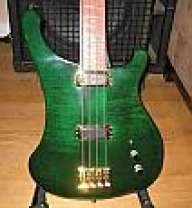
I want to run a set of Elixirs on my Modulus Q6, but the only X-Long scale B string that Elixir offers is a taper wound.

The bridge on my Q6 is NOT string through, so, my question is, is it acceptable to have the core wire of the taper wound string run over the saddle and then have it taper up to the .135" after it's passed over the saddle? This would be in-correct, right?

I guess us 35" scale guys that aren't string through don't have any Elixir options. :(

 
That's not a problem. Actually that's the whole point in having tapered strings :D

But keep in mind that that will require new setup, as every other type of string would.

Easy...

The whole point of a taper wound string is to make the tight bends when stringing through the back of the body easier and to make an arc in the strings final gauge less likely as it travels over the saddle. However I believe that the string is designed to taper up to it's final .135" before if passes over the saddle and leaves the bridge.

Can anyone else confirm this?
 
Um, no, the idea is to have the thin tapered part of the string contact the saddle. Look inside a piano, the heavier wound strings have only the core wire attached to the wood. the windings start just past the attachment point.

The theory is that this lets the string vibrate more freely and produces a harmonic series closer to that of an "ideal" string (one with zero thickness and perfect flexibility).
 
Um, no, the idea is to have the thin tapered part of the string contact the saddle. Look inside a piano, the heavier wound strings have only the core wire attached to the wood. the windings start just past the attachment point.

The theory is that this lets the string vibrate more freely and produces a harmonic series closer to that of an "ideal" string (one with zero thickness and perfect flexibility).

Hmm... Ok. Excellent information, makes sense to me.

Just one question then I guess... Why don't we see more instrument strings made and used that are taper wound like you describe? You think that would be more popular.
 
To add to the above posts, tapers are the same principle as a piano wire. If you ever look inside a grand piano at the low strings, you will see that the core extends about 3/4 of an inch beyond the bridge (or whatever it's called in a piano) before the wraps start. I use the Will Lee series (Dean Markley) on my Tobias 6 and the B to D are all tapered. I have found that tapers (at least on this instrument) tend to give me a predictable sound and life from the string.
 

Latest posts