• TalkBass has been independent since 1998. Add your voice.
    Create a free account to reply to discussions, view embedded media, and browse with fewer display ads.
    Join freeLog in
    Want zero display ads or expanded classifieds tools? Compare plans.

Acoustic bass fetish club Part 2

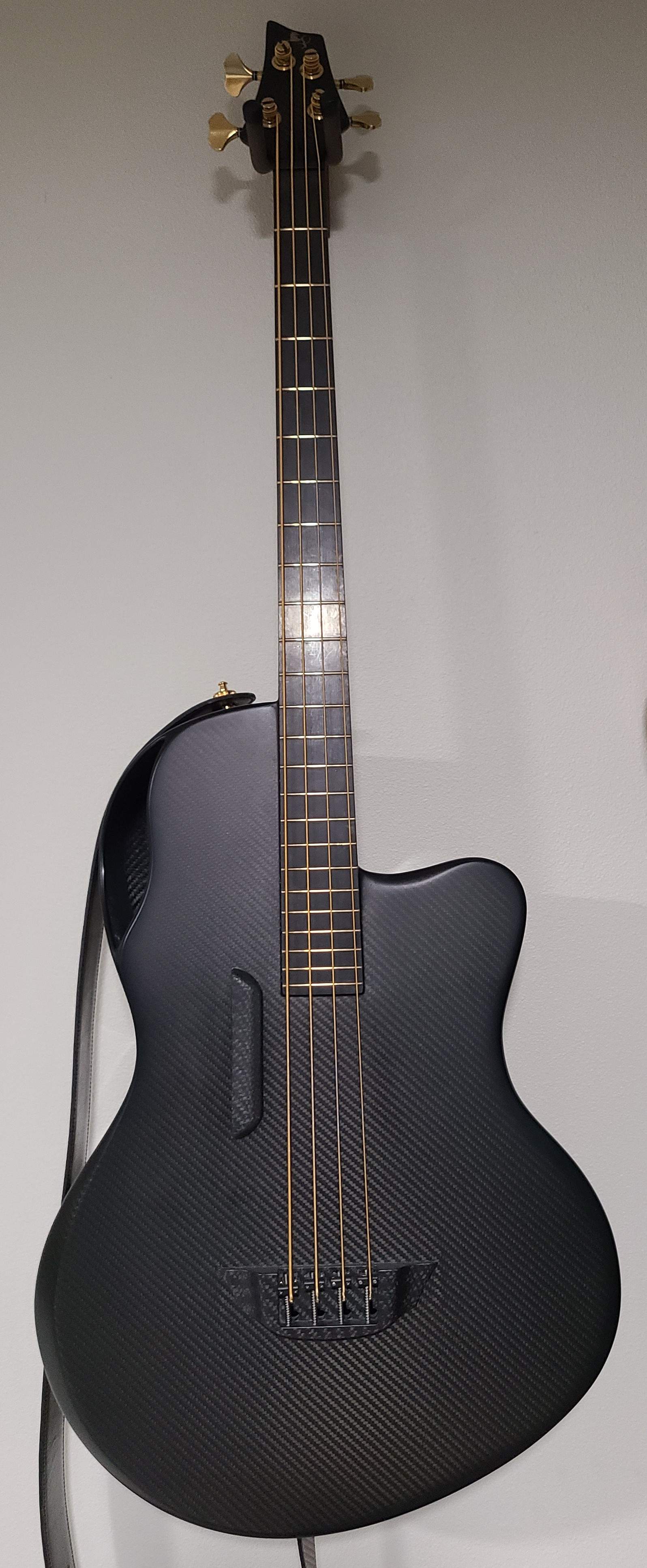
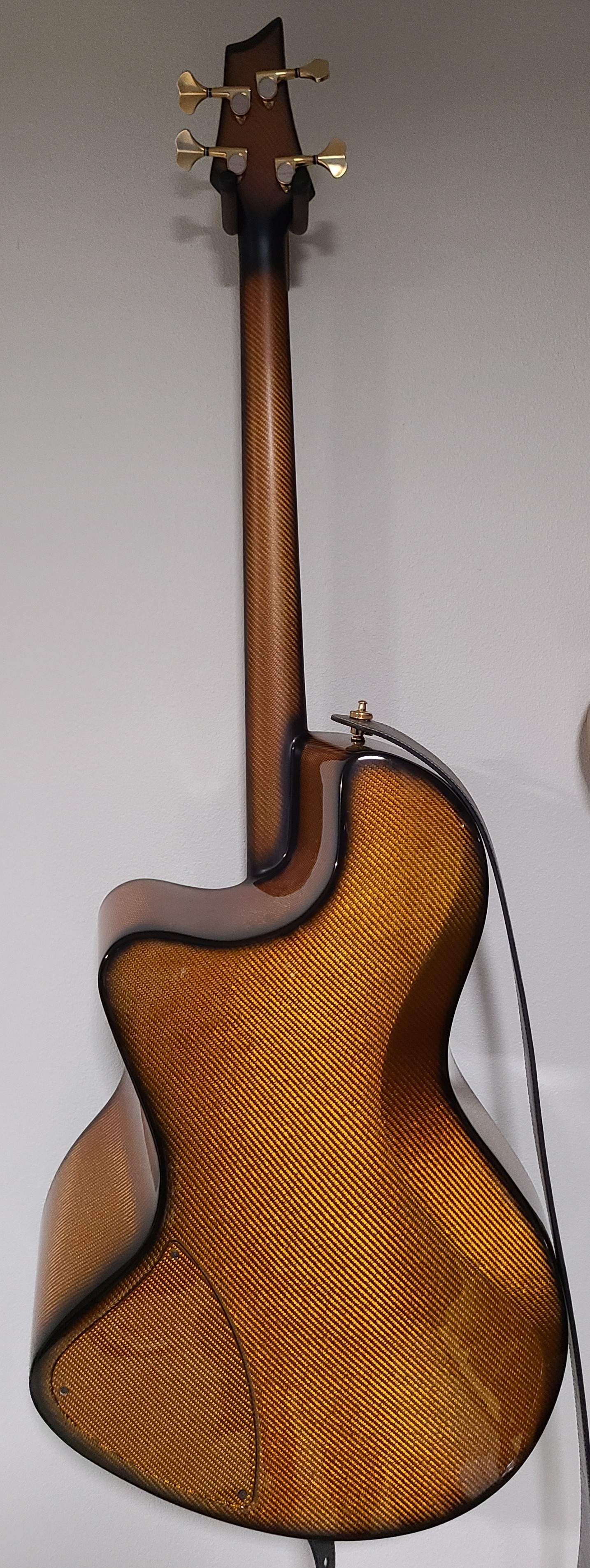
Looking to sell my Emerald Balor bass if anyone is interested. Hoping to sell locally in the Seattle area as I don't know if I have a good box for shipping (may be able to make something work). Lots of custom features that are no longer available. Feel free to reach out if interested.
20220804_213353.jpg
20220804_213414.jpg
 
  • Like
Reactions: Bob_Ross
There is a genre of music in which unamplified acoustic bass guitars are routinely used: Portuguese fado. Those basses are real power horses (and traditionally have no cutaway). Maybe that would be of interest to you.

You can see and hear one such bass quite well in the video below:


In fact, one of mine IS a fado bass, built by Sr Jose Fontes
Mota. Below, left, next to a "jumbo" Martin.
bass comparison.jpg

I discovered it on eBay laying around a pawnshop in Rhode Island and grabbed it for $450. <gloat>

Link Removed
 
Last edited:
Looking to sell my Emerald Balor bass if anyone is interested. Hoping to sell locally in the Seattle area as I don't know if I have a good box for shipping (may be able to make something work). Lots of custom features that are no longer available. Feel free to reach out if interested.
View attachment 5028789 View attachment 5028790
Probably better to put that in the classifieds.
 
  • Like
Reactions: maddogsauce
There is a genre of music in which unamplified acoustic bass guitars are routinely used: Portuguese fado. Those basses are real power horses (and traditionally have no cutaway). Maybe that would be of interest to you.

You can see and hear one such bass quite well in the video below:


From what I can see and hear, it looks like the bass is tuned ADGC.

That's another point about acoustic volume that isn't mentioned often. Tuning higher helps a lot.
I'm pretty sure the tuning is the traditional G-D-A-E (double-octave violin).

The instrument (whose earliest mentions date back to the 1880s) was first used in the context of the local popular music orchestras called tunas.
Joel Pina (1920-2021), originally a mandolin player, joined one around 1940, soon moving to the ABG (viola-baixo, back then more often called violão baixo) thanks to the zero need for adjustment to the tuning, and later (ca1950) introduced it to fado, where it hadn't been used before.
Here he is (barely visible behind comrades) in 1962 with his weapon of choice (Preston tuners and all) :


Clearly, there are some players who still tune like he did, which I already suspected since the AGI/NOVAGI/Dragão string company, located in the Porto area, makes a string set for it, the D037:
http://www.novagi.pt/en/cordas-para-instrumentos-musicais
Nylon-core, silver-plated copper. In case anyone's interested, it is available here:
Dragão D037 Violã Baixo Acoustic bass Bass Classical 4 string

Your point about tuning higher very much stands.
 
Last edited:
The thick crud on the fretboard of my electric bass stops at the 14th fret. My Sigma ABG’s fretboard isn’t quite as filthy but tells the same story: I don’t need a cutaway.

Visually I really like the symmetry of a non-cutaway ABG. Whether curvy jumbo or stout dreadnought, or even a trapezoid, I want the body complete and the neck in the middle. I also suspect that less upper bout would mean less vibration on my tummy, but I haven’t tested.

So as I surf the internet, not really shopping, but not completely closed to daydreams about possible future additions to my ABG collection, I’m reassured the collection won’t get out of hand because almost everything has a cutaway!

One day a builder will propose something like @mikeoso’s Mota and then I’ll have trouble resisting. Or maybe I’ll start wanting to play high notes and chords…
 
The thick crud on the fretboard of my electric bass stops at the 14th fret. My Sigma ABG’s fretboard isn’t quite as filthy but tells the same story: I don’t need a cutaway.

Visually I really like the symmetry of a non-cutaway ABG. Whether curvy jumbo or stout dreadnought, or even a trapezoid, I want the body complete and the neck in the middle. I also suspect that less upper bout would mean less vibration on my tummy, but I haven’t tested.

So as I surf the internet, not really shopping, but not completely closed to daydreams about possible future additions to my ABG collection, I’m reassured the collection won’t get out of hand because almost everything has a cutaway!

One day a builder will propose something like @mikeoso’s Mota and then I’ll have trouble resisting. Or maybe I’ll start wanting to play high notes and chords…

I hear you loud and clear. At first I felt the same and got an Earthwood. Then Sold it and my other 2 ABG has cutaways. I did not think I would use them much but I have been. Especially for cording. Now I have 2, 5 string basses tuned C to E. I also have 4 string G-E.

@mikeoso's Mota is a beauty. That was when I first started researching getting an ABG.

There was a mota offered for sale last year on Reverb. It went off the market but perhaps you can contact him directly, here is the old listing.
 
Jonas Hellborg’s book on bass chords sounds great on an ABG. Access to the upper frets is helpful. Hearing chords on an ABG really helps hearing the chord constructions. It helps touch and ears in producing the notes as distinctly as you want. Featuring some more than others, working the dynamics when one is plucked, struck, strummed, slapped, tapped, or brushed differently than another is most satisfying.
 
Last edited:
I'm pretty sure the tuning is the traditional G-D-A-E (double-octave violin).

The instrument (whose earliest mentions date back to the 1880s) was first used in the context of the local popular music orchestras called tunas.
Joel Pina (1920-2021), originally a mandolin player, joined one around 1940, soon moving to the ABG (viola-baixo, back then more often called violão baixo) thanks to the zero need for adjustment to the tuning, and later (ca1950) introduced it to fado, where it hadn't been used before.
Here he is (barely visible behind comrades) in 1962 with his weapon of choice (Preston tuners and all) :


Clearly, there are some players who still tune like he did, which I already suspected since the AGI/NOVAGI/Dragão string company, located in the Porto area, makes a string set for it, the D037:
http://www.novagi.pt/en/cordas-para-instrumentos-musicais
Nylon-core, silver-plated copper. In case anyone's interested, it is available here:
Dragão D037 Violã Baixo Acoustic bass Bass Classical 4 string

Your point about tuning higher very much stands.

Awesome history lesson!

My Dean EABC5 is tuned CGDAE, and I get a lot of mileage out of just the highest 4 strings. Tons of chording opportunities while still going low enough to cover some bass lines.

The Dean has a cutaway and it helps a lot with upper fret access, though the body is still too large for me to play up there comfortably. At that range, I am intruding well into guitar territory so I don't think I'm missing much acoustic volume from having a cutaway.
 
Jonas was my main motivation for playing ABG!

Jonas Hellborg’s book on bass chords sounds great on an ABG. Access to the upper frets is helpful. Hearing chords on an ABG really helps hearing the chord constructions. It helps touch and ears in producing the notes as distinctly as you want. Featuring some more than others, working the dynamics when one is plucked, struck, strummed, slapped, tapped, or brushed differently than another is most satisfying.
 
  • Like
Reactions: HvyBlvy and chadds
I'm pretty sure the tuning is the traditional G-D-A-E (double-octave violin).

Now I have 2, 5 string basses tuned C to E. I also have 4 string G-E

My Dean EABC5 is tuned CGDAE, and I get a lot of mileage out of just the highest 4 strings.

You can put this under the heading of “Totally Unimportant, Just Curious” …

I’ve noticed that ABG players quite frequently identify their string tunings as indicated above, highest string to lowest string, instead of E-A-D-G for example. Perhaps it happens elsewhere, as well, and I just haven’t noticed it. String manufacturers list the strings from lightest to heaviest, ex; .052-.073-.095-.110, on their packaging which would comport to the tunings quoted above. Yet tunings are most commonly referred to by players as heaviest to lightest.

As I said, just curious …
 
You can put this under the heading of “Totally Unimportant, Just Curious” …

I’ve noticed that ABG players quite frequently identify their string tunings as indicated above, highest string to lowest string, instead of E-A-D-G for example. Perhaps it happens elsewhere, as well, and I just haven’t noticed it. String manufacturers list the strings from lightest to heaviest, ex; .052-.073-.095-.110, on their packaging which would comport to the tunings quoted above. Yet tunings are most commonly referred to by players as heaviest to lightest.

As I said, just curious …
For string identification, treble to bass is somewhat traditional for bowed and plucked Western string instruments (in classical guitar parlance, to quote one example, the "first string" is the high E), and as you point out it is preserved on string set sleeves.
However, the average - right-handed playing, left-to-right writing - electric (bass) guitarist tends to "read" the strings from left to right while holding (physically or in their mind) the neck vertically, board front.


[Just to be absolutely clear, not for you but the future passer-by:
the "traditional" G-D-A-E tuning of Portuguese acoustic bass guitar I was discussing before, I listed in the "electric" way = G is the bassiest, E the trebliest, just as is the case with violin and mandolin (only two octaves below these).]
 
  • Like
Reactions: HvyBlvy
However, the average - right-handed playing, left-to-right writing - electric (bass) guitarist tends to "read" the strings from left to right while holding (physically or in their mind) the neck vertically, board front.

That’s been how I always interpreted that tendency, as well …

I graduated from a pretty snooty classical school, and they used a wide variety of descriptors to identify strings/tunings. The most common, however, was based on “middle C4” using the octave designation, but that’s to be expected when interacting with the wide range of classical instruments and their associated notation.
 
  • Like
Reactions: HaphAsSard
You can put this under the heading of “Totally Unimportant, Just Curious” …

I’ve noticed that ABG players quite frequently identify their string tunings as indicated above, highest string to lowest string, instead of E-A-D-G for example. Perhaps it happens elsewhere, as well, and I just haven’t noticed it. String manufacturers list the strings from lightest to heaviest, ex; .052-.073-.095-.110, on their packaging which would comport to the tunings quoted above. Yet tunings are most commonly referred to by players as heaviest to lightest.

As I said, just curious …
I've been on TB since January 2017 and have always seen it as low to high.
Speaking with other bass players I've never seen or heard it described high to low.
I've never seen it described high to low from any instrument manufacturer.
 
Last edited:
To clarify--or make things even more confusing--it seems like string gauges are listed smallest to largest (i.e. .045 - .125) but bass tunings are usually listed from the lowest note to the highest note (B-G).

It's the same with guitar.
This is something that drives me nuts when I see or hear someone referring to the highest-pitched string as the "bottom" string.

It's a musical instrument, not a bookshelf- the string that sounds the lowest pitch is the bottom, not the one closest to the floor!

Thinking in terms of pitch actually eliminates a lot of confusion, as it also translates well to instruments that are held vertically (or on their "back", like a piano).