• TalkBass has been independent since 1998. Add your voice.
    Create a free account to reply to discussions, view embedded media, and browse with fewer display ads.
    Join freeLog in
    Want zero display ads or expanded classifieds tools? Compare plans.

1976 Jazz Fingerboard Crack

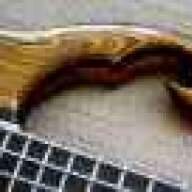
While my 76 Jazz was getting a trussrod adjustment, a small crack formed on the finger board from the nut to the first mother of pearl block inlay. The MOP block isn't cracked nor is the neck itself. The guy at the shop is going to talk to his Fender guy to see what can/should be done. He immediately loosened the strings and stopped.

What should I be looking for here? Anyone know of a standard fix for that? You can barely feel it with your fingernail but you can see it. Sorry I don't have any pics as it's at the shop.

Any input would be appreciated.

Thanks.

Ray

 
Well - not that this caused the problem, but your setup guy should have loosened the strings BEFORE tightening the rod. I actually lean the neck with the nut up against the edge of the table & press gently on the back of the neck (enough to flex it slightly) while turning the rod. Don't make it work any harder than it has to.

Does the crack run through to the other side of the nut?

Since you have a maple board, there's not much you can do to make the crack invisible. You could try to wick some superglue in there to hold it, but you run the risk of applying it to the truss rod threads and seizing up the rod.

If you insist on making it invisible, the only remedy may be to entirely remove the fretboard between the nut & first fret, and replace it with a fresh piece of maple along with your block - but that's usually only done if you have problems with the rod (stuck at the adjustment nut), and the color match with your existing maple may not be all that great.
 
Cracked fretboards on the 3-bolt Jazz necks are kind of common. The bullet truss nut was simply manufactured too close to the surface.

The repaired necks I've seen simply have superglue wicked in the crack. You simply unscrew the bullet nut before you do this so you don't accidentally glue the nut in place.
 
Just a quick update. The fingerboard has been glued and bullet nut replaced. Was told I need a shim to get the adjustment I need. Guy also stated to not be too aggressive with the adjustment so we don't get more cracks. It's old he said.

Think he is giving me the straight skinny or just protecting himself from further damage?

Ray
 
Take it to another Tech, man. He is shimming in the neck pocket to get the strings closer to the board, but it's a half-assed kind of fix.

If you end up not being able to find a tech in your area that can fix it, you can send it to me. I run the Guitar Repair Institute. It would be better for you to find someone in your area to do it, though, to save on shipping.
 
I assume that your tech was suggesting a spacer under the bullet nut, not a shim under the neck. It may be good to have a tech remove the neck and put it in a fixture to put a upward bow in the neck to remove the strain from the trussrod. That way the strin from the strings will pull the neck to a more flat position. Never, never, adjust a trussrod with the neck under string pressure.
 
I was going to suggest what Rocky suggests (I think...) - a "heat treatment" where the neck is removed, the truss rod is loosened all the way, the fretboard is heated to soften the glue joint, flexed into a straight or slightly-back-bowed position, then clamped in that position and allowed to cool. This should be done only by someone who has experience doing it.

Of course, it works only if the fretboard is a separate slab of wood....won't do a thing for you if you have a 1-piece neck with the slots cut into the surface.
 
Take it to another Tech, man. He is shimming in the neck pocket to get the strings closer to the board, but it's a half-assed kind of fix.

If you end up not being able to find a tech in your area that can fix it, you can send it to me. I run the Guitar Repair Institute. It would be better for you to find someone in your area to do it, though, to save on shipping.

See guys??That's what I like about this site.One bassist helping another bassist.Nice gesture.I hope that gesture extends to the rest of us players who may have issues w/our axes in the future.
I,for one will definitely keep you in mind if a repair issue ever arises with one of my basses.Real cool,man.Real cool.
 
A shim where? Where does he suggest putting a shim to change the neck relief?

Can you tell if the fretboard is a separate piece of maple from the rest of the neck?

If I understood correctly, the shim is for the truss rod, not the neck pocket. He also told me the last frets are high and buzz a bit. I'm going to see it in the next day or two to see how it came out. If it still isn't setup to my liking, I have two options.

1. have the current neck worked on (ie. lower frets, heat neck, etc)
2. buy a new neck but save the old one.

Thanks all for the great advice and input. I really appreciate it.

PS - I'm in the Phoenix area
 
The shim is for the trussrod, not the neck pocket. The micro tilt was used to get the neck where it should be.

The last 5 frets or so are high and buzz but other than that, it plays good. They have a guy who works for Fender locally and he is going to work on the frets for me.

Thanks for the input gang! I'll let you know how this turns out.