• TalkBass has been independent since 1998. Add your voice.
    Create a free account to reply to discussions, view embedded media, and browse with fewer display ads.
    Join freeLog in
    Want zero display ads or expanded classifieds tools? Compare plans.

3D printer bass

What would be interesting and possibly more viable is an SLS/SLM printed bass. SLM uses a laser to spot-melt powder into place. A hollow aluminum or stainless steel bass could be made this way (or titanium or even gold), the technology is designed for production volumes as well as prototyping. The only real impediment to fast production would be the need for very smooth surfaces, since that would mean either more time spent on post-print finishing or very high precision. I guess another problem is I'm not sure whether there are SLM printers large enough, but I imagine one of the printer companies would be happy to design something if the right client has enough money to burn.

I heard 5 or six years ago that the first Maatsura SLS printer had made it to the East Coast distributor. It was offered at 1.5 million, was as big as a tour bus, and had maybe 2 cubic feet of printing capacity. Don’t forget the 480v service, cost of powder, and a service plan.

You know who can make a profit from a machine like that? Hint: not a luthier...
 
Foams like Urelite are molded in a form. Not sure if this is meant to be some sort of rebuttal. Even with chemical/thermal curing, which can be affected by the presence of a frame or core, the cycle time is much faster than building 1/16th at a time (if that is even the capability of a small 3D printer). Of course this does add Ovation to the discussion- probably the most successful (maybe 2nd to NS at this point) purveyor of plastic stringed instruments. All of which I believe were also formed/molded.

When you are trying to make money out of plastic, cycle time is king. I make large scale thermoformers for a living...

Everything I know about plastics I learned from The Graduate, so I would have no idea what I'm rebutting!
Was just tossing the UKII into the discussion as another plastic/synthetic guitar example.

Carry on...
 
I'm not sure about plastic for a guitar body and it's durability in the long run...I'm more inclined to give metal a chance though.
The Tokai Talbo with the aluminum body
david_in_barcelona_ Tokai_Talbo_bass_pickups.jpg
 
  • Like
Reactions: DJ Bebop
I agree with warrplayer, headless design would balance better, they should have used a little more thought at the design stage.

<start rant>

Got to say, I'm tired of all these attempts to make 3D printing seem like the second coming. The only places I see it actually being useful is physical shape prototyping (for testing fit and proportion, etc), medical use (one-off custom components designed per patient where the material choices don't suit CNC), and where the material itself cannot be formed by other means. Even then, a lot of these cases will be better served by CNC, depending on cost (for instance, a prosthetic attachment can have a number of prototypes 3D printed to test the fit and then once it is decided, the actual device is CNC machined). All other cases are better served by CNC, since the material strength is not compromised, you have a greater choice of materials and the precision is orders of magnitude better.

Apparently one thing 3D printing is really good for, though, is generating hype. Nobody really cares about a CNC machined bass, but an impractical, unbalanced, instrument made of inappropriate materials is suddenly "cool" because it was 3D printed.

And it's mostly becuase it's become affordable to have your own 3D printer. 3D printing itself is as old as the hills, there were laser-hardened resin printers in the 80's. They didn't make any world-changing items from the technology then and I don't foresee anyone doing it now, either. The only real benefit of a printer at home is printing simple shapes from shared designs for parts that don't need strength. Small convenience gained over having to order online.

</end rant>


You kids get off my lawn!
 
I heard 5 or six years ago that the first Maatsura SLS printer had made it to the East Coast distributor. It was offered at 1.5 million, was as big as a tour bus, and had maybe 2 cubic feet of printing capacity. Don’t forget the 480v service, cost of powder, and a service plan.

You know who can make a profit from a machine like that? Hint: not a luthier...

Heh. I'd bet a 2cf printer wouldn't be large enough regardless of the shape of the bed. Judging from recent demo videos on youtube the large SLM printers have shrunk down to delivery-truck sizes. The prices have probably not shrunk. This isn't my field though, I don't know much.

Luthiers and probably even Fender wouldn't want to buy one anyway, it would be cheaper to contract with a printing service. Arguably anybody could eventually print a guitar as long as they have a DXF file and a credit card. Shapeways has an SLM though theirs only has a 10x10x8" print volume, not nearly large enough; some of their plastics printers might do the job though.
 
It would be great if this became a thing and got refined enough that producing an inexpensive bass was easily repeatable. Would love to see this displaced the horrid low dollar basses you find beginners buying these days with something reliable and decent to play.
 
  • Like
Reactions: equill
It’s plastic, folks. If people wanted plastic basses you could blow-mold (in halves) and assemble dozens in the time it takes to print ONE. It’s amazing how powerful and cheap machine control circuits have become, and I’m sure someone will develop a guitar plastic that is better than “luthite”, but I haven’t played one yet...
Weren’t Steinbergers plastic?
 
The technology is in it's infancy.
Think outside of the box.
It will allow for products to be made at much lower costs and potentially to make things that we have never been able to do before.
I've got a buddy who manufactures specialty motorcycle parts..
Some of his parts have gone done in price due to 3-D printing.

Since the beginning of time we have always started with a larger piece of material and removed some to make a product.
This is the first time we have started with nothing but raw material and created something from dust.

People thought that horses would never be replaced with cars too.
 
Funny thing, a buddy of mine has all kinds of 3D printing/engraving machines... he's a little crazy as to why. Anyway he is open to printing me one up and stuff. I'd be really impressed if you could print the whole thing.
 
It would be great if this became a thing and got refined enough that producing an inexpensive bass was easily repeatable. Would love to see this displaced the horrid low dollar basses you find beginners buying these days with something reliable and decent to play.

Not sure how that would help. The problems with cheap basses isn't the body or the even the necks.
 
  • Like
Reactions: DJ Bebop
Just a new direction. I'm imagining that if the body and neck can be 3D printed, at a significant cost savings, then greater care could be afforded to the rest. Seems like the consistency could be made very uniform. Uniform weight, dimensions, everything produced would be exactly alike. That's gotta be an advantage. - The only downside I see is that it would rip the soul right out of the instrument. If it happened, I could see the TB comments now; "extremely sterile", "felt very lifeless to play"... Someone will reply "yea, but what do you want for $89.95"...
 
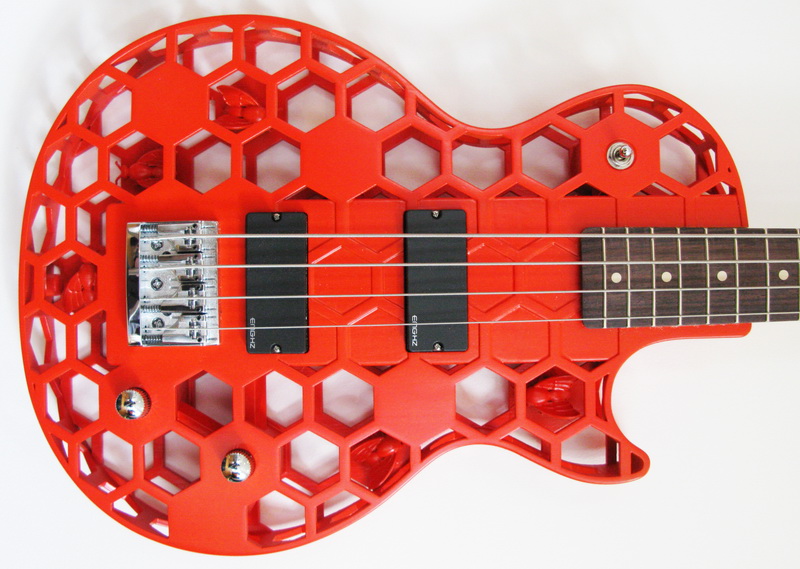
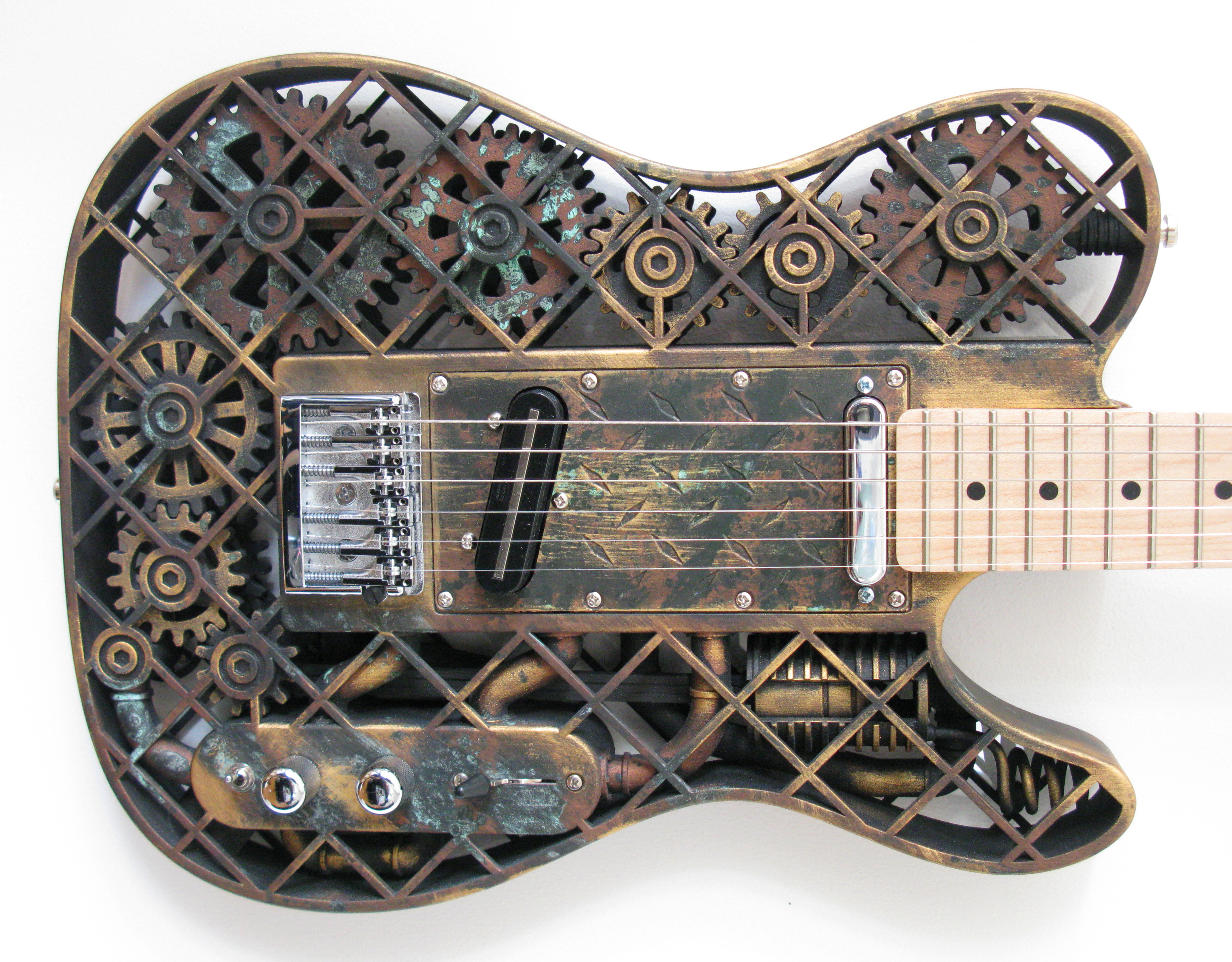
Played the craziest bass tonight. It was developed at Rochester Institute of Technology on a 3D printer. They are unveiling it tomorrow night at an event, and I have to play it for the first two tunes. I have to be honest, it could use a few tweaks, but it actually sounds pretty good. I’m not sure what the material is, but it is hollow like a whiffle ball. The neck dive definitely needs to be addressed since the body is crazy light.
BEWARE...