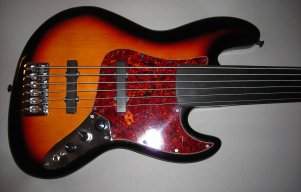
im planning on switching over to a six string bass. and just wanted to know what are the pros and cons of doing this. and how big of a difference there is.

Enjoy the benefits of a premium membership!
Upgrade Account
-
TalkBass has been independent since 1998. Add your voice.
Create a free account to reply to discussions, view embedded media, and browse with fewer display ads.
Join free Log in
Want zero display ads or expanded classifieds tools? Compare plans.
You are using an out of date browser. It may not display this or other websites correctly.
You should upgrade or use an alternative browser.
You should upgrade or use an alternative browser.
4 to 6 string?
- Thread starter Xenobassist
- Start date
More options
Who Replied?From reading here, it seems the switch is pretty transparent to some, while others just can't seem to make it. Probably all depends on how you play and how you think about what you play.
My own experience is, 4 to 5 is a big switch. I can then do 4-string stuff without ever reaching out past the 5th fret - but that low string is no longer E and I have to rethink all the keys. From 5 to 6, not really a problem, the biggest difference is the C string makes the neck wider.
My own experience is, 4 to 5 is a big switch. I can then do 4-string stuff without ever reaching out past the 5th fret - but that low string is no longer E and I have to rethink all the keys. From 5 to 6, not really a problem, the biggest difference is the C string makes the neck wider.
Its not that tough. Just takes some getting use to. I switched from a Fender P Deluxe to a Carvin 6 string.
My biggest issue, and I am sure it is common, is that my right hand would pluck a diffenrent string than what my left was fretting.
A few weeks of some woodshedding will work all the kinks out pretty quick.
Good luck.
My biggest issue, and I am sure it is common, is that my right hand would pluck a diffenrent string than what my left was fretting.
A few weeks of some woodshedding will work all the kinks out pretty quick.
Good luck.

well a big hurdle on the 6 string is muting. to mute a 4 string you just gotta lay down your hand. muting a 6 takes a little more articulation I use my 3rd and 4th fingers on my plucking hand and my thumb to mute around what I'm playing and then I use my fretting hand for the rest. if you're like me you'll find you go back and forth between 4 and 6. jam it out you'll be fine
From reading here, it seems the switch is pretty transparent to some, while others just can't seem to make it. Probably all depends on how you play and how you think about what you play.
My own experience is, 4 to 5 is a big switch. I can then do 4-string stuff without ever reaching out past the 5th fret - but that low string is no longer E and I have to rethink all the keys. From 5 to 6, not really a problem, the biggest difference is the C string makes the neck wider.
+1 My switch from 4 string to 5 string way back in the day took about 1 set for fingerstyle playing to feel confortable, and then about an additional half year to really get the open string muting down when slapping (that can be difficult).
For the heck of it, I bought a 6 string back then also, and literally could never play it. The muting of open strings was so overwhelming to me, the string spacing so tight (or the neck so huge with those models with full 19mm spacing), that I just couldn't do it. I also found the 'C' string just too thin sounding on most 6's I investigate.
Different strokes for different folks. The muting and neck size will IMO be the things that will either fall into place for you are push you back to a 4 or 5.

I went from 4 to 6 about a year ago. I'd say within a few hours I had started to adjust to the physical differences, but it probably took a few weeks before I was really comfortable. Have I mastered the 6? Oh heck no. Am I as comfortable and confident on it as I am on a 4? Yes. Actually now going to a 4 feels like getting a slice of pie but not getting any whipped cream.
Now I'm hungry.
Now I'm hungry.



IMO, it all sort of depends on what your goals are. I play 6 & 7 string basses 99% of the time and they have become 2nd nature to me. I do a fair amount of chording and doubling guitar/key phrases, so it's important to have the range.
Plenty of cons to the higher string counts, though. Many times they are heavier, usually the necks are wider, as previously stated above muting is something that is essential to clean playing. It's not easy to find strings, so it's usually an online order only and if you do find a set in a store, it will probably not be the type of strings you are looking for.
The biggest con is that you will need to play very cleanly .... many of the bass playing flaws that we have are masked with a 4 string, but man, do you hear them when playing the higher string count basses. Your technique will have to change, hand positions will change and if you're like most extended range players you'll end up playing more across the neck as compared to up and down.
Of course, I'm a big proponent of extended range basses, but they aren't for everyone. Like I said above, think about your bass playing goals and then consider the type of bass needed to accomplish that ....
Plenty of cons to the higher string counts, though. Many times they are heavier, usually the necks are wider, as previously stated above muting is something that is essential to clean playing. It's not easy to find strings, so it's usually an online order only and if you do find a set in a store, it will probably not be the type of strings you are looking for.
The biggest con is that you will need to play very cleanly .... many of the bass playing flaws that we have are masked with a 4 string, but man, do you hear them when playing the higher string count basses. Your technique will have to change, hand positions will change and if you're like most extended range players you'll end up playing more across the neck as compared to up and down.
Of course, I'm a big proponent of extended range basses, but they aren't for everyone. Like I said above, think about your bass playing goals and then consider the type of bass needed to accomplish that ....

As mentioned before, the muting is most likely the biggest challenge, depending on your current technique. Also, getting used to the C string takes a while. But all in all, if you're already familiar with the fretboard, it's not that big of a deal. If you decide to do the switch, just practice alot and when you play scales, use the full range of the bass and keep track of the notes you are playing and you'll soon be familiar with 6 strings. Experiment as much as you can and have fun!
Oh yeah, unless you absolutely have to do so to fund the 6er, I think it would be a good idea to hang on the ol' four banger. I certainly had regrets about selling my fours back in the day. More range gives you more possibilities, true enough, but sometimes more is just more; differend, but not necessarily better. Then again, some people never look back. This is exactly why I'd keep your favourite bass for a year or two, until you're really sure if you like six strings better.
Oh yeah, unless you absolutely have to do so to fund the 6er, I think it would be a good idea to hang on the ol' four banger. I certainly had regrets about selling my fours back in the day. More range gives you more possibilities, true enough, but sometimes more is just more; differend, but not necessarily better. Then again, some people never look back. This is exactly why I'd keep your favourite bass for a year or two, until you're really sure if you like six strings better.

- Aug 5, 2005
- 7,243
- 92
- Disclosures
- Endorsing Artist: J.C. Basses
Cons: 6-string basses are more expensive for string changes
Pros: 6-string basses make you look cool.
Cons: 6-string basses are larger and heavier.
Pros: 6-string basses have 10+ more notes to utilize
Pros: 6-string basses make you look cool.
Cons: 6-string basses are larger and heavier.
Pros: 6-string basses have 10+ more notes to utilize
Jump right into it; go for the 6-string right away. That way, once you've become accustomed to it, the 5-string will be easy if you ever pick one up. And a 7-string is a minor adjustment away.
im planning on switching over to a six string bass. and just wanted to know what are the pros and cons of doing this. and how big of a difference there is.
4 string.
Old school look and sound.
Thin comfy neck.
Scales are up and down neck.
Most common bass so all parts and strings cheap and available.
Due to popularity, MANY used instruments available.
Wide string spacing and no B in the way excellent for slapping.
String damping simple and easy.
Usually lighter weight.
Range is limited.
Chords tend to be muddy unless carefully chosen.
Same for double stops.
Both passive and active easily available
"Extreme" solos harder to do, often need harmonics.
Fender makes many excellent models in many price ranges.
Usually inexpensive compared to equivalent 6 stringers.
6 string.
usually a modern sound and look.
Very wide neck like a diving board that takes some time to get used to.
Two octaves are available at any position right across the neck! But cross-neck scales must be learned.
Most stores don't carry 6 string sets and 35" scale 6 string set are special order.
Narrow spacing inhibits slapping (or if wide-spaced neck is exceptionally wide for normal playing)
Often 24 fret (2 octaves up and down neck) which also doesn't have as good a slap sound.
String damping is more complex...usually takes half the strings in one hand and the other half in the other.
Usually active (to help bring out a modern sound).
Often heavier with heavy neck compared to 4 string.
Chords, double stops and solos not range-limited. Not muddy.
Fender only makes one 6 string (Steve Bailey) except for custom shop and it costs an arm and leg. (though is excellent!)
6 stringers tend to be more expensive.
Once you know how to play a 6 string, playing a 5 string properly is automatic. (properly means playing cross-neck scales rather than as a 4 string with a couple of extra low notes)
And last but not least, a 6 stringer looks cool for a 6 string gig... but can get you kicked out (or forced to play house bass!) at an old school gig!
Remember rules of Bass Acquisition #7:
You can never own too many basses!
If you find a comfortable one, its no big deal. if its the slightest bit uncomfortable, adjusting is difficult. I've been a four string player, and I'm waiting on my MTD 635. I played one and it was super comfortable for me, but I played some other fives and sixes and I didn't care for em. Play before you buy!

As others have said, muting is probably the most difficult part of the transition. More strings = more open strings ringing out and causing cacophony if they are not muted properly.
I bought my first six after years of playing a four and gigged with it the same week. Yeah, there were one or two small missteps, but it went pretty well for the most part. I just bought my first seven string a few weeks ago and played it at church 3 days after bringing it home! Of course, some make the transition easier than others.
Why play a six string
Maybe not a necessity, but definitely more than a luxury. If I want to pedal a note on the E or A string, and pop a tenth, or the second octave, it's necessary. I don't have to do that, but if I want to, I need that sixth string. If your fingers are six inches long, you won't need it for that situation. Mine aren't. My hands are small.
A six is also great if you want to play some chords. You can do that with a four or five stringer, but you get mud on the ADG strings. DGC works great for chords.
The lowest and highest notes on a six are nice to have, but the main reason that I love 6 stringers is so that I can play in Eb, so I can play in E without using an open string, so I can play in F, F# and G without having to play in first position, so that I can do two and a half octave runs without shifting my hands, so that I can can grab a root and a tenth on the B and D, E and G, & A and C strings.
The extra low notes and high notes are cool too. But I spend 90% of my time between the fifth and fifteenth fret.
If you want a six, get one. Forget what other people say. Me, I play five and six, and seven. Just because one person thinks four strings are enough doesn't mean that I have to fit inside their little 'what a bass player is' box!
I bought my first six after years of playing a four and gigged with it the same week. Yeah, there were one or two small missteps, but it went pretty well for the most part. I just bought my first seven string a few weeks ago and played it at church 3 days after bringing it home!
Of course, some make the transition easier than others.Why play a six string
Maybe not a necessity, but definitely more than a luxury. If I want to pedal a note on the E or A string, and pop a tenth, or the second octave, it's necessary. I don't have to do that, but if I want to, I need that sixth string. If your fingers are six inches long, you won't need it for that situation. Mine aren't. My hands are small.
A six is also great if you want to play some chords. You can do that with a four or five stringer, but you get mud on the ADG strings. DGC works great for chords.
The lowest and highest notes on a six are nice to have, but the main reason that I love 6 stringers is so that I can play in Eb, so I can play in E without using an open string, so I can play in F, F# and G without having to play in first position, so that I can do two and a half octave runs without shifting my hands, so that I can can grab a root and a tenth on the B and D, E and G, & A and C strings.
The extra low notes and high notes are cool too. But I spend 90% of my time between the fifth and fifteenth fret.
If you want a six, get one. Forget what other people say. Me, I play five and six, and seven. Just because one person thinks four strings are enough doesn't mean that I have to fit inside their little 'what a bass player is' box!

My biggest problem was hitting the right strings when slapping. Then I found if I used a "reference" for my right hand.... the strings are easier to find!!!! I hit allot of the right strings at the right times now!!!!  I like playing chords or arpeggios on the ADGC strings and then running bass lines on the lower strings.... when I pick up a four string it just doesn't feel right... it feels small.... I don't have one anymore, mainly because it seemed like my muscle memory got messed up when I jumped from a 4 to a 6. Took a bit to get use to each. A 4 seems like I'm in a box and a six seems like it's much more open... and I would imagine an upright would be another world altogether... although they are all "basses". 6 strings forever...
Peace

Tim
I like playing chords or arpeggios on the ADGC strings and then running bass lines on the lower strings.... when I pick up a four string it just doesn't feel right... it feels small.... I don't have one anymore, mainly because it seemed like my muscle memory got messed up when I jumped from a 4 to a 6. Took a bit to get use to each. A 4 seems like I'm in a box and a six seems like it's much more open... and I would imagine an upright would be another world altogether... although they are all "basses". 6 strings forever... Peace
Tim

I play in 5 different gigs. Half bass, half guitar. I've been playing 7-string guitars as my main axe since the mid 90s, so getting use to a low b bass string was extremely easy.
I can see how going from a 4 to 6 might be tricky for some, but the important thing is to try out a lot of 6s because they all feel different. You may prefer small or wide string spacing, depending on your application. In my case, I like medium string spacing at the bridge, but I like small spacing at the nut. Some like tons of room in general. Just experiment & don't give up until you find what you're comfortable with.
I can see how going from a 4 to 6 might be tricky for some, but the important thing is to try out a lot of 6s because they all feel different. You may prefer small or wide string spacing, depending on your application. In my case, I like medium string spacing at the bridge, but I like small spacing at the nut. Some like tons of room in general. Just experiment & don't give up until you find what you're comfortable with.


