• TalkBass has been independent since 1998. Add your voice.
    Create a free account to reply to discussions, view embedded media, and browse with fewer display ads.
    Join freeLog in
    Want zero display ads or expanded classifieds tools? Compare plans.

4 to 6 string?

I joined an extremely technical death metal band two years ago, it required a 6 string which I'd never played until then. I learnt (crammed) about twenty songs in a month and a half on the 6er, extremely fast, lots of chording, string skipping etc.
well my left (fretting) hand, hasn't been the same since. I'm sure I developed tendonitis because of that bass, I'm not in that band anymore and have ditched that bass, as well as my 5 string. I have absolutley no desire to go back to one. go very slow the first while and build up your left hand gradually, especially in the beginning.
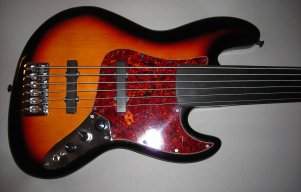
 
i have been playing 6-strings as my main baas for over 10 years the best thing i can tell you is look around for the right bass for you. I mean six strings are fine as long as the bass fits your hands. I started out with a yammaha trb-6p supper wide neck that killed my hand then i found an Ibanez sr 6-string that to me the second i picked it up it was easy to play and after ten years i still have that bass as well as many other ibanez 6-strings. Just find your fit man.
best wishes.
 
I'm a weird one but the transition from 4 to six seemed like a natural progression to me, yet I still struggle with the 5's most of the time! It very well could be an issue with the neck flatness and string spacing for me, I don't know but I play better on 6s than 5's. I don't own one yet, but thinking REALLY hard about getting one! I don't do very much thumpin or pluckin (not very good at it), so this really isn't an issue for me as far as string spacing.

The major issue for me will be staying the hell off of the C string! I will ride the upper register like nobody's business!!
 
For me, I didn't have any problem switching to five. But, when I switched to six, that's where the trouble begun. It took me like a month to get used to the width of the neck. But the main problem was I keep counting the strings wrong, took me a few more months to adjust.

But, right now I'm back to 4. It just suits me more.
 
For me, I didn't have any problem switching to five. But, when I switched to six, that's where the trouble begun. It took me like a month to get used to the width of the neck. But the main problem was I keep counting the strings wrong, took me a few more months to adjust.

But, right now I'm back to 4. It just suits me more.

It could be that I don't have very much arch in my fingers on my left hand when I play, that may be why the width of the neck doesn't bother me as much as thickness does.
 
The major issue for me will be staying the hell off of the C string! I will ride the upper register like nobody's business!!

In a few years, I'll hopefully get a six (read: When I'm good enough and have the money to do so), and the above quote amused me as I can see myself doing this a lot. I already have a tendency to play past the ninth fret and often on the D and G of my current basses.

That, and I'd use the low B an incessantly large amount. In fact, the A and D would probably get used only to connect what I was doing on the E/B strings and the G/C strings...
 
The transition is as hard as you make it and will depend on how much improvement you need to your technique. That being said, the bass needs to be well built, well balanced, and allow for good action as flaws that may not be a big deal on a 4-5 can make playing a 6 string a big chore.

My 4 to 5 transition took a lot of effort, but after taking some classical guitar in college, I progressed quickly after a somewhat long period of not doing so well. The transition from 5 to 6, was much easier for me.
 
From 4 to 5 wasn't so hard for me but I understand that some people have a hard time.
then I switched to 6 strings bass 4 years ago. Was very simple. Prior to do that I stringed my 5 strings EADGC.

I learn to play bass with a 5 strings ... so I'm used to palm mute, floating thumb. I did it naturaly when I pickup my 5 strings.

I think some people don't give enough time with the 5 or 6 strings before giving up. It is easier if you only play the 5 or 6 strings, no come back at your 4 strings.
 
I think the most important thing is whether or not you have pretty big/long hands and fingers. If you have large fingers, no problem. Personally I have very short fingers and small hands, plus the pinky is very short compared to the others, so I can barely play riffs on the B string on a 5-er. Then there's muting on a 6, quite some job to do there...
 
i have played 4,5, 6 and upright.
i had never played any until i tried them.
you won't know until u try one in your home then on your gig.
the only 6 that made sense to me was the Steve Bailey 6.
it seemed significantly more complex to find a 6 that worked opposed to 4,5 or upright.
with that being said ,don't overthink it...go find something you like and if it doesn't work.... flip it....
 
In a few years, I'll hopefully get a six (read: When I'm good enough and have the money to do so), and the above quote amused me as I can see myself doing this a lot. I already have a tendency to play past the ninth fret and often on the D and G of my current basses.

That, and I'd use the low B an incessantly large amount. In fact, the A and D would probably get used only to connect what I was doing on the E/B strings and the G/C strings...

Guys! GUYS! I hope you understand that an ERB is to bass playing as the double bass drum pedal is to drumming. There is a word called "TASTE" and it has nothing to do with the instrument you are playing. A drummer doesn't have to do the machine gun thing with his double pedal and you need to remember that the B string also has some notes that are higher than the open E string.

You can use those extended range notes but please remember to do it tastefully! Hey, even the drummer for Charlie Daniels band plays a double pedal, but he also knows what taste is.
 
Guys! GUYS! I hope you understand that an ERB is to bass playing as the double bass drum pedal is to drumming. There is a word called "TASTE" and it has nothing to do with the instrument you are playing. A drummer doesn't have to do the machine gun thing with his double pedal and you need to remember that the B string also has some notes that are higher than the open E string.

You can use those extended range notes but please remember to do it tastefully! Hey, even the drummer for Charlie Daniels band plays a double pedal, but he also knows what taste is.

Hey pal, I am quick to admit my own weaknesses!!! I have nooooo problem sharing what I know I will be up to. It's kinda like leaving a 4 year old alone in a room full of candy and expecting to come back and not see a sticky fingered wide eyed look of surprise when you walk back into the room. The temptation is far greater than I can resist! LMAO!!!
 
i've been a serious player for 15 years & I got my first 6 a few days ago, the 2 bigh adjustments I;m having is the sring spacing (though I love my bass-an SX Ursa I'd prefer it a touch wider but it's a matter of having my children leave me alone so I can practice--any tips for that let me now) and the "ergonomics" or lac of "Muscle memory" for olaying songs I already know. I figure if I just play the 6 for 9 weeks Ill have the handle on that, since that's how I got used to fretless years ago.
 
im planning on switching over to a six string bass. and just wanted to know what are the pros and cons of doing this. and how big of a difference there is.

there is so much more musically that you can do...chords and bass parts simultaneously...chords and licks unavailable on a 4 or a 5. It WILL take you a few months to a year to really feel comfortable on it, and muting will remain a constant problem, but there is so much more available to you that if you work at it, you won't change back.

Fretted:


Just do it, and don't look back.

Cheers,
Cameron
 
im planning on switching over to a six string bass. and just wanted to know what are the pros and cons of doing this. and how big of a difference there is.

The biggest thing I can off you is to not limit yourself in terms of deadline to have the transition mastered. I've been playing a 6 for a couple of years now, and I'm still learning and getting more comfortable with it. For me, it really opens up a lot more creative expression, because you have a lot more notes available to you in one position.

Just like learning a new language, the best way to do it is just to jump in, forcing yourself to learn it. So have fun!
 
I think the most important thing is whether or not you have pretty big/long hands and fingers. If you have large fingers, no problem. Personally I have very short fingers and small hands, plus the pinky is very short compared to the others, so I can barely play riffs on the B string on a 5-er. Then there's muting on a 6, quite some job to do there...

Yes, and no. Good technique can make playing the instrument a lot easier, physically. I have small hands, short fingers, and I play a 6 as my primary instrument (only instrument, actually), and I spend a lot of time in the lower registers. But my technique is okay (won't call it perfect, but it doesn't hurt to play), and that helps me play more than when I first picked up the 6er and my technique was... not so good. :ninja:
 
I think the most important thing is whether or not you have pretty big/long hands and fingers. If you have large fingers, no problem. Personally I have very short fingers and small hands, plus the pinky is very short compared to the others, so I can barely play riffs on the B string on a 5-er. Then there's muting on a 6, quite some job to do there...

who is playing a six, with no problem. In fact, the kid is a monster - videos soon will prove that. He's a normal sized 9 year old, with 9 year old hands.

Cheers,
Cameron
 
Lots of great dialogue here.

Another consideration is what material you play.

If you're playing by-the-book rock, you really dont NEED a 6, but if you're playing jazz, R&B, Gospel and many other genres, a 6 can be invaluable. Like others have said -solos, chords, etc all can be easier to do by playing horizontally instead of vertically.

Personally, I play in a classic rock cover band. I barely use my 5's and I have no need for a 6. I also dont have a lot of time for woodshedding and experimentation at this stage of my life so a six is out for me.
But if you want to learn it, I'd say go for it. Just make sure you play a bunch from different makers before you buy one.