• TalkBass has been independent since 1998. Add your voice.
    Create a free account to reply to discussions, view embedded media, and browse with fewer display ads.
    Join freeLog in
    Want zero display ads or expanded classifieds tools? Compare plans.

4ohm / 16ohm switch

Ringhammer

Supporting Member
Sep 3, 2016
3,521
18,134
S. F. Bay Area
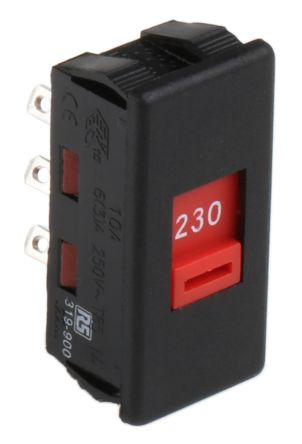
i have a cabinet and 4 x 16ohm speakers, and I know how to wire it to be either a 4 ohm load (all speakers in parallel) or a 16 ohm load (series/parallel). I’d like to put a switch on the back so I could switch between, same as the B25B 2x15” cabinet.

Does anyone have a schematic that shows how to do this?
 
dual4imp1.gif


WARNING: Do not flip the switch while the power amp is powered up.

More here: Wiring a 4 X 12 Speaker cabinet
 
dual4imp1.gif


WARNING: Do not flip the switch while the power amp is powered up.

More here: Wiring a 4 X 12 Speaker cabinet

Note the 5 amp switch rating in the diagram that Foz posted.

The rating required depends on the amp. For example, a 500W amp at 4 ohms will require:


P=I*I * R.
P= V * I, V = P/I

I = square root (P/R). For a 500W@4 ohm amp, I = 11.2A. V = 44.6V. So the switch contact should be rated for at least 11.2A@ 44.6VAC.

BUT having a safety margin is a good idea, so add 25%. That works out to (11.2 *1.25) 14A, let round it up to say 15A.

All of a sudden, the switch specification gets bigger. Select a switch that can handle at least what the speakers are rated for. Use an amp that is a good match for the cabinet.
 
  • Like
Reactions: 5StringPocket
BP: Guys who have 2 cabs often use such a switch so they can parallel the pair to 8 ohms or use a single cab @ 4 ohms.

Interestingly I use two 4Ω 2x10s. In parallel that equates to a 2Ω load. This is fine for all of my amplifiers. I have never used them in series or needed a switch to do so.

You should realise that the use of such a switch is fraught with danger for your amplifiers.
 
  • Like
Reactions: Giffro
I agree the switch is risky, esp. if I need to be sure to use a 15amp DPDT switch. What about wiring 2 jacks, one for a 4 ohm load and one for a 16 ohm load. Is there a schematic showing that?

This is only because of the B25B head which doesn’t allow for a four ohm cabinet, so I want the option of using this cabinet with that head.

Interestingly I use two 4Ω 2x10s. In parallel that equates to a 2Ω load. This is fine for all of my amplifiers. I have never used them in series or needed a switch to do so.

It has always been my understanding that having a cabinet or cabinets that have a lower load than the head (2 ohm cabinet / 4 or 8 ohm head) is bad for the head.
 
Last edited:
Since you're NOT (!) going to be switching this under load, you can get by with a lower current-rating for the switch than the math implies. Plus, common switches like this are going to be rated for household voltages, so typically 125/250 volt capacity. All this adds up to a 5-amp switch probably being sufficient. I went down this path for a different purpose and found that 10-amp DPDT toggle switches were easy to come by; I have them in speaker cabinets that have 800-watt (RMS) drivers that are typically driven by amps capable of 1000-1500 watts per driver. I haven't had any failures yet, but again...they are never switched under full load.

Edit: After reading your most recent post, I'm going to join with the nay-sayers and recommend against your doing this. Too perilous.
 
Last edited:
I agree the switch is risky, esp. if I need to be sure to use a 15amp DPDT switch. What about wiring 2 jacks, one for a 4 ohm load and one for a 16 ohm load. Is the a schematic showing that?
Yes, there is a description of using switched jacks further down the page on Foz's link. Using the 4-ohm jack would complete the parallel circuit, and using the 16-ohm jack would complete the series circuit. Be sure to push the plug all of the way in, and don't plug anything into the unused jack.
This page may help to understand the different types of jacks, how and why they work, and where to use them. Invalid Link Removed
 
My thought wasn’t switched jacks, but wiring so that one standard 1/4” mono jack would be wired to the speakers in parallel and labeled “4 ohm”, and another, separate 1/4” mono jack would be wired to the speakers in series-parallel and labeled “16 ohm”. This way there is no switch or switched jacks to worry about.

That is a schematic I’d like to see, but otherwise I’ll try to interpret the schematic referenced above and eliminate the switch and just wire the speakers in “A” mode to one jack and “B” mode to the other.

If the B25B could just run in 4 ohm, I wouldn’t bother with all this and I could use it with any cabinet I have...
 
... wiring so that one standard 1/4” mono jack would be wired to the speakers in parallel and labeled “4 ohm”, and another, separate 1/4” mono jack would be wired to the speakers in series-parallel and labeled “16 ohm”. This way there is no switch or switched jacks to worry about.
It would be nice wouldn't it, but unfortunately you have to have some form of switching, whether built into the jack sockets or separate.
 
55 watts / 4 speakers = <15 watts/speaker. Do you really need to do this, given the potential problems? Just sayin'....

At any rate, you've been shown how to do it and admonished to not do it, so good luck with whatever you decide. Just for the record, if you feel you really must do this, use the switch...the switching contacts on 1/4" jacks are not reliable or hardy enough for this application, IMO.