I figured it out later. I dont count music. Never have. Counting " 1 e and ah" at and above 120 bpm sounds silly, especially trying to do it out loud lol.4 notes per beat (assuming the beat is a quarter note) is simply 16th notes.

Enjoy the benefits of a premium membership!
Upgrade Account
-
TalkBass has been independent since 1998. Add your voice.
Create a free account to reply to discussions, view embedded media, and browse with fewer display ads.
Join free Log in
Want zero display ads or expanded classifieds tools? Compare plans.
You are using an out of date browser. It may not display this or other websites correctly.
You should upgrade or use an alternative browser.
You should upgrade or use an alternative browser.
5 notes every 2 beats at 120 bpm
- Thread starter Drop1
- Start date
More options
Who Replied?Not a song , it was just some random fill I was messing with.Is this a specific song you've learning? Can you post the original version?
It turned out to just be 16ths.
I'd post a clip, but I'm too lazy to bother loading a video.
I looped it and put a kick under it to count it, but that made it sound like a techno song lol.
I boosted the highs so I could count the the fret strikes. That was how I figured it out.
Idk how you guys count music In real time. It feels alien to me to try to put numbers to rhythm.
I took a little video with my phone.
It sounds like techno due to being looped and where I placed the kicks, but that's what made it countable to me. I boosted the highs to bring out the fret noise then boosted some specifc mids to make it sound even more techno cause that's what it sounded like to me with this kick drum.
It sounds like techno due to being looped and where I placed the kicks, but that's what made it countable to me. I boosted the highs to bring out the fret noise then boosted some specifc mids to make it sound even more techno cause that's what it sounded like to me with this kick drum.


Brandon Shea
Commercial User
I went way too long without learning how to properly count music, and I really regret not starting to work on that earlier. So far, the tip that has helped me most is to start counting music as I’m listening to it, not playing. Doing that really helped me figure out where the bass fits in a song, especially in relation to drums.Idk how you guys count music In real time. It feels alien to me to try to put numbers to rhythm.
The key, unfortunately, is to start slow. You won’t be able to jump into crazy tempos at first, so try 75 or 80 BPM with your metronome. I also love turning off beats 1 and 3 to emphasize the backbeat. If you can remember that the snare/clap generally hits on beats 2 and 4, it’ll be a little easier to find your place if you get lost.

After a while you just count the beats and feel the subdivisions. There are only so many rhythmic combinations of notes and rests within a beat and you get used to recognising them in the score. They are a bit like fractals in that the same combinations get scaled within larger and smaller chunks. In that regard its just like reading English. Start with letters, then sounding out syllables. Eventually you recognise whole words and stop sounding out one at a time.Idk how you guys count music In real time. It feels alien to me to try to put numbers to rhythm.
Check out the rhythm reading books by Louis Bellson if you want to really get your head around it.
Last edited:

- Apr 1, 2000
- 17,405
- 9,845
- Disclosures
- Endorsing Artist: Roscoe Guitars, DR Strings, Aguilar Amplification
If you tie the 2nd 16th note to the next 8th note, that's what I hear. (On my laptop, in a room with other stuff going on)
I dont know how to read that but the way I have it laid on the beat in the video it's 4 quick notes back to back (i have to count the fret strikes) with the last of the those 4 notes held, then 5th note also held.
123fouuuuurfiiiiive123fouuuurfiiiiiive
Your notation could be right, I wouldn't know unfortunately.

I'd post a clip, but I'm too lazy to bother loading a video.

I took a little video with my phone.


here's the rhythm --- accent, embellish, ornament how you see fit --- it's not complicated:

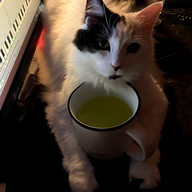
It's not complicated and it's correct.it's not complicated:
I think we heard the same thing. Since the loop is on 2 beats, I have written only 1 bar of 2beats (2/4), but this could be equally well written as 2 bars of 4/4 as you did.
here's the rhythm --- accent, embellish, ornament how you see fit --- it's not complicated:
View attachment 6982146
The main difference is that I heard it shifted by one beat with respect to what you wrote. Without more musical context to make clear which beat is the one, both are equally plausible.
I put the kick ( the 1) on the first of the 4 16th notes to make it easier for me to count.I think we heard the same thing. Since the loop is on 2 beats, I have written only 1 bar of 2beats (2/4), but this could be equally well written as 2 bars of 4/4 as you did.
The main difference is that I heard it shifted by one beat with respect to what you wrote. Without more musical context to make clear which beat is the one, both are equally plplausible.the first if teh
I didn't play it that way though. I played it as a funk fill, but I couldn't count it if I put the kicks in the correct spots. I had to shift the kicks over half a beat or so.
Maybe later today I'll put the kicks where they really go and remove the eq and use the actual start of the loop so yall can hear how it was really played.
This actually leads me to a theory question. If a note starts on a random 16th , say the 3rd 16th ( the "&" ) and the note us held for 2 16ths , does that make that note a 16th or is notes time dictated by the note length?
right, my use of multiple measures is arbitrary. mostly i was showing that there aren't any triplets or odd timings as discussed in the OP and earlier in the thread.the loop is on 2 beats
Brandon Shea
Commercial User
Two sixteenths = one eighth.This actually leads me to a theory question. If a note starts on a random 16th , say the 3rd 16th ( the "&" ) and the note us held for 2 16ths , does that make that note a 16th or is notes time dictated by the note length?
Another way to think of it: the type of note is based on how long it's held relative to a whole note.
Yes, two 16th notes have the same duration as one 8th note.This actually leads me to a theory question. If a note starts on a random 16th , say the 3rd 16th ( the "&" ) and the note us held for 2 16ths , does that make that note a 16th or is notes time dictated by the note length?
This kind of elementary knowledge is not very difficult to learn, but really essential, and if you find the time for it, it would be immensely beneficial to your musicianship.
Yes that's what I want asking and that makes sense. I couldn't understand the notation above becuase the first 4 notes are played in 16th timing, but the last not of those 4 is held. Now that I know the note length dictates the notes timing, that makes more sense.Two sixteenths = one eighth.
Another way to think of it: the type of note is based on how long it's held relative to a whole note.
I can't really read notation, but I "think" I'm reading 3 16ths and 2 8th notes. Is that correct? Or technically 2 pairs of 3 16ths and 2 pairs of 8ths per bar. (4 beats) .
So 16th,16th,16th,8th,8th 16th,16th,16th, 8th,8th makes 1 bar?
This counting stuff is weird .
No, your counting is not correct. (actually I don't even get what you mean with "2 pairs of 3 16ths...").I can't really read notation, but I "think" I'm reading 3 16ths and 2 8th notes. Is that correct? Or technically 2 pairs of 3 16ths and 2 pairs of 8ths per bar. (4 beats) .
So 16th,16th,16th,8th,8th 16th,16th,16th, 8th,8th makes 1 bar?
This counting stuff is weird .
And counting is not "weird"; it's actually quite easy if looked at the right way.
Here is what I suggest you:
order yourself a pizza; then slice it in 2 equal parts, then slice each part into 2 parts, and repeat until you have 16 equal pizza parts.
The full pizza is a 4/4 bar. Each 1/16 part is a 1/16 note. If you group together 4 1/16 parts, you have a quarter pizza (corresponding to a quarter note).
Ok, you see where I'm going to: you just replace the "counting" stuff by visualizing pizza parts.
A particular rhythm amounts to a particular part of slicing a pizza. Practice, practice, practice!
When you're done, just eat the pizza, you deserve it...
Groove Master
Commercial User
- Apr 22, 2011
- 1,808
- 1,291
- Disclosures
- Author of Groove 101, Slap 101 and Technique 101
Latest posts
-
 Are the quality on the sterling Ray 34’s and 35’s really that bad?
- Latest: FLStudiobassist
-

-

-

