
Don't mean to put anyone off but Fender used 12x12" vinyl asbestos flooring tiles to do those 'clay' dots

TalkBass has been independent since 1998. Add your voice.
Create a free account to reply to discussions, view embedded media, and browse with fewer display ads.
Join free Log in
Want zero display ads or expanded classifieds tools? Compare plans.
Don't mean to put anyone off but Fender used 12x12" vinyl asbestos flooring tiles to do those 'clay' dots
 Jim
Jim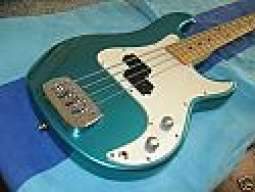
Yes, Leo never let any parts go to waste. He carried that on with him to G&L.They're all different. They were basically hand built instruments back then. A lot of 65's were still using parts as early as 62/63 with a 65 stamp on them, so the differences in the actual parts would be pretty small. It's more about the tone and playability of that particular bass - like the poster above said.


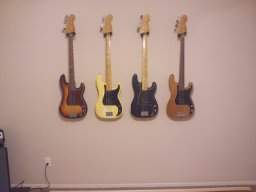

Not cut and dry, pearl dots can be found as early as during late '64. As with everything Fender, always an overlap of using up stuff while implementing new, so both those years you'll both styles.Thanks for info. so clay dots till 65, nice.
Pickups had plastic, or Teflon wire.
T
I've got a 65 Musicmaster II with a tort guard faded to cream body...I always thought it looked dorky back in the day!!The problem with tort on real vintage basses is it's hard to find a good company that makes a legit tort look. Even Fender doesn't have it down.
This company called Spitfire, I think, nails the old nitrocellulose tort look. But they're pricey. Might as well find a real vintage tort guard for a few hundo. Or just get a reissue mint guard- that'd look sweet.
I think that's the case with any of the old Fender solid colors.....faded is best which is why nitro lacquer that's been in the sun or 'aged somehow' is the best looking 'old finish' imo.Seafoam Green has to be really old and beat up to look good IMO. Mine dont look good. IMO-- Too perfect kindda
Looks like the board on my 65 Musicmaster II....mine has an "L" plate as well.As does mine. And apparently, a Brazilian rosewood board. Neck dates to January 65, btw.

No. For some reason this urban legend will not die. They are not Clay, floor tiles, asbestos or any other crazy thing people made up. The "clay" was actually a white filler material similar to wood putty. They were bright white when new. Over the years they absorbed oil from the fretboard and fingers and become a brownish clay color hence the nickname.Don't mean to put anyone off but Fender used 12x12" vinyl asbestos flooring tiles to do those 'clay' dots

Bobalu- Mamba is a snake... Did you want to say "Mambo"(Cuban), Or perhaps anything south of the border is Mamba to you?

(I can't even spell Rhumba correctly!)LOL! Told you I didn't really know! Yes, Mambo. Or wait....no, I was really thinking of the Mambo/Rumba blend. I meant to say Mumba. Yah, that's what I meant.....


 ) hehehe


