
Enjoy the benefits of a premium membership!
Upgrade Account
-
TalkBass has been independent since 1998. Add your voice.
Create a free account to reply to discussions, view embedded media, and browse with fewer display ads.
Join free Log in
Want zero display ads or expanded classifieds tools? Compare plans.
You are using an out of date browser. It may not display this or other websites correctly.
You should upgrade or use an alternative browser.
You should upgrade or use an alternative browser.
'66 Vintage Jazz
- Thread starter Sathington W.
- Start date
More options
Who Replied?

That finish looks way too shiny to be nitro from the 60's.
Just get yourself a MIM Fender Classic 60's bass used on eBay for $500. It nails the old-school Jazz vibe for cheap.

Just get yourself a MIM Fender Classic 60's bass used on eBay for $500. It nails the old-school Jazz vibe for cheap.

For around $1,200 or so you could have a Warmoth put something together to match that bass as close as humanly possible without going "customshop"
I disagree about opting for a Warmoth. You definitely don't get that thin neck you're currently enjoying with one of Warmoth's baseball bats.
I've heard nothing but good things about the road worn and classic series.

HA! You guys wont let it go.
My guess is that regardless of what it is the guy won't let it go at a reasonable price and on top of that the OP only wants to know what bass he could get that would be in his price range.
My opinion is the US 62 reissue would be the best but you would need to find one used on that price range and usually they are a bit higher than that used.
The MIM classic would be my next pick but if you can shoot for the MIA one go for it.
My guess is that regardless of what it is the guy won't let it go at a reasonable price and on top of that the OP only wants to know what bass he could get that would be in his price range.
My opinion is the US 62 reissue would be the best but you would need to find one used on that price range and usually they are a bit higher than that used.
The MIM classic would be my next pick but if you can shoot for the MIA one go for it.
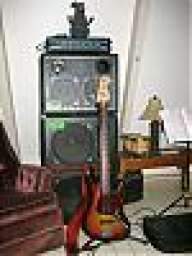
Your question was what for will play like that one for $1000 . i would say try a American Standard .should be able to find one for less then that .Look on here in the 4 sale . I bought one from Bass Emporiun and just love it . And the are really great guys to deal with as well. You are correct Fender Jazz Bass's really are nice instruments. Good luck in your hunt ...
ok, I'll jump in here, I thought this thread was dead a while back - I have a CIJ 62 Reissue jazz with Fralin PU's and it kills.
I've actually A/B'd it with my buddy's original 66 Jazz and it sounded just as good and honestly the Fralins even had more low-end than the original 66 jazz PU's.
Got it for $590 shipped (it was used)
I've actually A/B'd it with my buddy's original 66 Jazz and it sounded just as good and honestly the Fralins even had more low-end than the original 66 jazz PU's.
Got it for $590 shipped (it was used)

That finish looks way too shiny to be nitro from the 60's.
WOW nice bass even if it's not all original ...
And it's about my favorite color too, but Lake Placid Blue is not a nitro color BTW so that color tends to have little or no checking and minimal color loss. It does sometimes take on a slightly greenish tinge though.
My 73 is LPB so I did some digging on that color via the net and found some good info on a vintage guitar site ... here ya go
But you say, "acrylic lacquer? I thought Fender used nitrocellulose lacquer?". Fender used both acrylic and nitrocellulose lacquer in the color coat.
To understand Fender custom colors you have to know what the colors are based on. The answer, of course, is automobiles. In 1956 DuPont started using acrylic binders in their lacquer. This solved the yellowing problem, and to a large extent, the color retention problem too (acrylic is more UV resistant than celluloid). Also, since acrylic binders have better elasticity, the checking problem disappeared too.
Take the color, Lake Placid Blue. The paint type is "Lucite", which is DuPont's brand name for acrylic lacquer. The number, 2876L next to "Lucite", is the DuPont paint code identifying the paint formula for Lake Placid Blue (note some colors are "Duco", which is DuPont's brand name for their nitrocellulose lacquer).
If you bring the paint code 2876L to your local DuPont automotive paint dealer, you can identify which car originally used this color. In Lake Placid Blue's case, that would be a 1958 Cadillac color available in acrylic lacquer (Lucite).
If it's any help pricing wise I had a bass very much like this awhile back with a re-fined body of unsure origin but with an original 60s neck and changed pickups ... a very cool bass painted Burgundy Mist, it sold for $1200.00 at auction. At todays prices maybe $1500.00 to $2000.00.
 ... The "Road Worn" series and USA 62 and 75 reissue are nice new alternatives to vintage too, if your looking for that vibe.
It's the clearcoat that yellows on LPB, which in combination with the blue underneath makes for a deep green shade on many of the old ones.
I've seen at least one mid '60's one that had no clearcoat (a step that was often left out at the time), and the blue was very vivid, like new in fact.
I've seen at least one mid '60's one that had no clearcoat (a step that was often left out at the time), and the blue was very vivid, like new in fact.
It's the clearcoat that yellows on LPB, which in combination with the blue underneath makes for a deep green shade on many of the old ones.
I've seen at least one mid '60's one that had no clearcoat (a step that was often left out at the time), and the blue was very vivid, like new in fact.
True that! ... mine may not have the clearcoat as it very blue with no green at all.
 ... This one is from 1973 the last year of LPB

