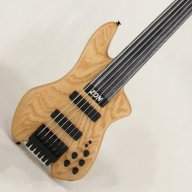
No, there really is a difference in the impedance relationship, it's not just about signal level. By way of illustration, I have had passive basses with very high output which sounded great with an old fuzz face, and I have had an active bass with somewhat low output (lower than unity compared against the same bass in passive mode) which sounded harsh and spitty with the exact same fuzz face. Additionally, with a passive bass the volume and tone knobs on the bass dramatically change the "quality" or "flavor" of the fuzz effect, and not just in terms of how clipped the signal is.
Fuzz is a different effect than overdrive; not just because is it a higher degree of clipping, but because the circuits that were mainly used to get the fuzz effect in the '60s (which have been copied ever since) happen to be very sensitive to the instrument that they are connected to. One pedal designer I read said he felt those early designs formed a complete circuit with the pickups in the instrument, as opposed to being just another processor in series.
There are loads of different ways to get "fuzz", but a classic "fuzz pedal" design, e.g. based on the Fuzz Face or Muff etc., will be sensitive to the impedance relationship with the instrument.
Because of that, a wireless will completely negate that relationship. There is an impedance relationship between the bass and the transmitter, and there is an impedance relationship between the receiver and the pedal, but there is no relationship at that point between the bass and the pedal.
Tayste and at least one other person have said that the Barge variable impedance device worked very well.