Thanks, Doc, for the good words and for starting such an uplifting thread!

Enjoy the benefits of a premium membership!
Upgrade Account
-
TalkBass has been independent since 1998. Add your voice.
Create a free account to reply to discussions, view embedded media, and browse with fewer display ads.
Join free Log in
Want zero display ads or expanded classifieds tools? Compare plans.
You are using an out of date browser. It may not display this or other websites correctly.
You should upgrade or use an alternative browser.
You should upgrade or use an alternative browser.
A Thought for Late Bloomers
- Thread starter Dr. Cheese
- Start date
More options
Who Replied?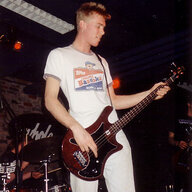
I played in bands in my 20s then had a long stretch away, though I never sold my bass and added a couple of guitars to keep noodling with. Now, empty nest (though a ways from retirement) and I’m playing music with friends again and having a ball. I’ve had friends die and seen others lose abilities with age, so I’m determined to make the most of the time and energy I have, still learning and improving on the bass.

Lou Ralls had his 1st hit at age 41. Imagine a new career, starting in your 40’s. Every age is the best age to start. The great thing is, playing bass keeps you young. Thats a fact.


Scott LaFaro was another who didn't stay long, but made waves.
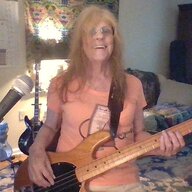
I was early to music on a sax, but didn't find a bass in my hands until living past forty. It was a quick transition and came naturally, starting to gig in less than a year. My hands and dexterity are now compromised by a genetic condition that affects a good bit of my body periodically. Letting go of being used to easy gains has been difficult and setbacks can stop me in the water for months at a time, reinforced with pain. The challenge is to persist and find what truly motivates our actions, appreciating the process rather than the results. The goal is not to win, but rather to play at this point.
I was early to music on a sax, but didn't find a bass in my hands until living past forty. It was a quick transition and came naturally, starting to gig in less than a year. My hands and dexterity are now compromised by a genetic condition that affects a good bit of my body periodically. Letting go of being used to easy gains has been difficult and setbacks can stop me in the water for months at a time, reinforced with pain. The challenge is to persist and find what truly motivates our actions, appreciating the process rather than the results. The goal is not to win, but rather to play at this point.
- Oct 22, 2015
- 21,155
- 256,591
- Disclosures
- I am an affiliate for Ari Cap.
"Second bloomer" is more how I imagine myself to be.
Grew up with a traditional public school musical education. Learned to play piano (sort of, lol.), and how read music, Play sax in band, and put it all down when I start prep school. We have no music classes when I am there (they do now!).
Buy my StingRay just about this time of year in 1979. Pass my audition with Pat Hicks at Musicians Institute on 8 December, 1980.
The paycheck that keeps a roof over my head comes from Hearst Newspapers, where I rise from reporter to editor. It's a colorful life :: laugh :: My band, our band, is a sort-of New Riders of the Purple Sage kind of thing. We play to the San Fernando Valley hippie crowd.
And I am just in conversation elsewhere now about this: the more deeply I move into my newspaper career, the further away I get from music. The bass goes "under the bed" when I am at Medill for my master's. Then the fun begins ... it's a different kind of fun, but it's fun to me. There just aren't many people who do what I do. My essential contract with my fine employer is "the newspaper goes to press on your watch". The "or else" part is implied.
Keep the bass all along, and there it is when I am retired. I haven't forgotten ....
Buy a copy of Ari Cap's Music Theory for the Bass Player around 2017, I guess. She writes me when I register the book (which opens the portal to the videos): "what do you want to do?"
What I do is join the beta Music Theory for the Bass Player cohort. The purpose of the cohort is everybody works on the same material at the same time, with accountability. This rings true for me because who knows how many bass books I have that I never finished? I have a book on slap that I bought in 1980, and never got past the first page. Still haven't.
Buy my Nordstrand Cat bass as a thank you to myself for completing the MTftBP cohort the second time. StingRay goes to Santa's Workshop for seven months in the time of The Thing That's Going Around, and comes back "factory fresh" and playable again.
It's around that time Ari asks if I would like to be a volunteer coach for the next cohort. "Yes, thank you," I reply. Today I'm the volunteer cohort "uber coach", and continue my own lessons with Ari. I'm taking her Rhythm Matrix course for the second time. We just started, and I have homework
Grew up with a traditional public school musical education. Learned to play piano (sort of, lol.), and how read music, Play sax in band, and put it all down when I start prep school. We have no music classes when I am there (they do now!).
Buy my StingRay just about this time of year in 1979. Pass my audition with Pat Hicks at Musicians Institute on 8 December, 1980.
The paycheck that keeps a roof over my head comes from Hearst Newspapers, where I rise from reporter to editor. It's a colorful life :: laugh :: My band, our band, is a sort-of New Riders of the Purple Sage kind of thing. We play to the San Fernando Valley hippie crowd.
And I am just in conversation elsewhere now about this: the more deeply I move into my newspaper career, the further away I get from music. The bass goes "under the bed" when I am at Medill for my master's. Then the fun begins ... it's a different kind of fun, but it's fun to me. There just aren't many people who do what I do. My essential contract with my fine employer is "the newspaper goes to press on your watch". The "or else" part is implied.
Keep the bass all along, and there it is when I am retired. I haven't forgotten ....
Buy a copy of Ari Cap's Music Theory for the Bass Player around 2017, I guess. She writes me when I register the book (which opens the portal to the videos): "what do you want to do?"
What I do is join the beta Music Theory for the Bass Player cohort. The purpose of the cohort is everybody works on the same material at the same time, with accountability. This rings true for me because who knows how many bass books I have that I never finished? I have a book on slap that I bought in 1980, and never got past the first page. Still haven't.
Buy my Nordstrand Cat bass as a thank you to myself for completing the MTftBP cohort the second time. StingRay goes to Santa's Workshop for seven months in the time of The Thing That's Going Around, and comes back "factory fresh" and playable again.
It's around that time Ari asks if I would like to be a volunteer coach for the next cohort. "Yes, thank you," I reply. Today I'm the volunteer cohort "uber coach", and continue my own lessons with Ari. I'm taking her Rhythm Matrix course for the second time. We just started, and I have homework
Last edited:
Didn’t get married until i was 55, so i got that going on for me, which is nice. Took 54 years to find someone willing to put up with my $#it. Theres hope for everyone, honestly.

One of the benefits of being older is hopefully improved attention span, ability to focus, and a sense of how you learn. The big downside for many is time. I have been learning electric guitar for the last six or so months, and plan to put bass on the backburner for a least a year to focus on it heavily. It's great fun, and it's an opportunity to "start over from the beginning, but with the benefit of knowledge I now have".
My best sellers:
What I Could Have Done
What I Wish I'd Done
. . . and of course, my evergreen tech tome,
It Was Working Until I Fixed It, Vols 1 and 2.
In my time I've made every mistake in the book to where I had to start a second book
However, these are the foibles we live through as all-too-human people in a world filled with ups and downs and lefts and rights. It ain't easy.
I got here from all of those there's and the only thing we can do about all the coulda/shouldas is not to let them haunt us, but learn from them and carry on today as best we can
I often find the great advantage of age is the new book I'm working on. . .
I'd NEVER Do That Again.
What I Could Have Done
What I Wish I'd Done
. . . and of course, my evergreen tech tome,
It Was Working Until I Fixed It, Vols 1 and 2.
In my time I've made every mistake in the book to where I had to start a second book
However, these are the foibles we live through as all-too-human people in a world filled with ups and downs and lefts and rights. It ain't easy.
I got here from all of those there's and the only thing we can do about all the coulda/shouldas is not to let them haunt us, but learn from them and carry on today as best we can
I often find the great advantage of age is the new book I'm working on. . .
I'd NEVER Do That Again.
Back in the day, long distance runner Craig Virgin said that athletes like him didn't hit their peak until their late twenties because it took that long to develop the required lung capacity.
Frank McCourt taught high school English for decades before publishing Angela's Ashes at age 66.
The reverse side of the coin: I'm in complete agreement with Glenn Gould - the stunning child prodigy Mozart isn't worth the bother.
What do you do with the rest of your career when you've already said a ton before you can drink legally?
To my ears, the 19 year old Wynton Marsalis in Herbie Hancock's quartet is far superior to the jazz police precinct captain Wynton.
Frank McCourt taught high school English for decades before publishing Angela's Ashes at age 66.
The reverse side of the coin: I'm in complete agreement with Glenn Gould - the stunning child prodigy Mozart isn't worth the bother.
What do you do with the rest of your career when you've already said a ton before you can drink legally?
To my ears, the 19 year old Wynton Marsalis in Herbie Hancock's quartet is far superior to the jazz police precinct captain Wynton.

JazznFunk
Supporting Member
The thing that revolutionaries like LaFaro, etc didn't have that the rest of us do is the benefit of advancing years for sure. But Lafaro was a sax player before he became a bassist.... he already had those concepts of music regardless of instrument in his head and blood. I agree that not everyone has that initial 'hit' of creativity and flourish when they're young. We have to put in the work. I had a lot to 'say' in my late teens and early 20s when I had more energy and chops than sense, but I feel like I for sure make far better music now than I did then. Composition, soloing, and every aspect of my ears are far better now than they were then. I didn't start playing music in any form until I picked up the bass in my last 2 years of high school, so to a lot of people that's considered being a 'late bloomer', when some were taking music lessons very young, or came from musical families. What I lacked in talent and being surrounded by music in my family, I made up for in determination and focus and a pretty natural sense of time and sound, which was also helped along by an interest in recording and studying records even before I ever thought about playing an instrument. Everything is a brick in the foundation.

It's always great to keep on playing and learning, but I have often thought to myself that the older I get, the harder it gets to improve. All those greats that were visionaries and virtuosos by the age of 27; well there's the sweetspot spot to gain that knowledge and have that creativity: age 5 - 30. That's when you have the ability (and usually the time) to take it all in, provided that you are disciplined and focused. After that, it can be done, but it is more difficult.
I wish I had my current discipline and focus with my younger time, energy and retention abilities.
I wish I had my current discipline and focus with my younger time, energy and retention abilities.
How many years you’ve been playing is irrelevant. It’s what you’ve done with those years I’ve seen plenty of people who have been playing 30+ years who are mediocre at best. I also know a handful of people who worked their assets off and got good in a relatively short time.
Don’t wish you had been playing longer - make the best of the time you have now.
Don’t wish you had been playing longer - make the best of the time you have now.

- Dec 21, 2007
- 15,227
- 45,045
- Disclosures
- Lark in the Morning Instructional Videos; Audix Microphones
Thanks for this post, @Dr. Cheese . It's a much appreciated reminder.

When I mentioned young geniuses, it was to stress that a great player can make her or his mark quickly once one has a concept.
My point is among us older people, some of us have some good ideas that need to be unleashed, and that can happen if we make the effort.
My point is among us older people, some of us have some good ideas that need to be unleashed, and that can happen if we make the effort.
JazznFunk
Supporting Member
I started playing bass when I was 20, and I'm 60 now. I never really studied as much as I should have. I think that nowadays access to information is tremendous and the only people who don't learn to play well are those who don't want to.
I sometimes think it's information overload, and with YouTube, people routinely think they have to be a bass Olympian to be 'relevant.' I think in some cases if people don't learn to play well it's because they're trying to be all things all the time, before the basics are absorbed with a decidedly limited, yet function set of information.
When I started in '97/'98 I had 'The Bass Player Book', published by Bass Player Magazine, a few printouts from somewhere on the web with modes and scales, and a beginner book with companion playalong tracks for pop stuff like 'Brown Eyed Girl', 'Wonderful Tonight', and a few other songs. I also loved to play along with the radio and CDs, and was a big blues fan from the start. In short, I had to focus on the materials available to me, well before YouTube, in a rural Southern town with only one tiny music store.

i'm an older person, i've had some good ideas, and here's my effort, unleashed = keep your fretless......and keep playing it!My point is among us older people, some of us have some good ideas that need to be unleashed, and that can happen if we make the effort.


Pablo Casals continued to practice several hours a day at age 80 because he said he was still making progress.
Then he went and married a 20 year old woman.
When asked about their 60 year age gap, he said: "I look at it this way. If she dies, she dies."
That candle that Casals was burning, I think it had like 5 ends. He had them all lit and ran them all the way down.
Then he went and married a 20 year old woman.
When asked about their 60 year age gap, he said: "I look at it this way. If she dies, she dies."
That candle that Casals was burning, I think it had like 5 ends. He had them all lit and ran them all the way down.
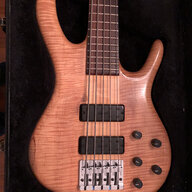
I'm 61,and I am getting back into bass guitar again.I just picked up a Traben 5 string chaos for a little over 100.00, and from the reviews I have seen I got a good deal!! I love this bass, it's like having 3 bass's in 1.This thing play's great,has great tone and I like the active electronics.What do you think?


