
I watched a video with a guy from EMG who explained that one huge advantage of an active set-up is that you can get a loud instrument while having pick-ups with a relatively low number of winds. That's because the active pre-amp (in the pick-ups and/or the pre-amp itself) give that volume boost. A pick-up with low winds pulls on the strings less, so you get more free vibration of the strings, which means more tone and sustain. So, even with a flat EQ, you're still getting a lot of tone from an active set-up that you'd lose with in a similarly loud passive set-up. As others have mentioned, there's also the fact that active instruments have powerful built-in buffers, so you don't lose tone through cables, pedals etc. That's part of the reason why Leo was messing with active circuits even in the 60s and eventually put them in Musicman basses, it removes lose of tone as an issue.Maybe this would be better for the electronics forum, if so, tell me. But I have an active bass and have played active basses pretty much for the entirety of my bass career. I’m not pro or anti active bass, it just happens to be the ones that I found for a good price that sounded good.
Anyway, here’s my question. Sometimes I tweak with the eq a bit… but I always ALWAYS find myself settled into the notches that indicate a “flat” setting. I know the depending on the onboard preamp it isn’t truly flat. I’m usually always playing with the volume at full unless I’m practicing at home. Is there a point to having a preamp that point? I mean… would the sound be any different if it was passive?

Enjoy the benefits of a premium membership!
Upgrade Account
-
TalkBass has been independent since 1998. Add your voice.
Create a free account to reply to discussions, view embedded media, and browse with fewer display ads.
Join free Log in
Want zero display ads or expanded classifieds tools? Compare plans.
You are using an out of date browser. It may not display this or other websites correctly.
You should upgrade or use an alternative browser.
You should upgrade or use an alternative browser.
Active bass…but never tweak?
- Thread starter Lit311
- Start date
More options
Who Replied?
Is there a point to having a preamp that point? I mean… would the sound be any different if it was passive?
When the instrument comes with no passive bypass, it's a moot point. Like you, I seldom touch the EQ on mine. I do work the volume, though, same as with passive basses. I start out at about 75% up so I have room to dial up or down mid-siong without having to go to the amp.


I'm with the OP. Though, I've played active basses about equally as passive, I 99% of the time just keep the controls on the active basses at neutral, occasionally cutting treble if the controls don't have a tone control (i.e. Lakland 55-02). I feel that most of the time the EQ points are just not set at a good spot for most preamp circuits. Bass at 50Hz? No thanks. Mids set at 1.1kHz? Definitely no thanks.
Now if there was an onboard preamp available out there that could be fully parametric? THEN I would definitely be tweaking that.
Now if there was an onboard preamp available out there that could be fully parametric? THEN I would definitely be tweaking that.

This is what I like about having active EQ. I found myself playing in a wide variety of acoustically horrible rooms. I use the EQ on the amp to correct for the room and then use the active controls on the Bass to get my preferred tones.

Same here. I go a little extra on lows, drop the mids down, little extra on the highs,I used to fiddle with the knobs constantly. These days I’ve found that once I dial in what I am going for at the start of the gig the only thing I ever touch is the pickup blend so I can get more bridge/neck on certain songs.
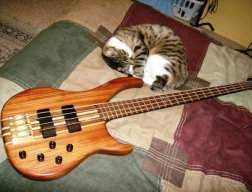
SO agree with this !!! I am the same. I play with mine a tad + or - than "flat" as well. I will take the clarity, punch, and no annoying 60 cycle hum from active pups. Not that passive can't be punchy, but active seems more responsive to me. I also like the built in compression that seems to come from my Cirrus basses. I also love my SIRE because it has EVERYTHING I love, and a passive feature, too.Alright. So, I’m not crazy! There is a difference. Forums like this are so awesome. I love learning new things.
Again, great! So, I’m not completely crazy.
You know. I never thought of that. I’ve never really played passives much… so that seems like a big plus for using actives to me. Also, just changing the volume, not the tone. Like… duh! That’s a no brainer. I can’t believe I didn’t think of that.

Depends on the preamp. The most common (in my experience)onboard pres are shelving EQs which aren't particularly useful. To me that means making really minor changes that result in significant results so the controls remain mostly intact.
If you boost the bass on these kind of pre's you end up clipping the signal and if you boost the treble you end up with piercing highs. Usually the mids are centered on a frequency and end up being the most usable controls for tone shaping.
Now semi parametric pres and more specialized pres with centered frequencies work best but are usually found on more expensive offerings.
Anyway that's just my poorlye made hypothesis.
If you boost the bass on these kind of pre's you end up clipping the signal and if you boost the treble you end up with piercing highs. Usually the mids are centered on a frequency and end up being the most usable controls for tone shaping.
Now semi parametric pres and more specialized pres with centered frequencies work best but are usually found on more expensive offerings.
Anyway that's just my poorlye made hypothesis.

If you use a lot of EQ, you add noise and distortion - a simple fact. But - - give me active electronics every day of the week. I love the added flexibility and the hotter output signal. I'm keeping my Ric passive - - but everything else has to be active.

My Yamaha TRBX305 has a switch for different "baked-in" tones.
Solo
Finger
Flat
Pick
Slap
I will only fiddle with the eq if I'm going for a particular sound within those sounds.
Solo
Finger
Flat
Pick
Slap
I will only fiddle with the eq if I'm going for a particular sound within those sounds.

…would the sound be any different if it was passive?
Most of my playing out was on an active bass. It was simple, a stacked V/B and a stacked treb/bass. Everything but volume was indexed. I used the index points as my starting point then played and adjusted volume then balance, usually favoring neck. Next came bass, usually favoring just a little and treble added until I got what I wanted. Play some more and make final adjustments and go. It didn’t take much to really alter your output. It also featured a passive setting. You could just roll the switch up two spots and go from active to passive.
It sounded pretty close, but not as lush, and at much lower volume.

Maybe this would be better for the electronics forum, if so, tell me. But I have an active bass and have played active basses pretty much for the entirety of my bass career. I’m not pro or anti active bass, it just happens to be the ones that I found for a good price that sounded good.
Anyway, here’s my question. Sometimes I tweak with the eq a bit… but I always ALWAYS find myself settled into the notches that indicate a “flat” setting. I know the depending on the onboard preamp it isn’t truly flat. I’m usually always playing with the volume at full unless I’m practicing at home. Is there a point to having a preamp that point? I mean… would the sound be any different if it was passive?
Good question. I have a 2006 MIG active/passive Warwick Corvette. Most of the time it’s played in active mode, blend set at the detent and no cut it boost added. I found the the bass is much more articulate and cleaner in the active mode, than passive.
For some reason, the frequencies that get boosted or cut, are not useful. When you boost the bass the low mids disappear making it hard to hear in the mix. Cut, it sounds clunky. As for the treble, it’s too shrill when boosted, and it gets dull sounding when cut.
For the most part, I have a good EQ on my Eden amps (Mesa WD-800 EQ is very similar) I really don’t need an onboard EQ in addition. It’s pretty rare I use anything other than setting tone controls on the amp to flat, then boosting 165hz a few clicks. But that’s not going to work for players who are playing material that require dramatic changes in their EQ but making repeated EQs on an amp a non starter.
My thought is if you really don’t mess with your EQ a lot, especially mid song, your amp has a baked in sound you don’t care for, or your amp doesn’t have the EQ features that will allow you to get “your sound”, IMO, an active bass is a bit of overkill.
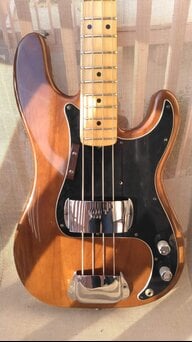
I've also always played my active basses at flat setting.
As my taste and playing has evolved over the years I now prefer single pickup passive basses. My reason being I use my right hand to control my dynamics in volume and passive basses seem more responsive. Single pu basses are usually in the sweet spot between where the neck and bridge pu would be.
Active basses are more consistent volume wise like using a compressor...Players that like using compression probably find active basses much more consistent.
As my taste and playing has evolved over the years I now prefer single pickup passive basses. My reason being I use my right hand to control my dynamics in volume and passive basses seem more responsive. Single pu basses are usually in the sweet spot between where the neck and bridge pu would be.
Active basses are more consistent volume wise like using a compressor...Players that like using compression probably find active basses much more consistent.
Last edited:
If anything, you may be doing yourself a favor:
I see and hear lots of guys with active pickup setups with 2- or 3-band EQ on the bass, which they've really cranked up, going down the cable to their amp, where they have the EQ all jacked to either add even more, or even more surprisingly to thin out what's coming from the bass ! ! !
Then they always wonder 'why does my amp sound muddy ?'
Sometimes, you just shake your head. In audio, less is always more, so think of it that you're sending a very clean signal down the cable and letting the amp do what it does. Can't go wrong like that.
And I too always prefer a real low-impedance pickup (think EMG, Alembic, etc.) and active tone networks to passive. I have passive basses I really like, not a problem at all, but for the reasons cited above, I think active setups offer advantages, and I never developed the Fear of an Itty-Bitty Battery, that pandemic always simmering here on TB, whereby grown, hairy-legged men live their lives in mortal fear of that 9v battery they see in their nightmares. . . . .
I see and hear lots of guys with active pickup setups with 2- or 3-band EQ on the bass, which they've really cranked up, going down the cable to their amp, where they have the EQ all jacked to either add even more, or even more surprisingly to thin out what's coming from the bass ! ! !
Then they always wonder 'why does my amp sound muddy ?'
Sometimes, you just shake your head. In audio, less is always more, so think of it that you're sending a very clean signal down the cable and letting the amp do what it does. Can't go wrong like that.
And I too always prefer a real low-impedance pickup (think EMG, Alembic, etc.) and active tone networks to passive. I have passive basses I really like, not a problem at all, but for the reasons cited above, I think active setups offer advantages, and I never developed the Fear of an Itty-Bitty Battery, that pandemic always simmering here on TB, whereby grown, hairy-legged men live their lives in mortal fear of that 9v battery they see in their nightmares. . . . .

Is there a point to having a preamp that point? I mean… would the sound be any different if it was passive?
You do realize you have already answered your own question. You said, "It just happens to be the ones that I found for a good price that sounded good."
I usually run the volume control on the bass wide open, and the tone controls in their center detente. Sometimes it's nice to have quick access to bass and treble (on the bass). Usually I try to get my basic sound by adjusting the amp, and then if I need to tailor the tone specifically to a song, I will reach for the controls on the bass.
I have heard some truly fabulous sounding passive basses. In my experience, many tend to be a bit noisier than active. All three of my passive basses have single coil pickups, so they tend to hum a bit. Basses with humbuckers don't tend to have this problem.

I used to play my active basses in the “flat” position as well. But recently, because I installed Delano’s Sonar preamp, I noticed that if I turn the knobs, it adds their color/flavor that is distinct to their preamp. So lately, I’ve been turning up the knobs BUT……they’re turned up evenlyMaybe this would be better for the electronics forum, if so, tell me. But I have an active bass and have played active basses pretty much for the entirety of my bass career. I’m not pro or anti active bass, it just happens to be the ones that I found for a good price that sounded good.
Anyway, here’s my question. Sometimes I tweak with the eq a bit… but I always ALWAYS find myself settled into the notches that indicate a “flat” setting. I know the depending on the onboard preamp it isn’t truly flat. I’m usually always playing with the volume at full unless I’m practicing at home. Is there a point to having a preamp that point? I mean… would the sound be any different if it was passive?

I do, however, make adjustments once in a while but I usually like to have an even EQ.

I just got my first active BG, and I just leave it flat, or play in passive mode. I'm probably just not skilled at manipulating it yet, but every time I try to make an adjustment it mostly sounds bad to me. I'm trying to get my head around the mid boost/cut, because I do see how it would be good to adjust that from song to song, but I'm not there yet.
I love the flexibility an onboard pre offers. Both to have the option to dial in your sounds at your bass, as well as the variety of tones if needed. I really don't care for twisting knobs on my amp at a gig. I set everything on amp @ 12:00, and usually start with everything set at the detents on bass and make minor adjustments for the room.


Yes, actually. The difference is quite significant. A low impedance line out means cable capacitance is a non-issue at realistic lengths. You lose virtually no high end even with long sends, and you can use your volume without it affecting your tone.
This can be done without resorting to active circuitry on board - by adopting a lower impedance in the pickups, and doing capacitive loading on board (my basses are wired this way), you can make the bass much less affected by cable capacity, and have a volume control that works like a volume control, not a blend of volume and tone. Professional microphones have operated with lower impedances for decades - they don't lose high end with long cables. We're still living with some choices Leo made that aren't completely ideal.
One detail, however - people talk about not wanting to lose high end. If you ever heard a pickup that wasn't loaded capacitively (they all are to some extent), you'd realize that is NOT what you want. Most basses have 20dB or so of rolloff at 10 kHz when you consider a reasonable length of cable. Any active bass has to incorporate some rolloff, or the tone will bite your head off.
One reason I like my basses passive is that, with the eq on a pedalboard (Source Audio EQ2), I have much more flexibility in setting EQ than I would with 2 or 3 knobs on the bass. i'm picky enough about the frequencies that make me happy that the chance that a bass manufacturer is going to put the frequency centers of eq sections where I want them is just about zero. Even if I had active basses, I'd still need a pedalboard, so the idea of putting eq on the bass makes no sense for me.
Last edited:


