• TalkBass has been independent since 1998. Add your voice.
    Create a free account to reply to discussions, view embedded media, and browse with fewer display ads.
    Join freeLog in
    Want zero display ads or expanded classifieds tools? Compare plans.

Adapting to my tiny hands.

I have exceptionally tiny hands. On top of this, I severely broke my fretting hand when I was younger, so have very limited dexterity in my ring and pinky fingers.

Still, I am convinced that this nut can be cracked.

I am able to use my pinky for 5ths and octaves at any part of the neck. My pinky is as strong as it’s going to be. My main issue is with the “Finger Per Fret” concept - on the two thinnest strings, I can play linear things, walking up frets. On the lower strings, I’m just unable to adjust my hand in a way that doesn’t generate intense pain.

Is this possibly a biomechanics issue? Something fixable by technique adjustment? Willing to pay to be assessed by someone with experience in this, just don’t want to be held back by this any longer.
 
I've got small hands and I've found that for me, 32 inch is far more comfortable than 34 inch. If I'm being honest, I would probably do even better with 30 inch.

What scale are you using? 34 inch, 32 inch, or 30 inch? If you're using a full-scale 34 inch neck, I'd strongly encourage you to try a medium or short scale. There's no point in struggling when you can be so much more comfortable.

I started by using the Index, Middle, Pinky (Simandl) approach, especially below the 7th fret, but as I get better I'm able to so some degree of OFPF. However, OFPF in my case means a fair amount of shifting and micro-shifting. There's just no way I will ever be able to physically stretch the way larger-handed folks can using OFPF without seriously damaging my hands. So, it's 3 fingers or 4 depending on where on the neck, but usually with some shifting.
 
I believe your attitude toward this will push you through. I don't have an answer, but I would suggest looking at videos of some child prodigies on both guitar and bass. When we want to do something badly enough we find a way, despite what our handicaps might be. And while many will probably disagree, I'd also advise you to let go of learning any "proper technique," and start looking for what will work best for you. I have small hands. I can't read music or understand theory despite 100 attempts at trying to learn. Not only did I never let any of those things hold me back, I never considered them a handicap.
 
I've got small hands and I've found that for me, 32 inch is far more comfortable than 34 inch. If I'm being honest, I would probably do even better with 30 inch.

What scale are you using? 34 inch, 32 inch, or 30 inch? If you're using a full-scale 34 inch neck, I'd strongly encourage you to try a medium or short scale. There's no point in struggling when you can be so much more comfortable.

I started by using the Index, Middle, Pinky (Simandl) approach, especially below the 7th fret, but as I get better I'm able to so some degree of OFPF. However, OFPF in my case means a fair amount of shifting and micro-shifting. There's just no way I will ever be able to physically stretch the way larger-handed folks can using OFPF without seriously damaging my hands. So, it's 3 fingers or 4 depending on where on the neck, but usually with some shifting.

Hilariously, my main instrument is a 34-37" Multiscale, and then my other is a 34" Jazz Bass. I have used a 30" Stingray and it gave me very serious "Fat Guy in a Little Coat" vibes :(. Was slightly more comfortable to play but I still struggled with pinky dexterity. Ended up selling it. I have thought about trying a 32" bass, but I play 5 string primarily, and I'm terrified of the "Flabby B string".

I should work on my Simandl and Micro-Shifting. Thank you for those things to work on :)
 
I believe your attitude toward this will push you through. I don't have an answer, but I would suggest looking at videos of some child prodigies on both guitar and bass. When we want to do something badly enough we find a way, despite what our handicaps might be. And while many will probably disagree, I'd also advise you to let go of learning any "proper technique," and start looking for what will work best for you. I have small hands. I can't read music or understand theory despite 100 attempts at trying to learn. Not only did I never let any of those things hold me back, I never considered them a handicap.

Hey, thank you for this. You've given me more things to consider and for that I am grateful. I appreciate the encouragement.
 
I should work on my Simandl and Micro-Shifting.

I'm a drummer, first and foremost. We've got lots of grips (matched, traditional, French Timpani, German, American, etc), lots of techniques (Moeller, Gladstone, finger-control, push-pull, etc) and they all have a place and they can all solve specific problems.

I'll never understand why anyone would get dogmatic about OFPF (I've see some of that as I've been learning the instrument). It's only one technique of at least two that I'm aware of. Getting as comfortable as possible with both just seems natural and sensible to me. I've seen a fair amount of posts on TB from folks like us who split the fingerboard at around the 7th fret (plus or minus).

I try to lean on the baseball player's mantra about hitting: "Trust your hands." I try to trust my hands to shift in time.

Edited to add: I don't think I'd have even bothered taking up bass if I hadn't watched this.

 
I have average sized hands, but an extremely short pinky. It's very difficult to reach notes at or above the 12th fret on the B, E, and A strings. My solution is simple: use the ring finger instead. This is much more fluid and comfortable than bending my fretting-hand wrist at a drastic angle to get my pinky up there. I also prefer to make small shifts with my hand rather than stretching to get from one note to another.
 
i 100 was in a similar boat. was 6 weeks premature so i have small hands and feet. there are 2 things i found are game changers for playing. i NEED a thin neck. it helps a lot for left hand stuff. the other is cliche but hard repetition and muscle memory will help build dexterity.
i got sick of my limited reach on fret range and that pushed me to do a lot of tapping and learn more right hand stuff. but at the end of the day its going to come down to finding a bass you are extremely comfortable with practicing a ton.
 
Your hand injury has left you with some disability, so any "proper" technique may be irrelevant. Experiment and find your own path. If a technique causes pain, stop and know that's not the way forward.

I have small hands and I've gravitated to short scale because I fend them much easier to play. Going with a shorter scale may help you out or not, but it's worth a try.
 
Forget the one finger per fret concept and do what works for you. My opinion is throw out all the rules and do what works best for you. Playing bass should NOT be painful or make you miserable.
This.

Play simpler bass lines requiring less fretting hand agility. Get creative with plucking hand techniques. You might just find your own signature style.
 
  • Like
Reactions: seescottrock
I have exceptionally tiny hands. On top of this, I severely broke my fretting hand when I was younger, so have very limited dexterity in my ring and pinky fingers.

Still, I am convinced that this nut can be cracked.

I am able to use my pinky for 5ths and octaves at any part of the neck. My pinky is as strong as it’s going to be. My main issue is with the “Finger Per Fret” concept - on the two thinnest strings, I can play linear things, walking up frets. On the lower strings, I’m just unable to adjust my hand in a way that doesn’t generate intense pain.

Is this possibly a biomechanics issue? Something fixable by technique adjustment? Willing to pay to be assessed by someone with experience in this, just don’t want to be held back by this any longer.

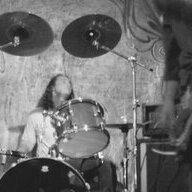
Forget 1-2-3-4. 30" scale, 1-2-4 fingering-use ring and pinky as one.
 
  • Like
Reactions: seescottrock