I know this topic has been discussed many times. I wanted to contact Jake deVilliers via his website but don't seem to be able to access it at this point. I know this is a subject that his business deals with a lot.
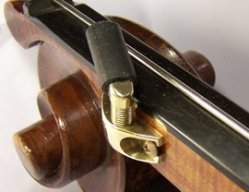
I have a Jay Haide bass that I bought here in Perth (Australia) earlier this year. I only played it for a brief period in the so-so setup that came from the shop before taking to a local luthier for setup. He installed a new bridge and soundpost and also (on the urging of the local classical shop) installed a ZMT Tailpiece. The shop is the importer and stockist of the tailpieces and raved about the positive difference they had made to smaller members of the violin family, but had yet to install one on a bass. The luthier echoed those comments (with no financial motivation to do so). The bass came with a Wittner composite tailpiece installed. The bass has Bel Canto strings and is used 60% arco / 40% pizz.
After the setup the bass understandably responded very well and played very nicely. Unfortunately, one of the first things I noticed is that notes B & C (played anywhere on the fingerboard) caused a very strong sympathetic response from the afterlengths, especially the very long E afterlength which happens to be tuned to B according to the installation instructions supplied with the tailpiece. Due to the heavily slopping nature of the afterlengths, and the fact that only the E afterlength can be tuned, the other afterlengths are all sorts of random notes. I spoke to Zoran, the manufacturer and designer of the tailpiece, who suggested I tune the E afterlength to a different pitch. Trying this only seemed to move the sympathetic response to a different note. Using some material to dampen the E and A afterlengths helps a lot, but you can clearly hear a different pitched sympathetic response from the D and G afterlengths. Of course I can dampen all the afterlengths but this seems to defeat the purpose of having a 'fancy' tailpiece, right?
The tailpiece weighs 177g from memory, and is installed not with the kevlar cord that it came with, but rather with the Wittner adjustable cable that I had from the original tailpiece.
I would greatly appreciate your advice and input on this situation.
I have a Jay Haide bass that I bought here in Perth (Australia) earlier this year. I only played it for a brief period in the so-so setup that came from the shop before taking to a local luthier for setup. He installed a new bridge and soundpost and also (on the urging of the local classical shop) installed a ZMT Tailpiece. The shop is the importer and stockist of the tailpieces and raved about the positive difference they had made to smaller members of the violin family, but had yet to install one on a bass. The luthier echoed those comments (with no financial motivation to do so). The bass came with a Wittner composite tailpiece installed. The bass has Bel Canto strings and is used 60% arco / 40% pizz.
After the setup the bass understandably responded very well and played very nicely. Unfortunately, one of the first things I noticed is that notes B & C (played anywhere on the fingerboard) caused a very strong sympathetic response from the afterlengths, especially the very long E afterlength which happens to be tuned to B according to the installation instructions supplied with the tailpiece. Due to the heavily slopping nature of the afterlengths, and the fact that only the E afterlength can be tuned, the other afterlengths are all sorts of random notes. I spoke to Zoran, the manufacturer and designer of the tailpiece, who suggested I tune the E afterlength to a different pitch. Trying this only seemed to move the sympathetic response to a different note. Using some material to dampen the E and A afterlengths helps a lot, but you can clearly hear a different pitched sympathetic response from the D and G afterlengths. Of course I can dampen all the afterlengths but this seems to defeat the purpose of having a 'fancy' tailpiece, right?
The tailpiece weighs 177g from memory, and is installed not with the kevlar cord that it came with, but rather with the Wittner adjustable cable that I had from the original tailpiece.
I would greatly appreciate your advice and input on this situation.