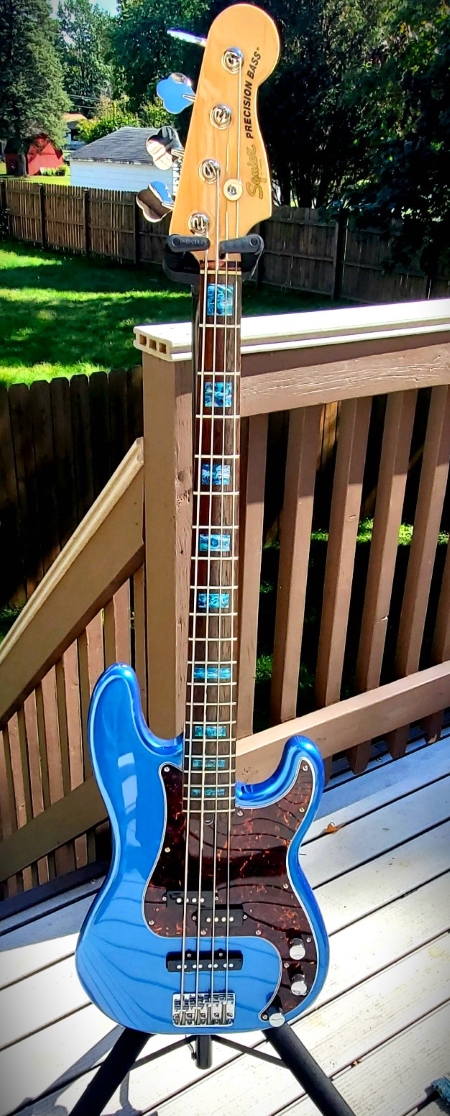
I wouldn´t benefit from the markers, but i find the pattern
strangely pleasing to look at...
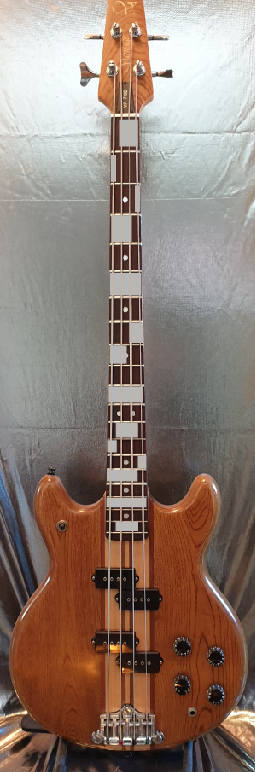
strangely pleasing to look at...

TalkBass has been independent since 1998. Add your voice.
Create a free account to reply to discussions, view embedded media, and browse with fewer display ads.
Join free Log in
Want zero display ads or expanded classifieds tools? Compare plans.
It looks like those markings would be helpful if you only ever play in very specific keys, and a hinderance in any other key. And if you only ever play in those keys, you'll be extremely familiar with the notes and the ultra-specific fret markings will be redundant.I've been meaning to learn my fret-board for years. I'm getting fairly good about it. In the process, I've been wondering why the markers aren't laid out similar to a piano where the sharps/flats are black keys. Yes, I know the 3rd, 5th, 7th, 9th, 12th, etc is tradition and marks the harmonics of the strings, but for me, at least right now, that is not as helpful. (I tried to get AI to draw a nice image, but I just made one directly since AI couldn't understand what I was asking for.)
Thoughts?

Same. I play seated and it doesn't take much to tilt the board back and see it.I don't get the "can't see the fretboard" thing, I don't play "all hunched over", and I can see it just fine.
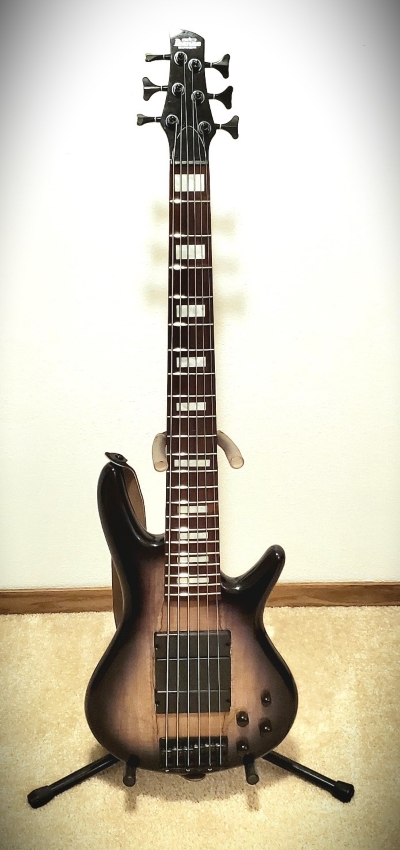
If you really want to learn the fretboard, keep it simple. Start with just the first 5 frets. Literally just start on open E and play each natural note going up to the 5th fret on each string, saying its name out loud. Go from open E up to C on the G string, and back down. Then do the same thing with the accidentals (sharps & flats). Do that at least once a day, every day. It sounds mundane but sometimes that's all it takes.
Once you get that down, do it from frets 5 through 10. Play & say the naturals; play & say the accidentals. Then add frets 11 & 12. Once you get to 12, everything you just learned repeats. The fretboard is a bunch of parallel patterns. You'll start recognizing them.
 This is just the state I'm at in furthering my enjoyment of this hobby.
Totally get what you're saying. And i think knowing the the fretboard better will make the hobby easier and more fun, which i think you're also saying.Yes, yes, yes. This is what I'm getting at. The alternate fret markers I posted help me instantly know where the whole notes are for standard tuning. I've been playing for 40+ years as a hobby. I picked it up in my high school youth group choir and got decent for a year or two, but it got relegated to the occasional noodling around over the years. I played trombone for a year then french horn for 5 years in middle and high school and I knew the bass and treble clef quite well as it related to those two instruments. But, that was all 40 years ago. Most of my hobby since then has been listening to and appreciating the talent of musicians by way of collecting a couple thousand albums (LPs and digital) over the years. (Along with sailing, motorcycles, airplanes, photography....)
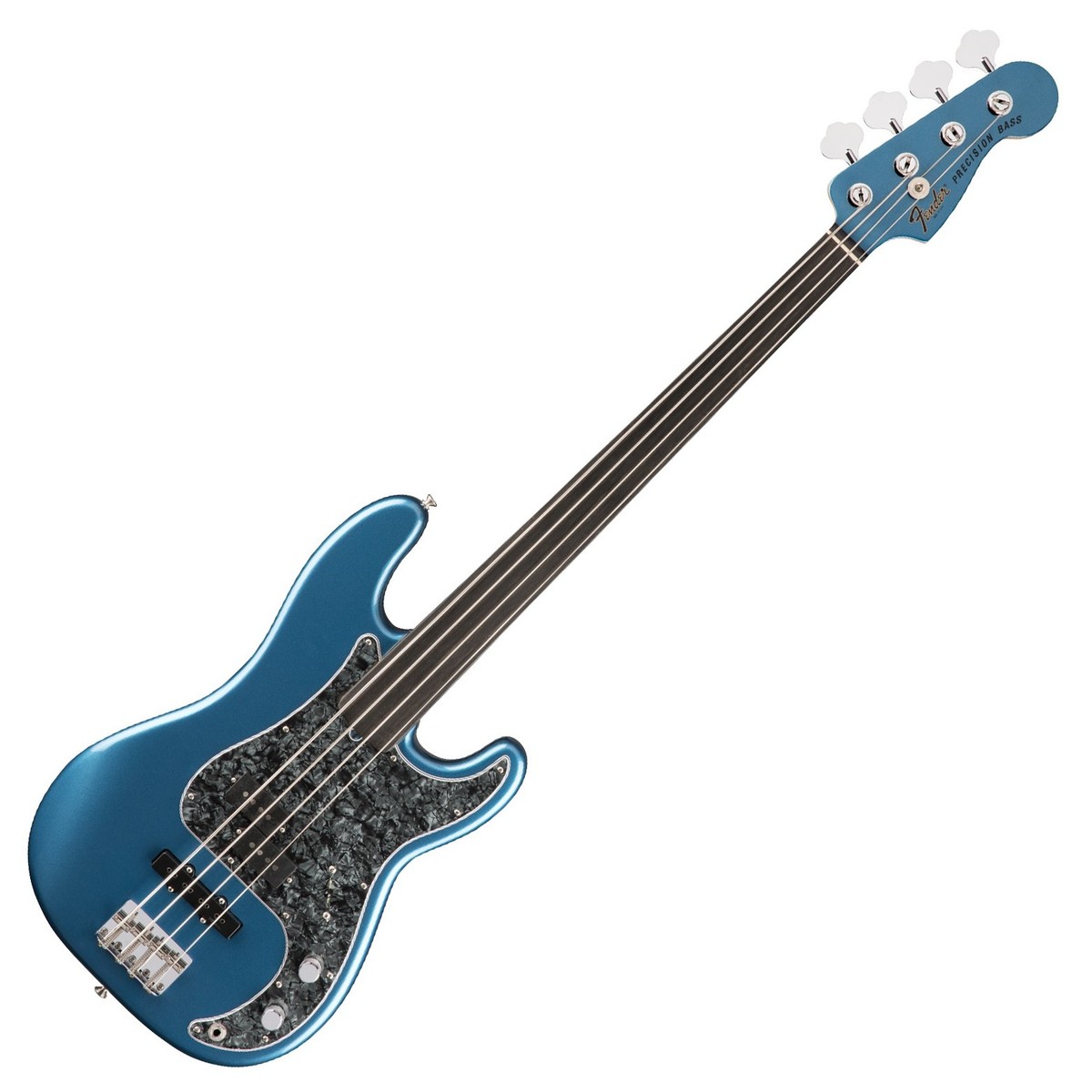
I've now got two basses that I love, one fretless; unlined with barely visible side dots (Ibanez SRF705) and an MTD Artist 4; no face markers with only the barely visible side dots. I started a frankencaster build in 2020 (electronics, pickups, setups, neck shimming, etc.) that I finally finished earlier this year when i re-fretted it with jumbos and it now plays like an American Fender! Not because I couldn't afford a Fender, but I wanted to understand the difference between cheap guitars, value guitars, and high-end guitars. It makes me fully appreciate how well built my USA PRS CE24 is!
Anyway.
I don't know why it's always been so hard to hack my brain into learning the guitar/bass fretboards as easily as I picked up brass instruments. I don't have a lot of time to practice as it's a hobby and I spend most of my waking hours trying to make sure I can achieve financial independence before I'm too old, but I'm slowly hacking away at it because I want to get good enough to just pick up one of the four stringed instruments and get lost in some creative path for a few hours. Maybe even play a few gigs here and there with friends, now and after I'm not as busy making a living.
So, this hack is working for me and all I want to achieve in the near future is correlating written music to the instruments. Tabs are great, but I really want to master the instruments one of these days. It's the journey, not the final destination. If I get nothing more out of it than genuinely realizing how much talent some of you have, then it was worth it.
If you've read this far, thanks! I want to say I've had another light bulb moment in how to look at learning the fretboard from your posts, and it connects with a recent very-long post by Carol Kaye put on facebook that I haven't read in detail, but I think she's spelling out what a lot of you in this thread are getting at with alternate tunings and patterns.
But first things first. I like this pattern I posted and plan on using it until I get the sheet music/fretboard connection down by concentrating on the first positions; and then figuring out how to play those in the upper positions. Then I can start to practice seeing the patterns that connect the circle of fifths and circle of fourths to the fretboard.
I know I need to practice, practice, practice. I get the muscle/eye memory part that only comes from practicing. I'm working on it. But it's not like I'm gearing up to play a fretless 6-string on youtube for 12M followers.
Thanks for all of the input. It's been helpful.
 (and if it doesn't you don't have to do it.)
This is the way. I remember those hand grip strength things from the 80's that my older brother had. If only my hands were stronger, I could blister the board like Patitucci!!Stop trying to take short cuts in learning. No need to reinvent the wheel. Realizing everyone learns differently I suggest learning the fretboard like we all did, repititon and practice.


Whole Notes refer to time.Yes, yes, yes. This is what I'm getting at. The alternate fret markers I posted help me instantly know where the whole notes are for standard tuning. I've been playing for 40+ years as a hobby. I picked it up in my high school youth group choir and got decent for a year or two, but it got relegated to the occasional noodling around over the years. I played trombone for a year then french horn for 5 years in middle and high school and I knew the bass and treble clef quite well as it related to those two instruments. But, that was all 40 years ago. Most of my hobby since then has been listening to and appreciating the talent of musicians by way of collecting a couple thousand albums (LPs and digital) over the years. (Along with sailing, motorcycles, airplanes, photography....)
I've now got two basses that I love, one fretless; unlined with barely visible side dots (Ibanez SRF705) and an MTD Artist 4; no face markers with only the barely visible side dots. I started a frankencaster build in 2020 (electronics, pickups, setups, neck shimming, etc.) that I finally finished earlier this year when i re-fretted it with jumbos and it now plays like an American Fender! Not because I couldn't afford a Fender, but I wanted to understand the difference between cheap guitars, value guitars, and high-end guitars. It makes me fully appreciate how well built my USA PRS CE24 is!
Anyway.
I don't know why it's always been so hard to hack my brain into learning the guitar/bass fretboards as easily as I picked up brass instruments. I don't have a lot of time to practice as it's a hobby and I spend most of my waking hours trying to make sure I can achieve financial independence before I'm too old, but I'm slowly hacking away at it because I want to get good enough to just pick up one of the four stringed instruments and get lost in some creative path for a few hours. Maybe even play a few gigs here and there with friends, now and after I'm not as busy making a living.
So, this hack is working for me and all I want to achieve in the near future is correlating written music to the instruments. Tabs are great, but I really want to master the instruments one of these days. It's the journey, not the final destination. If I get nothing more out of it than genuinely realizing how much talent some of you have, then it was worth it.
If you've read this far, thanks! I want to say I've had another light bulb moment in how to look at learning the fretboard from your posts, and it connects with a recent very-long post by Carol Kaye put on facebook that I haven't read in detail, but I think she's spelling out what a lot of you in this thread are getting at with alternate tunings and patterns.
But first things first. I like this pattern I posted and plan on using it until I get the sheet music/fretboard connection down by concentrating on the first positions; and then figuring out how to play those in the upper positions. Then I can start to practice seeing the patterns that connect the circle of fifths and circle of fourths to the fretboard.
I know I need to practice, practice, practice. I get the muscle/eye memory part that only comes from practicing. I'm working on it. But it's not like I'm gearing up to play a fretless 6-string on youtube for 12M followers.
Thanks for all of the input. It's been helpful.