

Folks often ask what the difference is between a P and PJ (VVT wired) in terms of tone and control characteristics. Is a PJ with the J turned off the same as a P? Here's a Spice simulation, showing what happens. First we'll look at both at full volume:
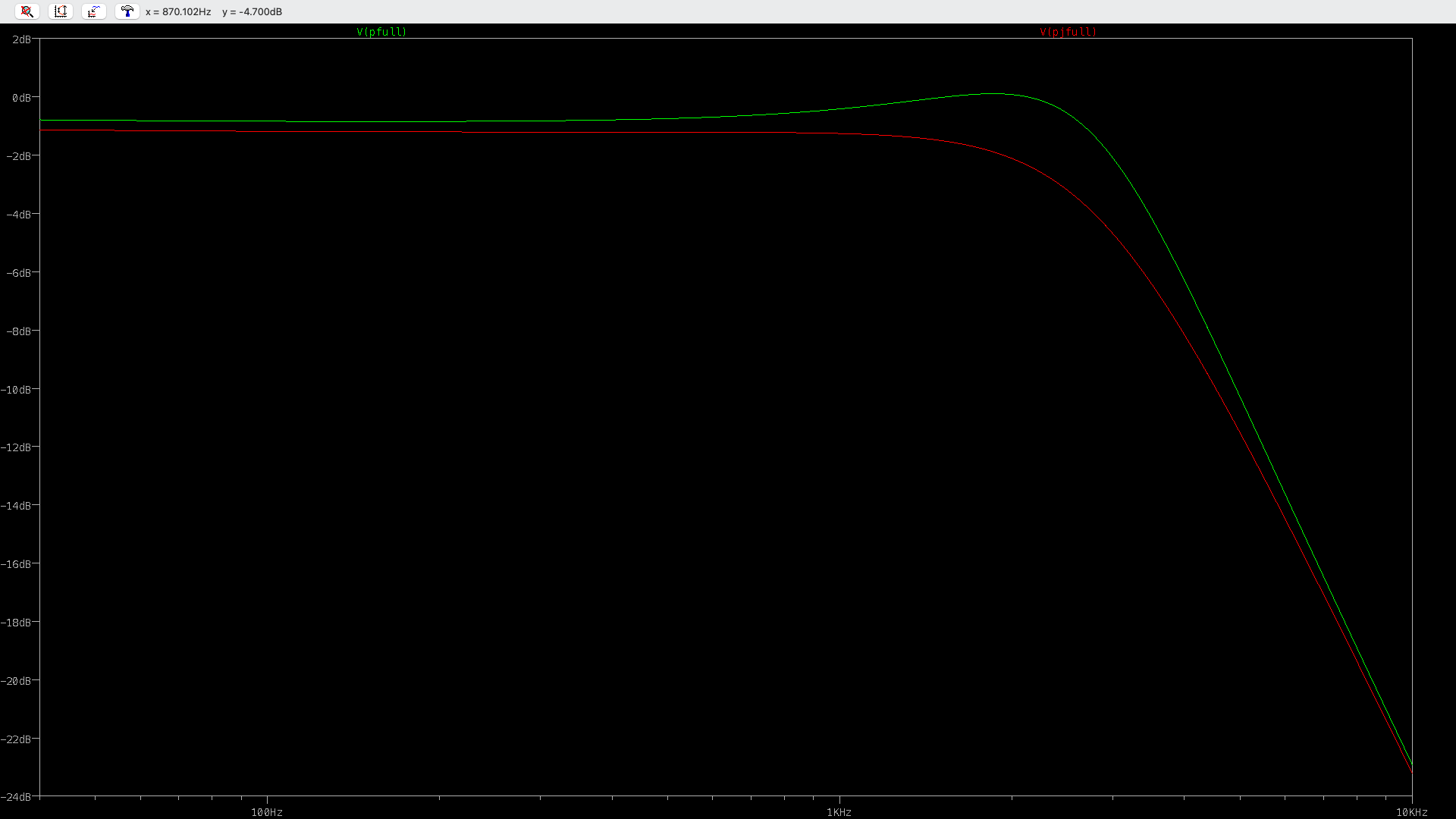
The green curve is the P, the red the PJ. Note that the PJ loses a bit (not a lot) of volume (the load of the second volume control does this) AND it changes the high mid peak - which isn't strong in a P to begin with, but with the added control, it's got less up there - less articulation to your notes.
Now, at half volume:

Again, the green curve is the P, the red the PJ. This is a linear taper pot at half rotation for both cases - with an audio taper pot, the same thing happens, just at different points on the pot's rotation. The P has lost some of its articulation, but not too much. The PJ hasn't lost as much in the low frequencies (it's not really a good volume control), but it has lost a lot in the high frequencies. Your "volume" controls on a VVT wired bass are not really volume controls, they're mixed volume and tone controls - nothing you can do about that.
OK, what about quarter volume?
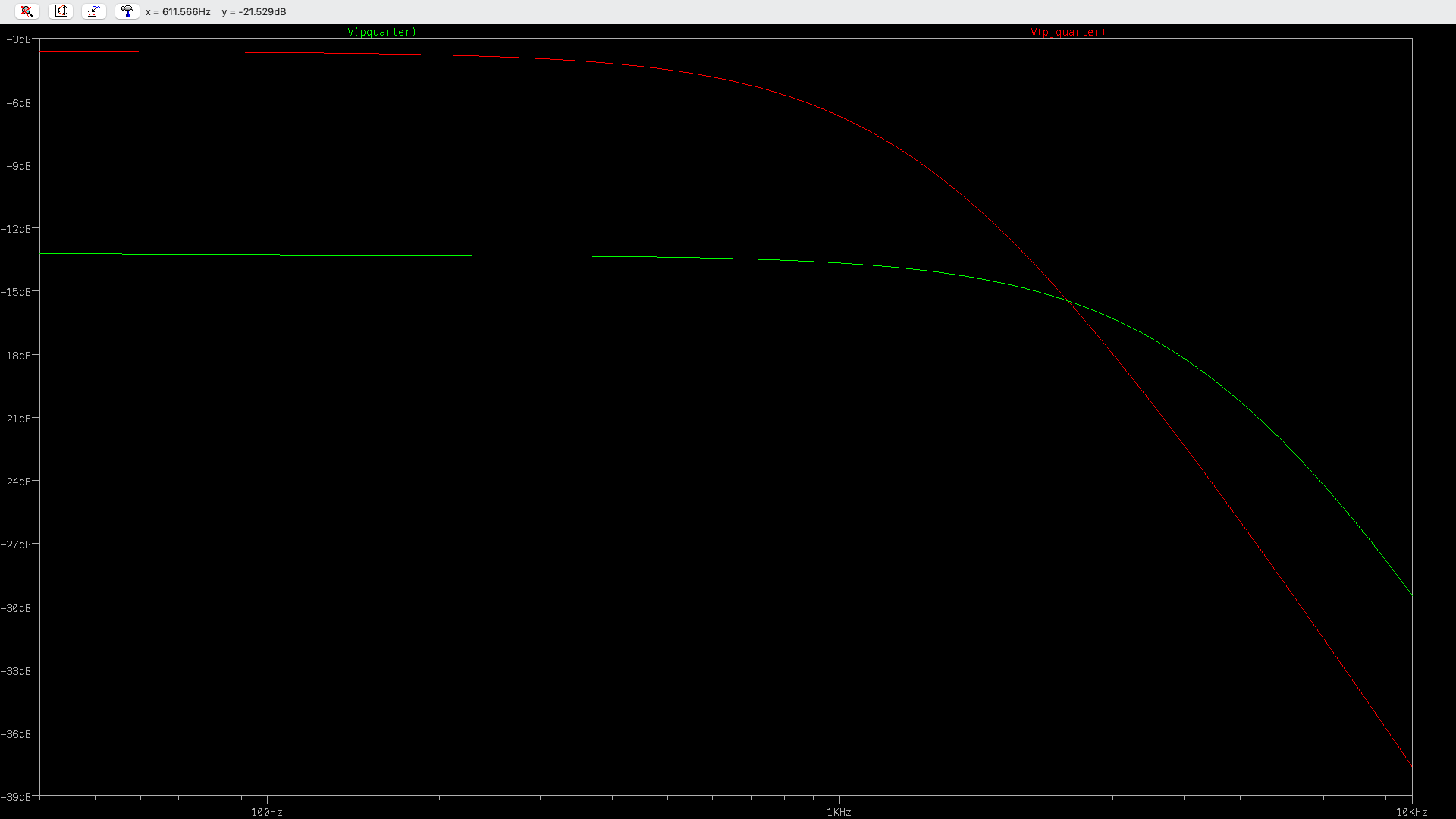
The P looks as before - we've got a decent (albeit not perfect) volume control - at quarter volume we should see 12 dB of loss, and we're about a dB low, but pretty close, and the articulation is still holding up OK. For the VVT PJ setup, we still haven't lost much level at low frequencies (it's down about 3dB from full, not 12), but the high end is definitely not holding up - in a VVT setup, you're not using the volume control as a voltage divider, the pot is wired backwards, so you're shunting the pickup with a resistor. As the pickup is highly reactive, this doesn't work out well.
So, does a PJ sound like a P? It sure doesn't work like one, and yes, you can hear this stuff. If you like what a PJ does, fine - no problem, but it isn't the same as a P when the J is off.
The green curve is the P, the red the PJ. Note that the PJ loses a bit (not a lot) of volume (the load of the second volume control does this) AND it changes the high mid peak - which isn't strong in a P to begin with, but with the added control, it's got less up there - less articulation to your notes.
Now, at half volume:
Again, the green curve is the P, the red the PJ. This is a linear taper pot at half rotation for both cases - with an audio taper pot, the same thing happens, just at different points on the pot's rotation. The P has lost some of its articulation, but not too much. The PJ hasn't lost as much in the low frequencies (it's not really a good volume control), but it has lost a lot in the high frequencies. Your "volume" controls on a VVT wired bass are not really volume controls, they're mixed volume and tone controls - nothing you can do about that.
OK, what about quarter volume?
The P looks as before - we've got a decent (albeit not perfect) volume control - at quarter volume we should see 12 dB of loss, and we're about a dB low, but pretty close, and the articulation is still holding up OK. For the VVT PJ setup, we still haven't lost much level at low frequencies (it's down about 3dB from full, not 12), but the high end is definitely not holding up - in a VVT setup, you're not using the volume control as a voltage divider, the pot is wired backwards, so you're shunting the pickup with a resistor. As the pickup is highly reactive, this doesn't work out well.
So, does a PJ sound like a P? It sure doesn't work like one, and yes, you can hear this stuff. If you like what a PJ does, fine - no problem, but it isn't the same as a P when the J is off.
Last edited:


