• TalkBass has been independent since 1998. Add your voice.
    Create a free account to reply to discussions, view embedded media, and browse with fewer display ads.
    Join freeLog in
    Want zero display ads or expanded classifieds tools? Compare plans.

Am I being scammed?

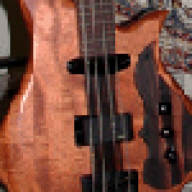
My best look suggests they are not, which means any electronics are going to have to be extracted through the f-hole. None of the pics show enough of the back to reveal a back panel, but I doubt there is one.

Even from the one picture on the listing those are absolutely painted. The top reflection runs right across the middle of the F with no interruption.

this one i got this morning from "IPS" was laughably bad :whistle:

Scammers know the scams are low quality and don't care. They're actively selecting for marks gullible enough to overlook the laughably bad premise. If you're looking at the email and going "wait a minute, why is the federal government asking me to pay my unpaid tax bill in Amazon giftcards???" then congratulations - you aren't the target demographic.
 
  • Like
Reactions: whero and Panek
Just as a follow-up and a word of warning. Even though I did not "submit" my personal information, somehow the scammer obtained it anyway and made a charge on the card today. Fortunately my credit union's fraud protection unit caught it and tipped me off. The transaction was cancelled and my card expunged. I will be sent a new card. So it looks like scammers do have a way to harvest our information even if we do not submit it.

My Reverb transaction from the 25th did go through and will be honored, which to me is a big deal because of the nature of the purchase.
Yep, they can log each keystroke if they want without you taking any specific action. Glad you came out of it relatively unscathed!
 
I have a bit (not much) of experience with Javascript which is likely how input is captured without submitting - I'm not sure this is doing much for you. I can think of three ways they might do this:
  • A script that responds to key events - it waits for keys to be pressed, and when that happens it grabs the data entered so far and sends it to their server. And yes, Ctrl-c Ctrl-v are keys.
  • A script that responds to paste events - I think there's a specific paste event that a script can listen for (which will include right-click paste), then grab input.
  • Even without event listeners, you could probably just run a timer at a small interval (seconds, milliseconds), that periodically grabs whatever has been entered so far.
It's far simpler than that: they probably used the change event. Presumably you're not going to move to the next form field until you've completed the current one (for example you won't enter your address until after you've finished typing your name). So when you're done entering your name in the "name" field and click on or tab to the "address" field, the change event fires on the name field and your name is sent to a faraway server. This helps prevent sending a lot of junk data. After all, they only want "Jim Smith", not "J", "Ji", "Jim", "Jim ", "Jim S", "Jim Sm", "Jim Smi", "Jim Smit", and "Jim Smith".
 
My best look suggests they are not, which means any electronics are going to have to be extracted through the f-hole. None of the pics show enough of the back to reveal a back panel, but I doubt there is one.

In the first picture, you can see reflections going over the "f holes"; holes don't reflect light, black lacquer does. But don't worry, those electronics had to get in there somehow; so there's either a back panel or they can be extracted through the pickup cavities.
 
I recently received the following scam email. Note that the email itself is a jpeg or some such graphic and not even an actual email. I forwarded it along to PayPal as I figured they'd take interest in such a scam. It was difficult to even report this and I was even more disappointed that PayPal didn't send so much as a follow up nor even acknowledged and concern about the scam email.
 

Attachments

  • 6C676348-212E-48D7-BB30-65BD9981C4FB.jpeg
    6C676348-212E-48D7-BB30-65BD9981C4FB.jpeg
    91.7 KB · Views: 29
  • Like
Reactions: DJ Bebop
So . . . my "day" job, which I'm only doing part time at this point as I transition into music full time, is as a network engineer. I'll give some quick information that's useful in these cases.

If the email points you to a URL it helps to know that DNS (the platform that turns URLs into IP addresses) reads from right to left. I'll give an example I've seen with Paypal scams. If you see a URL that's something like "Link Removed" then that's fine. That last forward slash denotes the end of the URL and it ends in "Paypal.com". If, however, the URL is something like "Link Removed" then that's not Paypal. That domain name is "blahblahblah.com", not "paypal.com". And in this case the scammer has created a "paypal.com" subdomain of the "blahblahblah.com" domain to trick your eye into thinking it's Paypal when it's not.

That's a common and telltale sign that what you are seeing is a scam.

Ben
 
Last edited:
I recently received the following scam email. Note that the email itself is a jpeg or some such graphic and not even an actual email. I forwarded it along to PayPal as I figured they'd take interest in such a scam. It was difficult to even report this and I was even more disappointed that PayPal didn't send so much as a follow up nor even acknowledged and concern about the scam email.
I get those, right into the fishing/scam folder and fishing report sent.

:)
 
This morning I found in my e-mail something from this sender
">"FedExShipping..." <[email protected]>, purporting to be a notification of impending delivery and requesting a customs fee of $1.95. I went through the sequence of steps and got as far as filling in my personal information in the boxes, but then common sense took over and I did not submit the information but instead closed the e-mail. But it got me thinking.

I do have a weekend bass purchase through Reverb on which I am awaiting delivery, but it ships out of Moultrie, GA, and why would there be a customs fee on an item shipped from one adjacent state to another? And what kind of customs fee is a charge of only $1.95? And that sender address was starting to look suspicious.

So I logged into FedEx.com and ran my tracking number through their system. FedEx
could find no such number in their files. So, is this a scam, and did I compromise my personal information by filling in the boxes even though I did not hit "Submit"?

I just assume everything is fake and everybody is lying ... I don't trust nobody no how and no way... and yes one of the biggest scams is to get your personal data ... I assume I am being scammed until I can be convinced otherwise.

I don't like being that cynical, but there are people out there whose full-time job is to steal from you.
 
Last edited:
  • Like
Reactions: DJ Bebop
did I compromise my personal information by filling in the boxes even though I did not hit "Submit"?

Yes, you probably gave some personal info to identity thieves.
As mentioned , web forms don't need you to click "submit" to gather data.
Facebook, amazon and You Tube gather metrics on things you mouse over, but never click on, for example.

I make it a policy to never, ever, EVER "click through" an email link or attachment.
I use an email client that exposes the sender's actual email address, not some easily spoofed "user friendly" name. If the sender's address does not end with @nameofthecompany.com I assume it is fake. If It's not patently obvious that it's a scam, I go to the company's actual web site and proceed for there. Preferably, spelunking through the phone maze to reach an actual human.

I feel lucky to have grown up from the before times, both witnessing and working in the field as the internet grew and mutated into the wonderous horror it is today. Along with it I grew and mutated an acute sense of what looks suspicious.
 
Last edited:
  • Like
Reactions: DJ Bebop
It's far simpler than that: they probably used the change event. Presumably you're not going to move to the next form field until you've completed the current one (for example you won't enter your address until after you've finished typing your name). So when you're done entering your name in the "name" field and click on or tab to the "address" field, the change event fires on the name field and your name is sent to a faraway server. This helps prevent sending a lot of junk data. After all, they only want "Jim Smith", not "J", "Ji", "Jim", "Jim ", "Jim S", "Jim Sm", "Jim Smi", "Jim Smit", and "Jim Smith".

Oh! Of course that exists. Thanks for chiming in.
 
  • Like
Reactions: DJ Bebop
So . . . my "day" job, which I'm only doing part time at this point as I transition into music full time, is as a network engineer. I'll give some quick information that's useful in these cases.

If the email points you to a URL it helps to know that DNS (the platform that turns URLs into IP addresses) reads from right to left. I'll give an example I've seen with Paypal scams. If you see a URL that's something like "Link Removed" then that's fine. That last forward slash denotes the end of the URL and it ends in "Paypal.com". If, however, the URL is something like "Link Removed" then that's not Paypal. That domain name is "blahblahblah.com", not "paypal.com". And in this case the scammer has created a "paypal.com" subdomain of the "blahblahblah.com" domain to trick your eye into thinking it's Paypal when it's not.

That's a common and telltale sign that what you are seeing is a scam.

Ben
URL typo in the first one?
 
  • Like
Reactions: DJ Bebop
This morning I found in my e-mail something from this sender
">"FedExShipping..." <[email protected]>, purporting to be a notification of impending delivery and requesting a customs fee of $1.95. I went through the sequence of steps and got as far as filling in my personal information in the boxes, but then common sense took over and I did not submit the information but instead closed the e-mail. But it got me thinking.

I do have a weekend bass purchase through Reverb on which I am awaiting delivery, but it ships out of Moultrie, GA, and why would there be a customs fee on an item shipped from one adjacent state to another? And what kind of customs fee is a charge of only $1.95? And that sender address was starting to look suspicious.

So I logged into FedEx.com and ran my tracking number through their system. FedEx
could find no such number in their files. So, is this a scam, and did I compromise my personal information by filling in the boxes even though I did not hit "Submit"?
Change your password. Javascript/AJAX is a thing -- you don't need to submit a form for it to still capture your keyboard input and send it somewhere malign.

Gone are the days of badly misspelled and obvious scams - there are some very sophisticated attacks out there.
 
  • Like
Reactions: DJ Bebop
This tells you it is a scam by looking at it <[email protected]>.
Do you see anything in the actual email address that says @Fedex.com?
I get several of those a week from all different email addresses. They all go into spam and the email address is blocked. They also do Paypal account emails and Ebay account emails. All are scams to get you to give them personal info, credit card numbers and Social security numbers. The web is full of thieves.
 
  • Like
Reactions: DJ Bebop
Oh! Of course that exists. Thanks for chiming in.
NP.

It's worth keeping in mind that those of us who've worked on legitimate websites want every transaction the user desires to be successful, so we have to develop robust UIs in a way that ensures every user's input is valid and leads to the results each user desires.

The form method I described will have a lot of failures. A well-built scam website does not want or need user success. It will never provide what the user wants so it doesn't have to try, it only has to pretend for long enough to convince the user to enter the right information. The aggregate number of successful collections of usable data that the site owner can exploit is more important than how precisely each individual's activity is collected, so failure rate is allowed to be exceptionally high by the standards of a legitimate website.