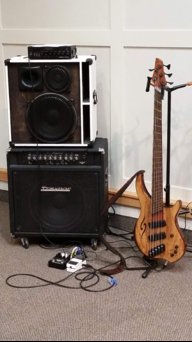
Honestly, this is the reason I don't use IEM. I hate missing all the juiciness going on in the room from my tone......

TalkBass has been independent since 1998. Add your voice.
Create a free account to reply to discussions, view embedded media, and browse with fewer display ads.
Join free Log in
Want zero display ads or expanded classifieds tools? Compare plans.
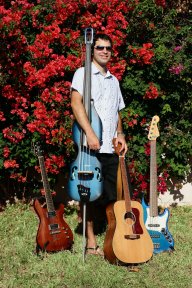
the church I play at recently switched to headphone monitoring for the rhythm section. We are using a system called KLANG that uses an app on my phone or tablet so I can adjust my individual mix. It's a great idea and works quite well except for the tone of my bass signal. It's so raw and I can't stand it. It's very metallic and sometimes thin and picks up a lot of clank and string noise. I understand the foh need that unaltered dry signal for them, but I don't want that tone for myself. So here's the question
How can I get a nice and full, warm, amp/cab tone as my monitor tone with out affecting the foh?
I thought a preamp DI might work, such as a tone hammer or sansamp but where would I place that so that tone is just for my monitor mix?
My set up right now with this new system is my bass with an Audere pre into a passive DI box to foh
Thanks for any help. Also if you have any experience with the KLANG system and app any pointers would be great.
 but it does not afford any adjustment other than output level.
Pull one in ear out, then you can hear your bass in the room with one ear and the detail in the other. I do this with crap soundguys that constantly adjust levels with gain.
Other points - sound guys typically use a dry signal because it is the default way they learned to run sound. A quality head properly eq'ed and put in the mix will sound great almost completely left alone. IMO this is a battle worth fighting.
Also, better iems sound better across the range of your instrument.
I've now gotten to the point where I only run myself through my ears. I work with one soundguy that will actually eq the monitors, the rest are just sending back the signal they get from the mics and it leaves the low end competing with the floor tom and kick which can muddy up a mix in a heartbeat. They mix this out and separate the instruments (if they are good) at foh but rarely do this for the monitors.

see, i set my drive knob to about 10PM, unless it's a daytime gig in which case i set it to 10AMEither side of "noon"!

jesus christ noPull one in ear out, then you can hear your bass in the room with one ear and the detail in the other.

but this absolutely! it's a long running topic on TB, but i totally agree. as long as "your tone" is a good one, it should never be a problem.A quality head properly eq'ed and put in the mix will sound great almost completely left alone. IMO this is a battle worth fighting.
I don't know why that matters, but you usually don't have that with local bands and churches (with IEM systems) as you get the FOH channels piped into the mix.
Unless you have a separate monitor mix (we do, and it's awesome), you're stuck with whatever is going into the KLANG, Aviom or Behringer sending units. I've never used the KLANG (EXPENSIVE!! system) but other than the effects and positioning capability, my understanding is KLANG still uses a sending unit like Aviom. Behringer has a sending unit, but the Ultranet capability is built into ALL their X series consoles. Unless the individual KLANG stations have EQ control on each channel (behringer's P16M's do) you get what FOH has set up for EQ and is passing into the sending unit.

No arguments there.. The problem with that approach tho', is that what bassists "THINK" is a good tone doesn't necessarily work for FOH. Same applies (and moreso) to guitar players.My point is, if you send a signal to FOH that sounds good, what you get in your ears and what ends up in the mains will sound good, by definition.
No arguments there.. The problem with that approach tho', is that what bassists "THINK" is a good tone doesn't necessarily work for FOH. Same applies (and moreso) to guitar players.
And.. it also depends on where the FOH is tapped and sent. Inserts, AUX busses and output busses can be tapped at various pre-main buss points.
ALL of that can factor into what you get in your IEM's..
I didn't even mention the "volunteer" techs who run the boards at churches.
you goal is to get yourself a signal path where that "juiciness" makes it into the DI and thus into your IEMs.Honestly, this is the reason I don't use IEM. I hate missing all the juiciness going on in the room from my tone......
Again, no arguments with that. Sadly, you're are in the minority with those skills!In my case, I'm a bassist and a FOH guy, so I have a good idea of what sound I should give to FOH.

and yet the guitar player gets his amp mic'ed and we get a fight...No arguments there.. The problem with that approach tho', is that what bassists "THINK" is a good tone doesn't necessarily work for FOH. Same applies (and moreso) to guitar players.


This is good advice. I definitely need to take more time and patience to get acquainted with this set up and then I can tweak things laterHMNN>..
IEM
Good quality IEM fit by a pro are the first step.
THEN
VOLUME
Adjust the volume on your bass.. most guys crank their bass and do not have a balanced mix.
THEN
PATIENCE
IEM is like a microscope. Chances are the band drains out much of the nastyness you're talking about. Go on Youtube and listen to isolated tracks.
Chances are your technique, settings, string choice, etc can be altered.
THEN
ONBOARD EQ
IF you continue having issues... work with the eq onbaord of your bass...
OVERALL,
Get the sound guys to let you in for a few hours to just work with it and get used to it... practice only on headphones at home.
This makes sense to me. I'll have to ask them if they can spare an extra channel for bassAre you using a digital mixer? If so have a 2nd channel be your monitor bass signal. Just use the source input from where you regular bass channel.
I have done this for bands in the past. When mixing on an X32 and the band only had 16 channels used. Channels 17-32 were just mirrors of 1-16,that were used for FOH, but I mixed the monitors off of 17-32. Separate everything this way.