• TalkBass has been independent since 1998. Add your voice.
    Create a free account to reply to discussions, view embedded media, and browse with fewer display ads.
    Join freeLog in
    Want zero display ads or expanded classifieds tools? Compare plans.

Ampeg Classic Preamp is an Overdrive!?

Mar 14, 2008
4,162
6,273
As the song goes, “today I made a sick discovery”…

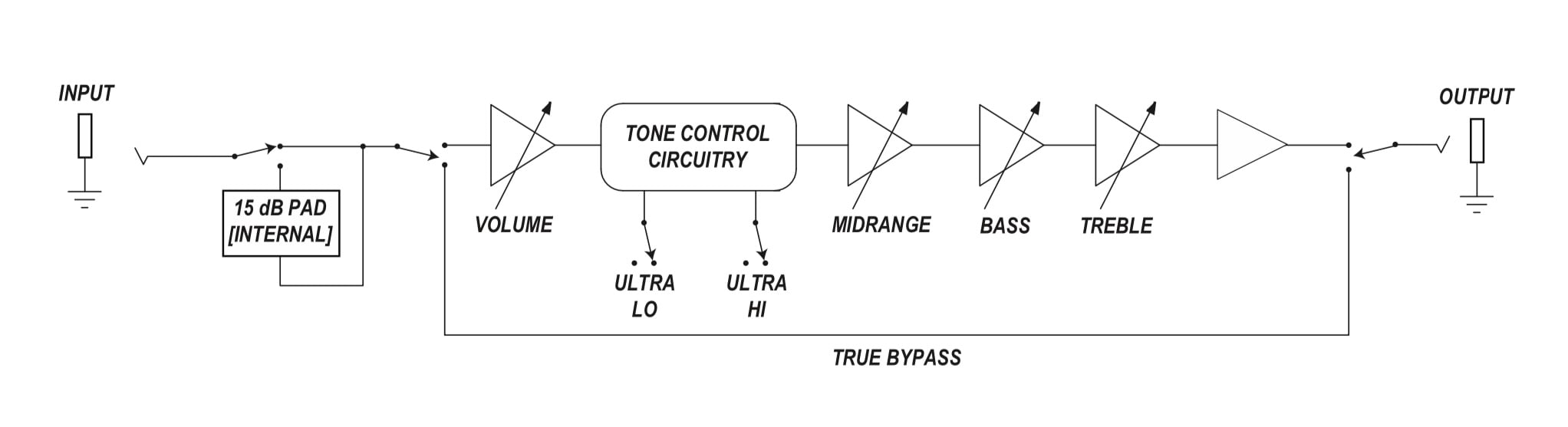
Reading the Ampeg Classic Preamp manual recently to remind myself of the EQ specs, I saw this and thought “odd… volume before EQ?”
BE353855-72F6-4DE4-BB18-789016D04C0F.jpeg


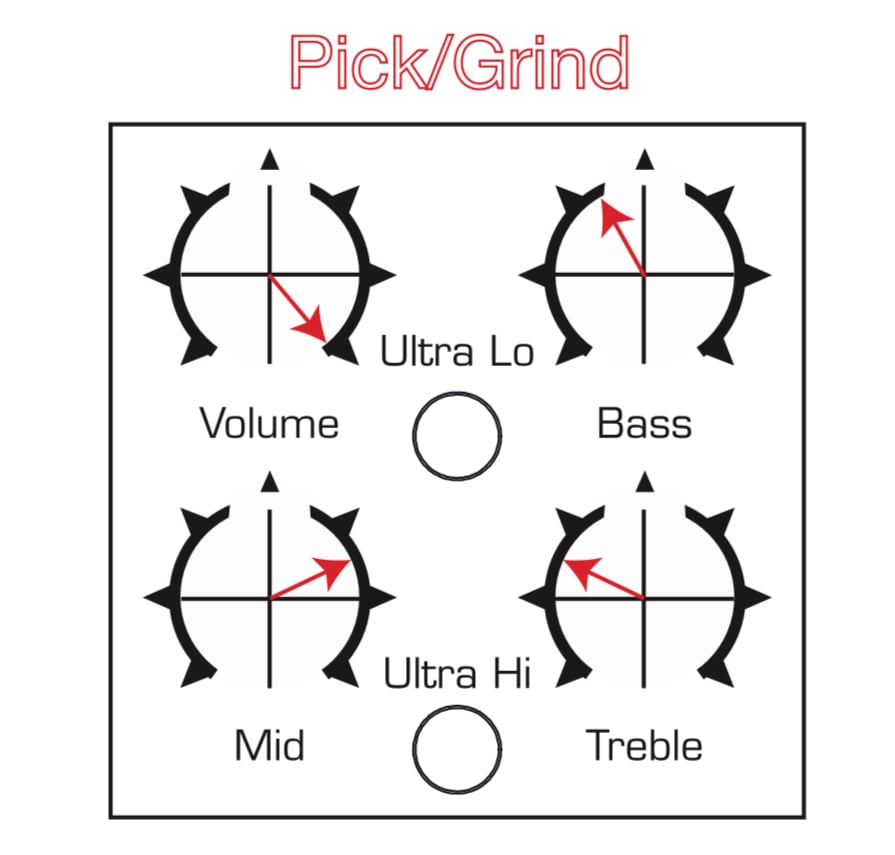
Then at the bottom I found some sample settings, and the last one was this one pictured below. I thought “grind… WUT!?”
D609CA23-686E-4155-8128-A002394F5FBB.jpeg


And none of the other sample settings had a suggested Volume.

Hmmm…

53A90727-7082-4057-866B-7BDFD677083E.jpeg


I’ve had both the Ampeg SCR-DI and Classic Preamp for years, and never used them for reasons. In the case of the Preamp, it was mostly due to a higher noise floor than I prefer which is especially a bummer since the SCR-DI is silent.

And I just don’t need preamp EQ. But a good OD can be very useful.

Turns out that it is indeed a drive!

Best of all it’s not one of those ultra-sensitive drives, like most, that make terrible sounds on double-stops even when set for mild OD, so requiring a comp in front.

I ran a super hot bass into it and, without needing to set the internal jumper to -15 dB, found I quite like the drive even on hard double-stops. And it’s killer for pick-playing rock style.

Ampeg’s own demos, advertising copy, and list of features makes no mention of this; a fail bigger than 2 8x10 fridges stacked vertically with an SVT on top.

On the Sweetwater page, midway down the video demos there’s a so-so example of this titled “mild grit”. However Dino himself doesn’t demo his own “Pick Grind” setting by turning the Volume up higher. Weird.

He does show-off some fine pick grind halfway through the “In-Depth Overview” vid though. Warning: intro music on the demos starts with a big bang and is far, far louder than the demos themselves, so turn volume down before hitting play on those clips: Ampeg Classic Analog Bass Preamp Pedal

The drive capability is very evident in this Reverb demo, at 1:28, 2:28 and 3:05 :


Major fail on Apeg’s part not promoting this feature front & center, and searching previous threads dedicated to this pedal I found zero instances of the word “Drive” other than someone stating specifically that it is *not* a drive, so I opted to go with a new thread.

There’s a bit of “Pultec trick” potential here too, given the Bass is at 40 Hz and Mid 500 Hz while the Ultra Lo boosts a bit at 40 Hz and cuts a lot at 500 Hz. Another thing they could’ve - should’ve - featured prominently.

Here’s the manual: https://ampeg.com/data/6/0a020a3f136c85e0b943b69eb3/application/pdf/Owner’s Manual - English .pdf
 
Last edited:
Well, at first glance it looks like the controls of the 1969 SVT minus the toggle for the midrange, so it seems like it brings the same problem with it: There's grind in there, but you will have to crank the gain while the master is fixed at 10, so to get things going things will get loud - it seems it'll be somewhere in the region of +18dB loud if I interpret the manual correctly.
 
Well, at first glance it looks like the controls of the 1969 SVT minus the toggle for the midrange, so it seems like it brings the same problem with it: There's grind in there, but you will have to crank the gain while the master is fixed at 10, so to get things going things will get loud - it seems it'll be somewhere in the region of +18dB loud if I interpret the manual correctly.

Nope! I’d thought so too, and probably many did like me and never went much above 12 0’clock / unity on the Volume because why would you? Thus never discovering the OD capabilities of this pedal.

However it only gets very loud if you have the EQ cranked too, especially if running one boosted EQ into another per the circuit diagram.

Volume set the way it is in the Reverb vid - around 2 o’clock - isn’t much above unity.

I find in order to get even my fave drives to work well with hot signals, or a wide dynamic range while playing, a comp is required in front. In this case maybe I’d go comp or something else afterward if needing to attenuate the volume coming out of it, but for a great finger style drive - even with a huge low end via Ultra Lo engaged and Mid cranked - I only turned down my amp’s input gain a little to be at same volume as when the pedal is off, with tons of headroom left before clipping the amp input even on slaps & pops.

I should mention that the noise floor is reasonable, even quite low, if considering it a drive pedal.
 
Last edited:
  • Like
Reactions: Parzival
Sounds like an unintentional feature, simply a result of running into the lack of headroom easily possible with a 9V preamp (the reason many/most hifi preamps offer or require higher voltage input or have internal charge pumps to raise the headroom). Any amplification stage can be driven into non-linear output (ie distortion) if pushed hard enough, and as you’ve found the design of putting the Volume before the EQ stages here seems to make that effect easier to control in this pedal (though also possible that boosting the Mid control is just making clipping in the input stage more audible). It does say under the 15db pad section of the manual that the input can start to distort at around 0.5V, and they suggest using the pad beyond that.

Anyway, it doesn’t sound bad like some unintentional pedal clipping- though I’m curious if you find it consistent across low to high notes? Usually I find this kind of clipping tends to be much more extreme on low bass-heavy notes which makes it less useful as a drive effect (this is the reason most drive pedals- even bass drives- utilize some sort of high-pass filtering before the clipping stages to even out the response across the neck).
 
Sounds like an unintentional feature, simply a result of running into the lack of headroom easily possible with a 9V preamp (the reason many/most hifi preamps offer or require higher voltage input or have internal charge pumps to raise the headroom). Any amplification stage can be driven into non-linear output (ie distortion) if pushed hard enough, and as you’ve found the design of putting the Volume before the EQ stages here seems to make that effect easier to control in this pedal (though also possible that boosting the Mid control is just making clipping in the input stage more audible). It does say under the 15db pad section of the manual that the input can start to distort at around 0.5V, and they suggest using the pad beyond that.

Anyway, it doesn’t sound bad like some unintentional pedal clipping- though I’m curious if you find it consistent across low to high notes? Usually I find this kind of clipping tends to be much more extreme on low bass-heavy notes which makes it less useful as a drive effect (this is the reason most drive pedals- even bass drives- utilize some sort of high-pass filtering before the clipping stages to even out the response across the neck).

Unintentional, but it doesn’t sound like pure wet #### like unintentional clipping usually does… including on a shocking amount of “bass” pedals. I’ve been burned by too many, and avoid those like the plague.

For example, on the Ampeg SCR-DI - made for bass by an iconic bass brand - it’s too easy to hit crap-sounding unintentional clipping, along with crap-sounding clipping from the Scrambler circuit when that section is activated, so I set the internal -15 dB jumper (why not an onboard toggle?!) which is an extreme attenuation. Then to get ~ unity I’ve got to have the Volume at max. So far that’s workable, if not ideal, except that -15 dB attenuation is present even when the SCR-DI is not “on”, which I guess is fine if it’s always on but then why even have a foot switch?

If there was any consideration behind this, it must be that the DI signal is always on even if the EQ is off, so somehow this all makes sense, but then why not a switchable pad on the DI out or Gain control for the EQ/Scrambler input? There are other reasons why the SCR-DI is unacceptable for me, but I’ll stop there.

The Classic Preamp, in stark contrast… no need for the internal jumper for me, and its internal jumper is *not* in line when the pedal is off. Thankfully.

As for its drive quality… fantastic! A nice drive for finger style, like what’s heard at end of the Reverb vid above, does not result in double-stops, chords or slap-pops being a kazoo-sounding slurry mess. Shocking and very tough to believe, I know.

No, it doesn’t peak out when slamming the E string. It seems a compressed drive overall, more focused in the mids. Kind of like the Mesa Walkabout, which I mention since you’re very familiar with that; similar character too in boosting the mids and highs, where toward the max EQ boosts it to turns into a bit of an ice-pick sound yet not totally sloppy and still useful in some applications especially if turning off any tweeters involved.

So while yes this all an unintentional result, they knew about it but failed to feature it, and it’s a very happy accident like those discovered in the subtle grind of classic studio strips or transformers… or Ampeg preamps. The kind of accidents that tons of time and money and 12 Ax7 tubes are burnt trying to emulate, and miles of ad copy promise while the actual products often fail to deliver. Which takes me back to the firm assertion that this should’ve been marketed as a primary feature all along. I’m sure that if it launched today for triple the price with a boutique brand attached to it, it’d be highly sought after.

Instead its inexpensive, easily found anywhere bass gear is sold, and if others like me have one neglected in the bottom of a gear locker I suggest reconsidering it as a drive pedal. If someone says this is their grail drive pedal I wouldn’t be surprised. It’s night-and-day better and more usable as an OD than the Scrambler section of the SCR-DI, which does have all the usual issues despite being a featured drive section of a dedicated bass DI.

I can’t make any sense of it.
 
Last edited:
Unintentional, but it doesn’t sound like pure wet #### like unintentional clipping usually does… including on a shocking amount of “bass” pedals. I’ve been burned by too many, and avoid those like the plague.

For example, on the Ampeg SCR-DI - made for bass by an iconic bass brand - it’s too easy to hit crap-sounding unintentional clipping, along with crap-sounding clipping from the Scrambler circuit when that section is activated, so I set the internal -15 dB jumper (why not an onboard toggle?!) which is an extreme attenuation. Then to get ~ unity I’ve got to have the Volume at max. So far that’s workable, if not ideal, except that -15 dB attenuation is present even when the SCR-DI is not “on”, which I guess is fine if it’s always on but then why even have a foot switch?

If there was any consideration behind this, it must be that the DI signal is always on even if the EQ is off, so somehow this all makes sense, but then why not a switchable pad on the DI out or Gain control for the EQ/Scrambler input? There are other reasons why the SCR-DI is unacceptable for me, but I’ll stop there.

The Classic Preamp, in stark contrast… no need for the internal jumper for me, and its internal jumper is *not* in line when the pedal is off. Thankfully.

As for its drive quality… fantastic! A nice drive for finger style, like what’s heard at end of the Reverb vid above, does not result in double-stops, chords or slap-pops being a kazoo-sounding slurry mess. Shocking and very tough to believe, I know.

No, it doesn’t peak out when slamming the E string. It seems a compressed drive overall, more focused in the mids. Kind of like the Mesa Walkabout, which I mention since you’re very familiar with that; similar character too in boosting the mids and highs, where toward the max EQ boosts it to turns into a bit of an ice-pick sound yet not totally sloppy and still useful in some applications especially if turning off any tweeters involved.

So while yes this all an unintentional result, they knew about it but failed to feature it, and it’s a very happy accident like those discovered in the subtle grind of classic studio strips or transformers… or Ampeg preamps. The kind of accidents that tons of time and money and 12 Ax7 tubes are burnt trying to emulate, and miles of ad copy promise while the actual products often fail to deliver. Which takes me back to the firm assertion that this should’ve been marketed as a primary feature all along. I’m sure that if it launched today for triple the price with a boutique brand attached to it, it’d be highly sought after.

Instead its inexpensive, easily found anywhere bass gear is sold, and if others like me have one neglected in the bottom of a gear locker I suggest reconsidering it as a drive pedal. If someone says this is their grail drive pedal I wouldn’t be surprised. It’s night-and-day better and more usable as an OD than the Scrambler section of the SCR-DI, which does have all the usual issues despite being a featured drive section of a dedicated bass DI.

I can’t make any sense of it.
Ah interesting- I noted the manual for the Classic preamp also showed the bypass switch coming post-pad (which I also found odd), but maybe I was mistaken. I'm surprised to hear the the SCR doesn't just use the same basic topology of the Classic preamp as well. Anyway nice find! Of course it can be noted that early tube amps including the SVT were never intended to be used for distortion either- so the tube dirt that many of us love was also a form of unintentional clipping!
 
  • Like
Reactions: logdrum and StayLow
Um, not quite. It has no gain-to-master relationship... If you're looking for drive in that generation and format, the Ampeg Scrambler pedal is probably better suited to that. The Scrambler has an input gain AND a master volume. So you can set the input gain and drive the signal path, have access to some EQ and send it out of the pedal at whatever volume you want.

Ampeg – Bass guitar amplification
 
Regardless of the specifics that the experts here are discussing, I sent my SGT-DI because I have been using the Classic forever and I prefer the tone better. Into a NUX MLD just for IR loading and DI duties. I am a happy camper. I still own a Mesa 400 and previously the SVT - CL. So I have a little idea - I think. Works for me
 
  • Like
Reactions: StayLow