• TalkBass has been independent since 1998. Add your voice.
    Create a free account to reply to discussions, view embedded media, and browse with fewer display ads.
    Join freeLog in
    Want zero display ads or expanded classifieds tools? Compare plans.

Ampeg PF500/350, part 4

Status
Not open for further replies.
gmanbass said:
I think I need to do the same. I've got a brand new PF500 and 2 PF115hes and I'm afraid to take them out on a gig for fear of failure. Everything works fine at home, of course I can't run them at gig volume as I live in an apartment. Talk about buyers remorse, I've got it in spades. Gig coming up in next couple of weeks, so I'll be on pins and needles till then.

That's a shame. If you were not on TB, I doubt you would be experiencing that anxiety. It is the internet after all, and on product forums like this you tend to hear all about the bad things but not enough about the good. Ampeg has sold tons of these amps, and many of us have been using them flawlessly. I have yet to make mine cut out, and I have tried everything this side of diming every knob and slappin' away hard. Take your PF to your next gig and play it like it was meant to be played and don't stress it. Otherwise you're going to freak out and blame the PF when you accidentally unplug your cord, a battery goes dead, or you forget to turn the volume knob up on your bass (something silly like that) and you have no volume through your rig. And if it makes you feel better, take a DI to the show as backup just in case something does go wrong and you need to run straight to board.
 
Just played a gig last night at Rock n Roll Hotel in DC (fun little room for us DC musicians) and shared my rig with the other opening band. I was just running one cab both out of fear of my PF500 pooping @ 4ohms, and the size of the room.

For what it's worth, my PF-500 performed flawlessly and sounded amazing with the single cab. It was a great experience being able to see and listen to my rig off stage, especially since the other bass player was playing a P-Bass very similar to mine (except with rounds). Although the sound guy ran DI from the rig, both the stage sound and DI had a great, (somewhat) warm, articulate sound. However, the same bassist described my tone as a little trebly, which put me off--but may have been more of the sound guy trying to "modernize" my tone then the fault of the 500's DI.

Anyway, I don't hate my PF-500 by any means. I'm actually really going to miss this cool little amp. If I was just to run a single cab all of the time, I probably never would have had an issue. Unfortunately, I just don't trust it under a 4 ohm load.

Any other consolation that the 7pro was the right move would help ease this transition
 
You should not do that. It likely will cause damage without warning.

What damage?

I checked, the amp has overcurrent and short circuit protection.
It better just shutdown or they have a defective design. Other posts point out that they shutdown, and return to normal afterwards.

Trying to get it shutdown can give you a feel for what it does before it goes into shutdown. So you're not surprised at the gig.

When you buy a car check the anti-lock brakes so you know how they feel. Test the gas pedal to the floor. Don't test the airbags, they are deploy once. Amp shutdown is a deploy many times. Test that it can protect itself. Amp reviewers should check this also.

It doesn't really matter, I see that other forums are filling up with testimony of these amps shutting down. I'd hope Ampeg is working on a fix. It's too bad that many are going to think this is the state of class-d when it isn't.
 
People:
the only acceptable response to stuff like this is to report it; not to pile on and create an entire page of junk that requires moderation.

play nice, or don't post.

thanks
 
Thanks Chef!!!!!! ...getting back to Ampeg tech talk, I have a question.

I have the evening off and I'm prepping my PF115 to install my new 7pro on Monday. I removed the horn (easy). I'm even going to cut a 4 1/4" square piece plywood, spray it black, pad it with foam strips and seal the horn hole, just because I have the materials on hand to do this easily. The horn driver weighs a good 5 or so lbs, so the new weight of my cab in "transport mode" should net about the same. Word.

So, I read somewhere on the interwebz that removing the tweeter doesn't sound the same as turning off an installed tweeter because the crossover gets switched or something like that. Apparently I'm supposed to run some kind of patch. Does this make any sense? Jimmy? haha
 
ryanfenderbass said:
Thanks Chef!!!!!! ...getting back to Ampeg tech talk, I have a question.

I have the evening off and I'm prepping my PF115 to install my new 7pro on Monday. I removed the horn (easy). I'm even going to cut a 4 1/4" square piece plywood, spray it black, pad it with foam strips and seal the horn hole, just because I have the materials on hand to do this easily. The horn driver weighs a good 5 or so lbs, so the new weight of my cab in "transport mode" should net about the same. Word.

So, I read somewhere on the interwebz that removing the tweeter doesn't sound the same as turning off an installed tweeter because the crossover gets switched or something like that. Apparently I'm supposed to run some kind of patch. Does this make any sense? Jimmy? haha

If you're pulling the tweeter it seems like you'd just want bypass the x-over and wire straight to the speaker?
 
If you're pulling the tweeter it seems like you'd just want bypass the x-over and wire straight to the speaker?
This is some of the stuff I'm really interested in. I'd like to find a "sound engineering for Dummies" source. There are a few online but they never to answer ALL my questions. I'm scheming to build a fEARful cabinet, so I want to have all my ducks in a row.
I'll plan to use my Ampeg head for the tone. I may have to power amp it, but I'm okay with that...:bassist:
 
If you remove a tweeter, you should disconnect its crossover also.... without a speaker loading it, the crossover may have a wierd impedance curve, which may not be good for the amp, may trigger protection, etc.

You should not do that. It likely will cause damage without warning.

Well I am gonna agree with someone unlikely here.......

If running ANY SS amp that has an accessible speaker jack at a lower than stock impedance causes it to fail without warning, then someone who designed it has some problems with understanding how gear gets used. And they did NOT do their job.

Amps get shorted. it happens. Lower loads get put on them... that happens too.

If an amp that has a speaker jack which the customer can see, is "automatically" damaged by a non-spec load, there is no excuse for it.

If one out of 100 may fail when that is done, that isn't great, but at least it shows that the designers were thinking.

Of all the amp types that there are, class-D amps should be the MOST tolerant of low loads, at least as far as failures are concerned. It should be pretty easy to install a current limiter...............any common or garden SMPS, which is pretty close to a class-D amp, has one.

A combo amp with NO external jack, well, OK, there isn't a big need to make that amp survive shorts etc..... you at least theoretically know what the amp is going to have as a load.

It teh customer can see the speaker jack, the sky is the limit on possible loading, you need effective protection.
 
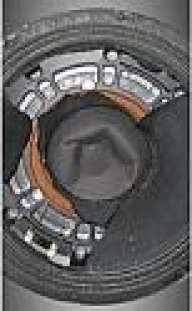
image-4078009994.jpg
First pic is just a fun shot of my finished mod.


image-2605515085.jpg
2nd pic comes with a question. I now only have my sub (single 15") wired in per how it was shipped. Queeter is completely disconnected. Am I good to go?
 
ryanfenderbass said:
First pic is just a fun shot of my finished mod.

2nd pic comes with a question. I now only have my sub (single 15") wired in per how it was shipped. Queeter is completely disconnected. Am I good to go?

On the 2nd pic, that would depend on whether the stock X-over passes a full range signal to the woofer or not. I'm fairly sure somewhere in one of the PF threads the crossover is mentioned and tells how its set up. Try a search in each thread and see if it pops up.
 
If you remove a tweeter, you should disconnect its crossover also.... without a speaker loading it, the crossover may have a wierd impedance curve, which may not be good for the amp, may trigger protection, etc.


Well I am gonna agree with someone unlikely here.......

If running ANY SS amp that has an accessible speaker jack at a lower than stock impedance causes it to fail without warning, then someone who designed it has some problems with understanding how gear gets used. And they did NOT do their job.

Amps get shorted. it happens. Lower loads get put on them... that happens too.

If an amp that has a speaker jack which the customer can see, is "automatically" damaged by a non-spec load, there is no excuse for it.

If one out of 100 may fail when that is done, that isn't great, but at least it shows that the designers were thinking.

Of all the amp types that there are, class-D amps should be the MOST tolerant of low loads, at least as far as failures are concerned. It should be pretty easy to install a current limiter...............any common or garden SMPS, which is pretty close to a class-D amp, has one.

A combo amp with NO external jack, well, OK, there isn't a big need to make that amp survive shorts etc..... you at least theoretically know what the amp is going to have as a load.

It teh customer can see the speaker jack, the sky is the limit on possible loading, you need effective protection.

I am not a tech - but I have screwed up an SVT - 7 because I used it with a cab that I forgot was 2 ohms.

I got a great deal on two 4 ohm Eminence 15's and and installed them in my Ampeg SVR-215 cab. I used that configuration for about a year with my SVT-2 or my SVT-4. Because the rack space was also built into the cab, I purchased an SVT - 7 to cut some weight. Well, the poor amp lasted 2 1/2 songs at a gig before it needed a $275.00 repair. The receipt is with my accountant right now - but I think it was blown diodes or a blown module or something. I don't recall there being any warning (but it has been quite some time ago now). The authorized Ampeg tech told me this is exactly what he would expect to happen under the circumstances.

When I got the repaired SVT - 7 back, I compared the sound to my SVT-2 and my SVT - 4 and decided to sell the 7. It was a very good sounding amp, but there are many reasons the other two cost far more - including tone IMHO.


For the heck of it, here is a photo of the SVR-215 cab w/ the SVT-4 installed (the 2nd 15 is in the back of the cab opposing the front one).

Can anybody guess what day this picture was taken?:D
 

Attachments

  • IMG_0352.jpg
    IMG_0352.jpg
    153.3 KB · Views: 662
I quit. Horn is going back in. Not gonna mount the 7pro. The time/benefit analysis does not swing in favor of rewiring the cab. I'm better off manning up and just schlepping the darn 7 to gigs. Hell, if I can afford it, I might even keep the PF-500 as we're currently on a second honeymoon based on its 1-cab performance last night.

Bottom line: should of listened to Jimmy... lesson learned.
 
Status
Not open for further replies.

Latest posts