• TalkBass has been independent since 1998. Add your voice.
    Create a free account to reply to discussions, view embedded media, and browse with fewer display ads.
    Join freeLog in
    Want zero display ads or expanded classifieds tools? Compare plans.

Another bass comparison thread

Apr 13, 2010
15,341
27,551
UK
For fun, I thought I'd throw my herd thinning out to the community.

Firstly, I wish I'd actually set the recording level properly - I was playing harder then usual so the playing is sloppy. It also didn't help that one of the pets was harassing me, but I love them anyway.

There are four instruments recorded playing to a simple backing snippet by Kristin Hersh just because I had it to hand as stems. It's Creative Commons Non-Commercial as a base licence, so I think it's OK. It's a simple line as it was a quick job to get this recorded so simplicity was key.

The plug in for the amp was a NAM Trace Elliot GP7SM head-only capture and there's no additional IR on it. Maybe I will reissue it later with a cab IR.

So the questions are:
  1. What sounds best?
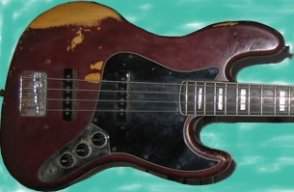
  2. Can you work out which bass of 2, 4, 5, 6 (I deleted 1 and 3 to keep the numbers down is which from the list: A. MIA Fender Precision, 2004, B. Fender Cowpoke, C. Jazz bass made from bits, D. Harley Benton JB-75, E. Squier Standard Precision, F. Harley Benton Enhanced Precision, G. 90s Fender Precision Lyte, H. 80s Tokai Jazz Bass. Yes, there are more options than basses recorded.
All basses have Rotosound nickel-plated 100 to 40 strings on of reasonably similar age, about 1 year of light playing at home as I'm sorting out a new band opportunity right now, but no gigging and these are not the instruments in the practice room, so home use only.

Here's the link to the files:

 
  • Like
Reactions: Atlanta Dave
1. They all sound pretty much the same to me, suspect that would go for any unassuming listener too.
Yes, I realise that through a combination of instruments and pick-up selection and playing, I seem to make things sound much the same. And yes, there's a mix of Jazz and Precision bases in there, and active and passive.

Would it help if I said the ones that are easiest to play are the middle price, but the cheapest and most expensive are little different in playability terms? I thought not.

The ratio of cost of the most expensive to cheapest is 4:1
 
The ratio of cost of the most expensive to cheapest is 4:1
I favour 51-54 style P-basses. Were I to do a similar A/B/C as yourself I seriously doubt anyone could truthfully tell the difference between most to least expensive, ratio 12:1.

This reminds me of a pickup ABC I did years back. Gathered all my single coils and swapped them into a bass, recording the same snippet with each. Price range of those pickups went 15:1 ratio. When I asked folks to name the cheapest pickup clip the replies showed stab in the dark guesses, each clip had the same number saying "that's the cheapest" 😁
 
One thing I should add is that for the J basses in the examples - and there is one - it's just the neck pickup in use. That's how I play a Jazz. It's much the same position as a P pickup and for the PJ basses, it's just the P pickup in place.

If someone wants to lend me a Wal (given that I failed to buy the two I was offered for £350 and £400 back in the 90s) then I'd be happy to add those to the badly played examples. :)
 
Last edited:
I'd add another fretted bass to it, but I'd have to change the strings.

Given the examples, I'm not sure it matters what I have that much of the pickup is in the general P pickup location.

When I had more variety, I did a wider test, including pickup selections, active on/off and tone settings. That's for another day as I'll have to split the play along into stems to take the original bass out plus it's about twenty odd tracks.
 
Last edited:
I'd add another fretted bass to it, but I'd have to change the strings.

Given the examples, I'm not sure it matters what I have that much of the pickup is in the general P pickup location.

When I had more variety, I did a wider test, including pickup selections, active on/off and tone settings. That's for another day as I'll have to split the play along into stems to take the original bass out plus it's about twenty odd tracks.

I'm not in a location with a decent listening environment right now so it would be pointless to comment on the clips, but I would like to compliment you on your decision to only compare basses with the same type of strings and roughly the same age/wear on the strings. Anything else would have made the comparison meaningless. At least if it's the BASSES you want comments on, rather than the basses+strings as a whole. I'm assuming you also use the J-basses with the neck pickup soloed, because anything else would make them REALLY stand out from the P-basses, and at that point it's more of a "J-bass vs P-bass" thing.

I will say this though:

If the tone of these basses is close enough that you (and other Talkbass members) have trouble deciding, you should keep that basses with the necks that feel the most comfortable to you. And only YOU can answer that question.

Also, the HB Enhanced kinda stands out, being the only active bass in that list (as far as I can tell?), The difference between an active eq and a passive tone control would be a HUGE deciding factor for me. I need a passive tone control for the type of tone I normally use.
 
  • Like
Reactions: shirojiro
I'm not in a location with a decent listening environment right now so it would be pointless to comment on the clips, but I would like to compliment you on your decision to only compare basses with the same type of strings and roughly the same age/wear on the strings. Anything else would have made the comparison meaningless. At least if it's the BASSES you want comments on, rather than the basses+strings as a whole. I'm assuming you also use the J-basses with the neck pickup soloed, because anything else would make them REALLY stand out from the P-basses, and at that point it's more of a "J-bass vs P-bass" thing.

I will say this though:

If the tone of these basses is close enough that you (and other Talkbass members) have trouble deciding, you should keep that basses with the necks that feel the most comfortable to you. And only YOU can answer that question.

Also, the HB Enhanced kinda stands out, being the only active bass in that list (as far as I can tell?), The difference between an active eq and a passive tone control would be a HUGE deciding factor for me. I need a passive tone control for the type of tone I normally use.
I would also add that in addition to how the neck feels, I’d pick the bass(es) that I enjoy looking at.

Aesthetics matter and having an instrument that looks cool to you can help inspire you to play.
 
If someone wants to lend me a Wal
Your opening post and my response had me thinking of a conversation from years back. Now your mention of Wal gives it context.

Fella Rob was talking about his basses and he could easily use his Harley Benton JB-75 for 99.9% of what he does without cause for complaint, he only really needs one of his Wal 6 strings for that 0.1% 😄

That struck a chord with me as I've long thought audiences and listeners don't care or notice 'bass tone', they just want to hear bass notes played in the right places 👍
 
Your opening post and my response had me thinking of a conversation from years back. Now your mention of Wal gives it context.

Fella Rob was talking about his basses and he could easily use his Harley Benton JB-75 for 99.9% of what he does without cause for complaint, he only really needs one of his Wal 6 strings for that 0.1% 😄

That struck a chord with me as I've long thought audiences and listeners don't care or notice 'bass tone', they just want to hear bass notes played in the right places 👍

The Harley Benton JB-75 is a very impressive bass for the price. Easily as good as Fender Player IMO, and at a fraction of the cost. Based on all the positive reviews I've seen it seems like the QC is good as well. My only complaint is the weight. Mine is INSANELY heavy.
 
  • Like
Reactions: -Asdfgh-
Your opening post and my response had me thinking of a conversation from years back. Now your mention of Wal gives it context.

Fella Rob was talking about his basses and he could easily use his Harley Benton JB-75 for 99.9% of what he does without cause for complaint, he only really needs one of his Wal 6 strings for that 0.1% 😄

That struck a chord with me as I've long thought audiences and listeners don't care or notice 'bass tone', they just want to hear bass notes played in the right places 👍
A 6-string is best for striking a chord. I guess the important thing is number of strings there. Some basses seem to sound quite different. For what I have with amp settings I tend to use, with the pickup choices I go for, they all sound much the same in a mix, it seems. At least the fretted ones.

What I may do later is use simple amp EQ (three or four bands) to see if I can make the four basses in the example sound even more like each other.
 
The Harley Benton JB-75 is a very impressive bass for the price. Easily as good as Fender Player IMO, and at a fraction of the cost. Based on all the positive reviews I've seen it seems like the QC is good as well. My only complaint is the weight. Mine is INSANELY heavy.
I have a fretless HB jazz. My other rosewood board jazz I played in a band with a dear friend who is no longer with us, so I won't leave that in a practice space. Hence the HB. It's very good except one of the bridge saddles jammed and one of the tuners broke. I also found it was better after levelling the fingerboard a bit.
 
Or remove the cymbals. But then playing in a band context, those things will tend to be there, hence doing it entirely within a mix. I also have versions with just drums and it's more audible. But I thought I'd start with a full mix.
I did not mean remove just mix it down or if you can tune the bass drum lower . One of the main notes if not the key of the song is resonating with the bass and the bass drum. If you want folks to critique the mix, t that's a different story, And what do the cymbals have to do with it, it's a different frequency slot. The ask in your post was to identify what bass is what -- not exactly as a comparison as your title says because you have r not/ provided the other sound clips as well.

My criteria for thinning is sell those that can be sold. Meaning those that hare less scratched and better looking. They turn out to be the instruments that I play less. And if they are vintage or desired by collectors.
 
I did not mean remove just mix it down or if you can tune the bass drum lower . One of the main notes if not the key of the song is resonating with the bass and the bass drum.
Not my song. The bassline is basically as per original one by Kristin Hersh, although the original has more treble and the bass is strung with flat wounds. It was just something quick to do as I had all the stems so could remove the original bass easily. It wasn't by first choice, just the easiest. The bass drum sound is probably not the best for a pretty much flat amp sound with flats. I did notice when I was recording things were a bit obscured. I could use something else, I suppose.

And what do the cymbals have to do with it, it's a different frequency slot

Exactly, and one that can often reveal differences in basses as the high frequency component can be characteristic.

The ask in your post was to identify what bass is what -- not exactly as a comparison as your title says because you have r not/ provided the other sound clips as well.
The identification part was supposed to be just an extra bit of fun but I could always delete it.

What other clips should I provide? I have lots. I didn't want to overdo it so picked ones reasonably representative of a mix

My criteria for thinning is sell those that can be sold. Meaning those that hare less scratched and better looking.

The ones in the mix for sale are all in good to excellent condition and include the two I play the most. But would one I play even more be better than three?
 
Last edited:
They are,

2. Harley Benton Enhanced Prevision. Active mode. P pickup only. Bass flat. Treble up. Cost £160

4. Jazz bass made out of bits. Warmoth neck. Pickups out of a Harley Benton. Passive. Cost of the parts £300 or £0 depending on your perspective as they were left over from other projects.

5. Squier Standard PJ from 2005. P pickup only. Tone up. Cost £140.

6. 1995 Fender Precision Lyte. Active. P pickup only. Tone controls flat. Cost £600.
 

Latest posts