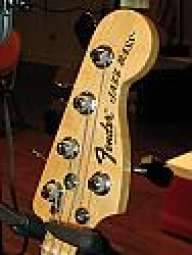
hello, my name is rick. I am almost 44 years old and have now decided that I want to learn how to play bass guitar. I have never played an instrument before so I know it is not going to be easy, but I really want to learn. I just bought a new bass today (a fender squier jazz bass). it came in a kit with bag,electronic tuner and a fender amp.I have musical experience (chorus back in high school) so i can read a little music. Now to my question.... what should I start learning first, how to pluck-pick-finger the strings or just start watching how to videos on youtube. Any and all comments and help will be greatly appreciated thanks.
Hey Rick--
I started exactly that way, exactly that time. This is what I learned:
1. Be careful about youtube videos--for every good piece of information, there are two or three bad ones.
Online Bass Lessons at StudyBass.com is a great place to start.
2. Pay special attention at first to technique (i.e., how to hold the instrument, how to make notes, etc.). Bass can be punishing on the hands if played wrong, and you are not starting with you person's hands. Even with proper technique, it is going to take time to build up strength and endurance int he little-used muscle the instrument requires. Rest if it hurts.
3. Tab is everywhere on the Internet. Nearly all of it is wrong to some degree, and most of it is mostly wrong.
4. Take lessons. Nothing beats a teacher who can straighten out bad habits early.
5. Take lessons. Nothing beats a teacher who can straighten out bad habits early.
6. Take lessons. Nothing beats a teacher who can straighten out bad habits early.
7. And you are going to outgrown that cheesy little Fender Rumble amp quickly.
Good luck!