• TalkBass has been independent since 1998. Add your voice.
    Create a free account to reply to discussions, view embedded media, and browse with fewer display ads.
    Join freeLog in
    Want zero display ads or expanded classifieds tools? Compare plans.

another possible dead string cause..

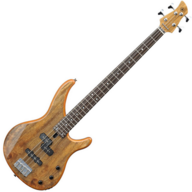
bought an Ibanez GSR280 cheapo a few months ago. Slim neck, very light, sounds reasonably tight with the factory pickups. The factory tuners were not so great, so I changed them for Gotohs. Went on holiday, bought a few sets of strings, got back and put on a set of Fender Nickelwounds, 45-105.

E string was dead from the start. I changed them after a few days for another set of Fenders. E string dead as well. Impossible...

I read through most dead string threads here, undid the neck, cleaned nut and bridge, fiddled with the truss rod, the pickups, restrung it with less windings around the tuner etc. Result: Now the A string was dead too.

I thought, this is strange, it sounded great before the holidays, no issues at all. What happened? I remembered the new tuners. Took the strings off to check them. The E-tuner was a bit loose, the nut you tighten on top of the headstock. I did´nt pay attention when fitting them it seems.

I thightened up all of them, re-strung it and guess what: Sounds better than new. What a difference. I´d recommend to check this. In mass production someone may have a bad day...
 
I remembered the new tuners. Took the strings off to check them. The E-tuner was a bit loose, the nut you tighten on top of the headstock. I did´nt pay attention when fitting them it seems.

I tightened up all of them, re-strung it and guess what: Sounds better than new. What a difference. I´d recommend to check this. In mass production someone may have a bad day...

Yup... I've been in the habit of checking all the tuners and making sure all the screws and nuts are properly tightened as part of every string change routine.
 
Someone please explain the physics of how loose screws could even remotely have any impact whatsoever on tone. I’m not questioning that the OP heard a difference though I would attest it was due to other factors. As long as a string is wrapped at the proper angle and the correct wraps after it’s past the nut there can’t be something changing brightness, etc. that I’m aware of.
 
Glad to hear it fixed it!

While I'm not a luthier I can see that it could be a problem if the string-break angle at the nut is not big enough, and the tuning peg is loose.
 
yes that's what surprised me too. That's why I asked. How can a loose cap/ tuning peg make a string sound dead?

I can´t.

I imagine that by tightening this threaded cap properly a firmer connection between tuner and headstock is achieved. Seems when this connection is loose, it kills some of the string vibration. In certain frequencies maybe.

Dead strings have been brought to life even by reducing the windings around the tuner in another thread. Dead strings are an irritating phenomenon and one would try a lot of things to get it back to normal..
 
Imagine holding a string by one end hanging down. Now "pluck" it. No sound, right? Same idea, I think--the peg end of the tuner can move back and forth to drain the string energy.
This is so not the same idea. He obviously tuned it to pitch .
A loose string hanging from your hand and you plucking it obviously doesn’t have a sound because there’s no tension on it.
 
Imagine holding a string by one end hanging down. Now "pluck" it. No sound, right? Same idea, I think--the peg end of the tuner can move back and forth to drain the string energy.

This is so not the same idea. He obviously tuned it to pitch .
A loose string hanging from your hand and you plucking it obviously doesn’t have a sound because there’s no tension on it.

Hi, without getting hung up on a poor analogy: To have a string vibrate you create a moving wave traveling up and down the string, being reflected at the ends and interfering with itself to set up a standing wave. At each reflection you have a force on the attachment point. This force has an equal and opposite reactionary force (Newton's third law), which sends the wave back the way it came. This works best if there is that attachment point is as rigid as can be. Any slight looseness, any ability to wiggle, will take some of the string's energy out in order to do so. And presto, the standing wave dies down much faster.

"But that force acts on the bridge, the tuner is way behind it" you may say. That's not entirely true. In a real string (not an idealised mathematical model) the force in the plucked string has components along the string, too, (it stretches, after all) and those forces are the ones acting on the loose tuner, leading to dissipated energy.

So SharpCat has the right idea (but could have perhaps found a better analogy). :thumbsup:
 
Hi, without getting hung up on a poor analogy: To have a string vibrate you create a moving wave traveling up and down the string, being reflected at the ends and interfering with itself to set up a standing wave. At each reflection you have a force on the attachment point. This force has an equal and opposite reactionary force (Newton's third law), which sends the wave back the way it came. This works best if there is that attachment point is as rigid as can be. Any slight looseness, any ability to wiggle, will take some of the string's energy out in order to do so. And presto, the standing wave dies down much faster.

"But that force acts on the bridge, the tuner is way behind it" you may say. That's not entirely true. In a real string (not an idealised mathematical model) the force in the plucked string has components along the string, too, (it stretches, after all) and those forces are the ones acting on the loose tuner, leading to dissipated energy.

So SharpCat has the right idea (but could have perhaps found a better analogy). :thumbsup:

Indeed - just as any other part can resonate and sap energy from the string.
 
  • Like
Reactions: Avigdor
My take : I guess if the string was completely tightened up at the nut this would not happen, but a standard nut only holds the string in 2 dimensions; the string is somewhat able to glide, and transfer (=lose) energy to the tuning post.

So to reuse @SharpCat analogy, imagine replacing the tuning post with someone loosely holding the string : all you'd get is a big fat and short thud :D
 
  • Like
Reactions: Avigdor
I can't explain the physics here but I guess it MIGHT have to do with slack at the tuner, which could perhaps absorb the higher frequencies. Or something else may have shifted when you re-installed the strings...?

I've actually often experienced more or less the same problem on cheap basses with "banana" necks made from poor quality wood. I've never been able to explain this phenomenon properly but it's certainly a fact that the rigidity of the neck MASSIVELY affects the tone/dynamics. And when the neck gets very soft, because they've used poor quality wood, the strings sometimes seem to go dead really fast (almost instantly). For some reason the lower strings are usually far worse affected by this than the higher strings. I've always suspected that this happens because a slight movement of the neck, when the strings vibrate, absorb the higher frequencies (as well as general sustain but the HIGHER frequencies on the LOWER strings always seen to be the most affected, making the strings sound "dead").

Like I said, I don't have a scientific explanation for this but I see it all the time. Soft necks made from poor quality wood can definitely lead to prematurely dead strings. But exactly WHY this happens... I really don't know.
 
bought an Ibanez GSR280 cheapo a few months ago. Slim neck, very light, sounds reasonably tight with the factory pickups. The factory tuners were not so great, so I changed them for Gotohs. Went on holiday, bought a few sets of strings, got back and put on a set of Fender Nickelwounds, 45-105.

E string was dead from the start. I changed them after a few days for another set of Fenders. E string dead as well. Impossible...

I read through most dead string threads here, undid the neck, cleaned nut and bridge, fiddled with the truss rod, the pickups, restrung it with less windings around the tuner etc. Result: Now the A string was dead too.

I thought, this is strange, it sounded great before the holidays, no issues at all. What happened? I remembered the new tuners. Took the strings off to check them. The E-tuner was a bit loose, the nut you tighten on top of the headstock. I did´nt pay attention when fitting them it seems.

I thightened up all of them, re-strung it and guess what: Sounds better than new. What a difference. I´d recommend to check this. In mass production someone may have a bad day...

Yep, hugely important! It’s something I have learnt to check every string change!
 
I've actually often experienced more or less the same problem on cheap basses with "banana" necks made from poor quality wood.

Just wait a sec, amigo.. It is a cheap bass, yes, but nothing like a soft banana neck. Of course they save cost on hardware - like the tuners - bridge, pickups etc. BUT: It plays great and performs very stable in our extreme temperatures. We were in the mid 40ies for 2 weeks, got back to 36° or so, but humid, no warped neck, I only have to tune it every evening. And after the little dead string episode I love it even more.

I recently got a set of active MEC pickups and electronics from a Corvette for next to nothing, seems like the PU´s will slot straight in, without major construction site on the body. Will keep you posted...