• TalkBass has been independent since 1998. Add your voice.
    Create a free account to reply to discussions, view embedded media, and browse with fewer display ads.
    Join freeLog in
    Want zero display ads or expanded classifieds tools? Compare plans.

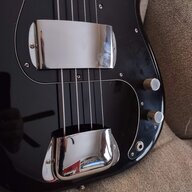
Any info on this bass ??

Good evening all !!!
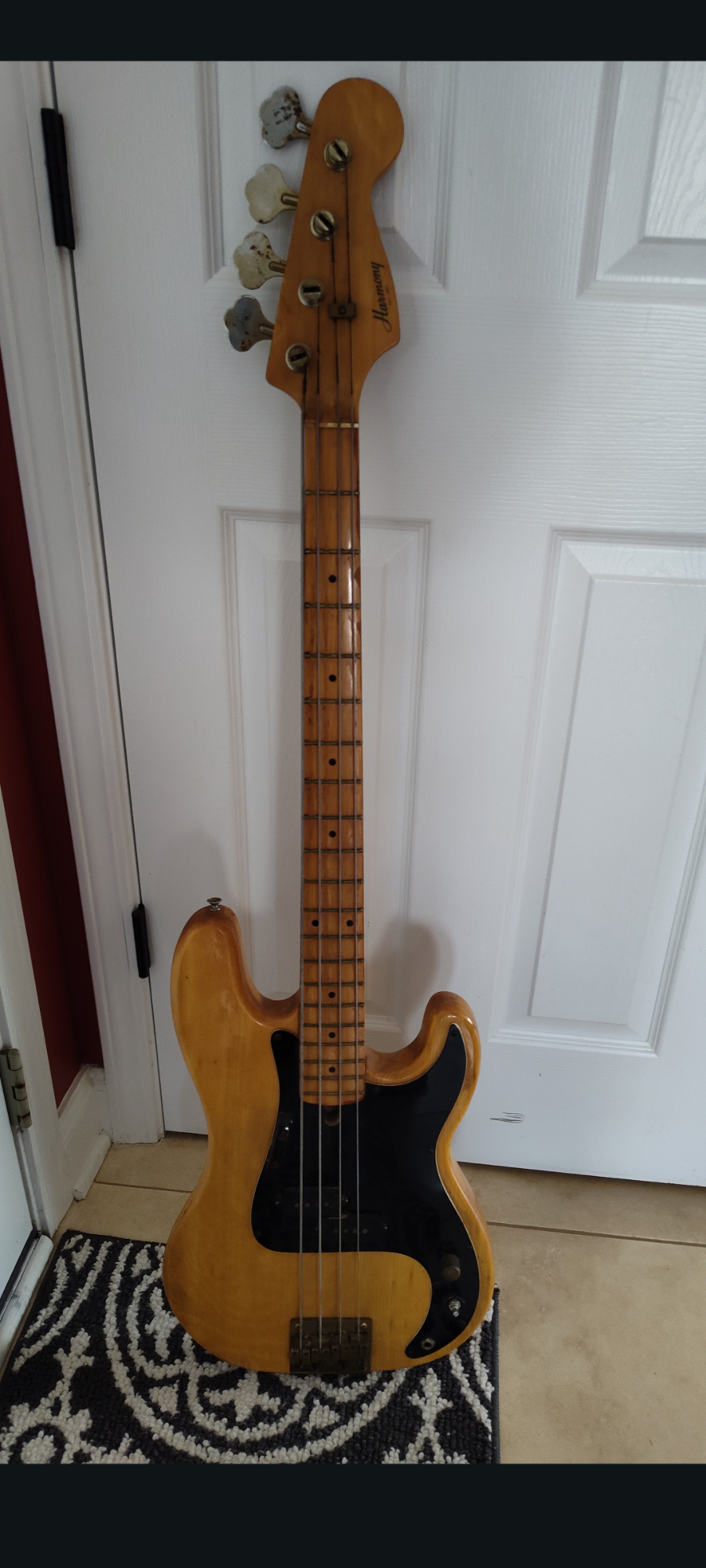
Just picked up this Harmony bass
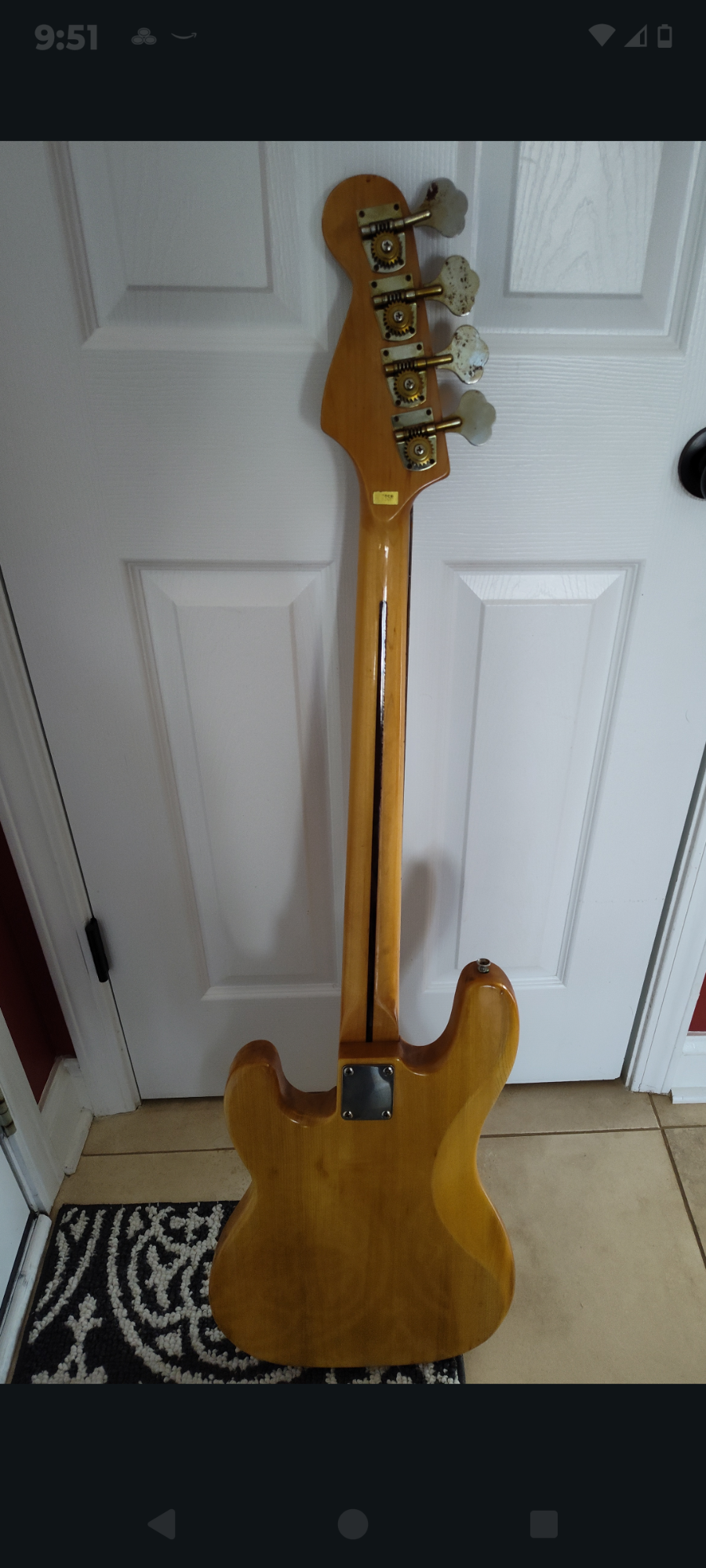
Curious if anyone knows much about them ? Any help on the year ? I don't see any serial number on it anywhere.
Screenshot_20260224-215101.png
Screenshot_20260224-215110.png

Is it a maple body ? Japanese sen ?
Any info is appreciated cause it's just a cool bass !
Thanks
-chop!!!!
 
Is it just my OCD, or has that neck shifted in the neck pocket? Nothing drives me crazier than string spacing issues...Probably easy fix.
Yes I opened up the neck screws in the body and gave her a shift !
It's great now . I will ad a small shim on the treble side back corner to keep it straight . I made a new bone nut installed , a little more love and she will be right !!!
 
  • Like
Reactions: JIO
Cool old Pbass!

AI says this:

“ The Harmony H65N (often referred to as a 70s/80s "8T65N" or similar, manufactured in Japan) is a vintage, solid-body, natural-finish electric bass modeled after the Fender Precision Bass. It typically features a maple neck and body, a single split-coil pickup, and 20 frets, known for a "solid," punchy tone with good sustain.

Key Details of the Harmony H65N Bass:

Era/Origin: Late 1970s to early 1980s, made in Japan.

Design: Solid body, usually with a natural finish, maple neck and body.

Electronics: Single split-coil pickup with one volume and one tone knob (P-Bass style).

Hardware: Often features brass hardware (bridge/nut) and solid tuning machines.

Scale/Nut: 34-inch scale length with a 1 5/8-inch nut width.

Features: Known for a heavy, solid construction compared to other Harmony models.

Condition and Value:

Price: Often sold for a few hundred dollars, considered a good value for a vintage instrument.

Common Issues: Due to age, some models may require shims for the neck, or have worn electronics (pots).

Playability: Generally considered good for beginners or as a collectible, vintage "workhorse".

The H65N should not be confused with the semi-hollow H22 "batwing" bass, which is a different, earlier Harmony model.
 
  • Like
Reactions: JIO and Chop11777
Cool old Pbass!

AI says this:

“ The Harmony H65N (often referred to as a 70s/80s "8T65N" or similar, manufactured in Japan) is a vintage, solid-body, natural-finish electric bass modeled after the Fender Precision Bass. It typically features a maple neck and body, a single split-coil pickup, and 20 frets, known for a "solid," punchy tone with good sustain.

Key Details of the Harmony H65N Bass:

Era/Origin: Late 1970s to early 1980s, made in Japan.

Design: Solid body, usually with a natural finish, maple neck and body.

Electronics: Single split-coil pickup with one volume and one tone knob (P-Bass style).

Hardware: Often features brass hardware (bridge/nut) and solid tuning machines.

Scale/Nut: 34-inch scale length with a 1 5/8-inch nut width.

Features: Known for a heavy, solid construction compared to other Harmony models.

Condition and Value:

Price: Often sold for a few hundred dollars, considered a good value for a vintage instrument.

Common Issues: Due to age, some models may require shims for the neck, or have worn electronics (pots).

Playability: Generally considered good for beginners or as a collectible, vintage "workhorse".

The H65N should not be confused with the semi-hollow H22 "batwing" bass, which is a different, earlier Harmony model.
I thought '80s because of the hs decal so I was potentially correct there. (late 1970s to early 1980s) I had an '80s neck with that decal. With the tuner plate footprint, he could install lighter Gotoh's which have a similar shape. And FTR, saying it was 'generic' I just meant it's a P-bass copy/clone and is not a quality criticism. Many P-bass clones (the Tokai "Hard Puncher" comes to mind) are sometimes as good or better than the original.

1772038308229.jpeg
 
Last edited:
Well... it's all Harmony. They were kind of big in the 60s, they made different types of guitars and basses and honestly, I wasn't a fan. But a solid body solid wood looking jazz like that, what could go wrong. I'd put some paraffin on them gears. Clean it up real, good play it and then make a decision.But it looks very salvageable , and it looks like it would probably be a pretty good player.
 
  • Like
Reactions: Chop11777
Additional info provided by Perplexity:

Around the mid‑1970s, Harmony ceased U.S. manufacturing; later “Harmony” solid‑body basses from the late 1970s into the 1980s were import instruments made in East Asia, primarily in Japan and then Korea, with the Harmony name used on outsourced production.
 
  • Like
Reactions: Chop11777