

Enjoy the benefits of a premium membership!
Upgrade Account
-
TalkBass has been independent since 1998. Add your voice.
Create a free account to reply to discussions, view embedded media, and browse with fewer display ads.
Join free Log in
Want zero display ads or expanded classifieds tools? Compare plans.
You are using an out of date browser. It may not display this or other websites correctly.
You should upgrade or use an alternative browser.
You should upgrade or use an alternative browser.
Any sufficiently advanced technology...
- Thread starter John Metta
- Start date
-
- Tags
- modes
More options
Who Replied?

C Hypolydian Scale ...The notes of this scale are: C, D, E, F#, G, A, and B.
I am missing something.
isn't that simply C Lydian? Whence comes "Hypo"?


We got way beyond 100 posts on the other modal string, we are on our way here.
I'm going to drop out and listen to some Johnny Cash.
I'm going to drop out and listen to some Johnny Cash.

Let’s ask SteveCS about it.I am missing something.
isn't that simply C Lydian? Whence comes "Hypo"?

Ah, yes: the ancient Greeks and the Medieval Church still have much to teach us concerning music.
I wikipedia'd it. Hypolydian is looks exactly like Lydian , but is an obsolete medieval Georgian mode that has no standardized place in modern equal tempered diatonic music theory. The name relates to other obsolete Georgian modes. These are the dark old ways that modern magicians fear to tamper with.
I wikipedia'd it. Hypolydian is looks exactly like Lydian , but is an obsolete medieval Georgian mode that has no standardized place in modern equal tempered diatonic music theory. These are the dark old ways that modern magicians fear to tamper with.
Maybe, SteveCS is a magician?

I wonder why Steve decided to "sprinkle" that Hypolydian mode in.

 Always nice when things fall into place in your brain and come out your fingers.
My favorite is always the dorian gray mode. No matter what, it never gets old.
A la mode.
This makes no sense - the notes listed are just C Lydian and it is a 7 note scale. Is it parody or just horribly misguided?C Hypolydian Scale | Piano Improvisation and Composition Lessons
C HYPOLYDIAN SCALE ON THE PIANO - IMPROVISATION AND COMPOSITION
Notes: C, D, E, F#, G, A, and B - Key: C - Origin: Greek - Category: Octatonic Scales
The C Hypolydian uses eight notes per octave. Because of this same reason it is a member of the so called Octatonic -scales that have Eight-note (or Eight-tone). On the piano keyboard, it is made up of one black keys: F# and six white keys: C, D, E, G, A, and B. This combination makes this scale - as well as the C Aeolian, C Aeolian Harmonic, and C Aeolian Major - as great choices for composing or improvising Greek music.
If we take a look a the key signature of the C Hypolydian Scale we can find it has no flats and one sharps. Therefore, on sheet music you will find one accidentals on the score. The notes of this scale are: C, D, E, F#, G, A, and B.
Now.
Let's look at a very popular Greek dance - Zorba (Sirtaki)
(I've played a lot of this kind of music in the past).
Are we in C Hypolydian?
One could listen from here:
Zorba s Dance (Sirtaki)
View attachment 3618464
C, D, E, F#, G, A, and B = normal 7-note Lydian.

Liven up the bong physics discussion?Maybe, SteveCS is a magician?
I wonder why Steve decided to "sprinkle" that Hypolydian mode in.

Maybe, SteveCS is a magician?
I wonder why Steve decided to "sprinkle" that Hypolydian mode in.
I used that example to illustrate the folly and confusion that can be caused by associating modes only with positions and fingering patterns on hhe instrument, and not modality in the music. I used the example of a 2-pctave G major scale, with some notes (C-D-E-F#-) played as one might learn a lydian pattern, and asked if that sequence could be considered lydian. If it was, then would not starting on G make everything to that point Hypolydian? (which is just Lydian starting from a 4th below final).
Looks like I succeeded.
I used that example to illustrate the folly and confusion that can be caused by associating modes only with positions and fingering patterns on hhe instrument, and not modality in the music. I used the example of a 2-pctave G major scale, with some notes (C-D-E-F#-) played as one might learn a lydian pattern, and asked if that sequence could be considered lydian. If it was, then would not starting on G make everything to that point Hypolydian? (which is just Lydian starting from a 4th below final).
Looks like I succeeded.
And now we know the rest of the story.

And now we know the rest of the story.
Not quite the whole story. I was trying to provoke thinking around how calling the C-F# section of a G Major scale Lydian might be considered as irrational as calling G Ionian C Hypolydian by virtue of the position it is played in. All I got was a flying bike that can't fly but goes very fast!
I think you have provoked a lot of thinking, starting with, “But why?”Not quite the whole story. I was trying to provoke thinking around how calling the C-F# section of a G Major scale Lydian might be considered as irrational as calling G Ionian C Hypolydian by virtue of the position it is played in. All I got was a flying bike that can't fly but goes very fast!
A major / ionian yields F# Aeolian, G# Locrian, C# Phrygian. When in doubt, check the key signature.
In short,
any Major scale "yields" Dorian, Phrygian, Lydian, MixoLydian, Aeolian, Locrian modes.
I think you have provoked a lot of thinking, starting with, “But why?”
To emphasis the point that playing something that looks like a mode due to it's position on the instrument doesn't instantly make the music modal.
And then, there is the hypomixolydian mode. The addition of the prefix "hypo" means that the final note is in the middle of the mode, with the chant melody going both above and below the final, as opposed to a straight mode, where the final is the lowest note of the mode. The link explains what became known as the "church" modes . Note that Locrian was never really used as it had the "diabolus in musica," or the imperfect fifth relationship, and was deemed unstable and avoided, literally, "the work of the devil in music," rather than the perfect fifth relationship of the other modes, which a chant or plainsong melody could be built upon a drone:I wikipedia'd it. Hypolydian is looks exactly like Lydian , but is an obsolete medieval Georgian mode that has no standardized place in modern equal tempered diatonic music theory. The name relates to other obsolete Georgian modes. These are the dark old ways that modern magicians fear to tamper with.
Modes: What are they and how do I use them? - Classic FM
Let's check C major scale.
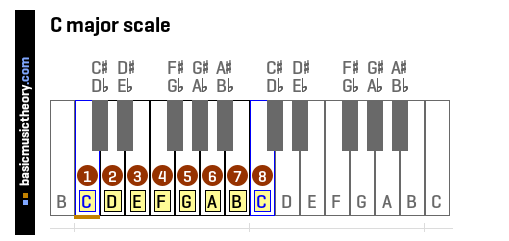
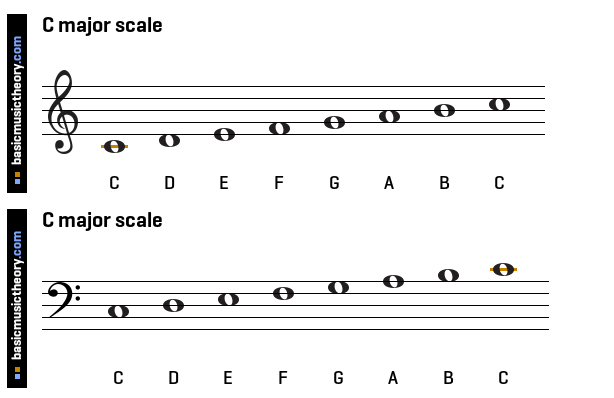
Let's harmonize it.
Triads

Four-note chords

Now, let's take a simple TRIAD chord progression:
C major - D minor - G major, and back to C major.
All those chords are from the C major scale. No Sharps, no Flats.
All chord notes are in the C major scale. EASY!
Let's "spice it up" those chords:
Cmaj7 - Dmin7 - G7, and back to Cmaj7
Once again, we don't need to use any sharps or flats while playing/using those four-note chords.
Everything is DIATONIC.
N.B. Modes are diatonic!
Now, we can find some drum rhythm pattern (BEATS) and play those chord changes.
The bass player thinks, "I just play the Root - Fifth notes of the chords, plus, maybe some other CHORD NOTES, and I'm good with that".
The keyboard player thinks, "I just play the long-note chords. I'm OK with that".
The "soloist" guitar player thinks, "I know the C major scale. I know what to "noodle" with C major scale. I'm good with that, but...
What should I "solo" over that Dmin7 chord?
I understand, I can play the chord notes, but what if I wanted to add something else? Let's say, if I want to play three notes ascending starting with A - C?
What note should I play between A and C?
Is it Bb or B natural?"
Now, we have encountered that "Scales or Modes" "debacle" (only for a few ones!)
Most probably, some knowledgeable TB members would say, "Hey, all those chords are diatonic. All the chord notes belong to the C major scale, just use the notes from C major scale and you are going to be Okay."
But what if a guitar player is not(!) good at Harmony?
Then, the guitar player watches some YouTube videos and learns that
"You should play D Dorian with that Dmin7 chord in our Cmaj7-Dmin7-G7-Cmaj7" chord progression.
When the guitar player encounters the G7 chord and watches another YouTube video, the guitarist gets an answer, "Play G Mixolydian with G7 chord".
The guitar player practices Mixolydian and during next rehearsal, the guitar player is very comfortable about that chord progression. The guitar player knows what notes (besides the chord notes) to play.
The guitar player is very content and tells everyone that with Dmin(7) in our C-Dm-G7-C chord progression, "Just play D Dorian", and with G7, "Just play G mixolydian".
The bass (smart) player, says, "I don't know why you are so exited. Just play the notes of the C major scale and don't think about anything else. All that mode "cr..p" is nonsense."
The guitar player does not want to argue with the smart bass player; therefore, the guitar player says nothing, just smiles.

Let's harmonize it.
Triads
Four-note chords
Now, let's take a simple TRIAD chord progression:
C major - D minor - G major, and back to C major.
All those chords are from the C major scale. No Sharps, no Flats.
All chord notes are in the C major scale. EASY!
Let's "spice it up" those chords:
Cmaj7 - Dmin7 - G7, and back to Cmaj7
Once again, we don't need to use any sharps or flats while playing/using those four-note chords.
Everything is DIATONIC.
N.B. Modes are diatonic!
Now, we can find some drum rhythm pattern (BEATS) and play those chord changes.
The bass player thinks, "I just play the Root - Fifth notes of the chords, plus, maybe some other CHORD NOTES, and I'm good with that".
The keyboard player thinks, "I just play the long-note chords. I'm OK with that".
The "soloist" guitar player thinks, "I know the C major scale. I know what to "noodle" with C major scale. I'm good with that, but...
What should I "solo" over that Dmin7 chord?
I understand, I can play the chord notes, but what if I wanted to add something else? Let's say, if I want to play three notes ascending starting with A - C?
What note should I play between A and C?
Is it Bb or B natural?"
Now, we have encountered that "Scales or Modes" "debacle" (only for a few ones!)
Most probably, some knowledgeable TB members would say, "Hey, all those chords are diatonic. All the chord notes belong to the C major scale, just use the notes from C major scale and you are going to be Okay."
But what if a guitar player is not(!) good at Harmony?
Then, the guitar player watches some YouTube videos and learns that
"You should play D Dorian with that Dmin7 chord in our Cmaj7-Dmin7-G7-Cmaj7" chord progression.
When the guitar player encounters the G7 chord and watches another YouTube video, the guitarist gets an answer, "Play G Mixolydian with G7 chord".
The guitar player practices Mixolydian and during next rehearsal, the guitar player is very comfortable about that chord progression. The guitar player knows what notes (besides the chord notes) to play.
The guitar player is very content and tells everyone that with Dmin(7) in our C-Dm-G7-C chord progression, "Just play D Dorian", and with G7, "Just play G mixolydian".
The bass (smart) player, says, "I don't know why you are so exited. Just play the notes of the C major scale and don't think about anything else. All that mode "cr..p" is nonsense."
The guitar player does not want to argue with the smart bass player; therefore, the guitar player says nothing, just smiles.


