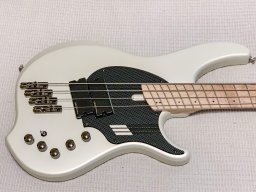
Perhaps Yamaha produces designs that have some advantage, but other than that, they're in precisely the same boat as everyone else is who farms out their production to the same distant plants.
It's interesting -- or perhaps depressing -- to me to see how people desperately struggle to justify their pitiful loyalties to "brands" that are little more than marketing fictions, never mind how much bandwidth is burned here in those efforts.
Wow, so pissy... It's a Yamaha. If you want more, pay for more. I'm sure Vinny Fodera will make whatever you want for a nice starting price of $5000... For the rest of us, these cookie-cutter basses work very well and even get us paid gigs.
Um... you're reading way too far into this. All of the brands that use the Cortex facilities work on the same principal. They send over their designs via software and pay the Cortex factory (or whatever they're called now) to produce the instrument to the tolerances they desire. If they want higher tolerances on the machining, they pay more. That's how MTD, Lakland, Yamaha, Charvel/Jackson, Samick, Cort, etc all work with those "identical" factories. Those factories are also largely automated to produce cookie-cutter stable guitars.
No, there are not little asian slaves manually labouring over these guitars. They're there to program the CNC machines.
There's actually a huge advantage to doing things that way. You get a consistent product, the precision you want and if anything goes wrong, you just swap out a neck or body at the loading dock when they hit the US/Canada and you're done.
That, and with everything being Plek'ed these days, it's really down to a science unless something is actually wrong with the body blank they cut and assembled which may not show up right after assembly.
I remember MTD having a bunch of spare necks and bodies sitting around in case a bass came in that was unable to be set up to spec.
Nothing wrong with that at all.