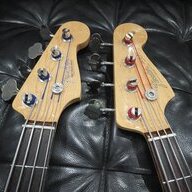
Bernard Edwards played that line on a stingray..There's rumor that he played that line on a pbass but there's no way..I've had a J and a P bass, although good neither was versatile enough in their individual right.
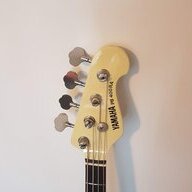
Then Macca's Yahama and Bernard Edwards "Good Times" made me notice the reverse P. Lee Sklar confirmed it.
Reduce the bottom end for E & A, replace it on the preamp, and D & A have a better bottom than before. Logic. Leo F agreed.
Between seasons of prerecording TV talent shows, Í converted my EMG hotrod to reverse P, and the difference was proved to me. The new mixes were better than earlier.
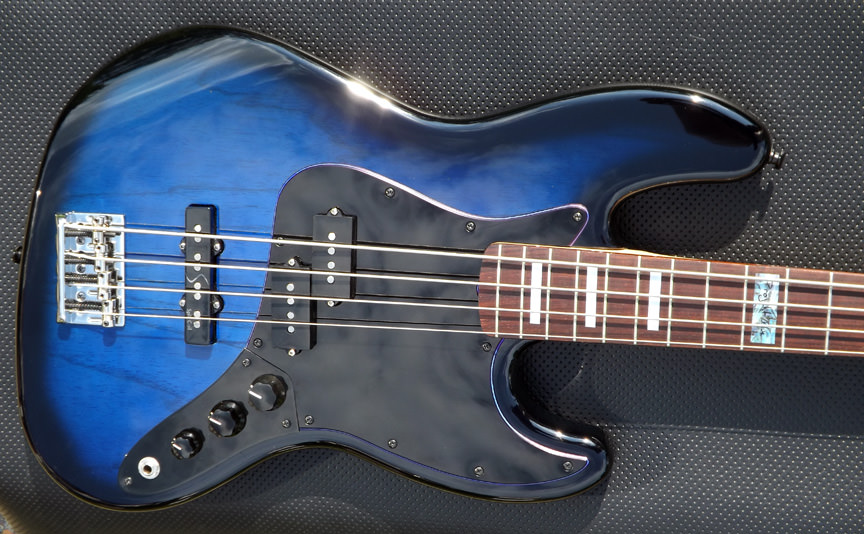
But I still wanted the growl and roar of the J as well. My last hotrod was a reverse P (70s Fender) and a SD hot stack J.
I wired it stereo out to mix then individually. I got a P sound unaltered, and the choice of adding J attributes separately mixed or together. That gave me 3 or 4 useful sounds.
Coil tap the PUs for more. Wrap shield the P and coaxial shield the wiring for still better. Still my no 1 bass.
There's no need to convert a good P or J; plenty of coys make them already. The good ones are usually active. Stuart Sender and Nick Fyffe (Jamiroquai live) show them off well.
The problem is you can't just add a Fender J to a Fender P and expect humbucking - the J must be self-humbucking ie a double coil eg a stack. Other smaller issues as well.
Whatever you choose, the PJ sound is not (yet) classic, it is a blend of the best of P and J, and different from expectations. We've all heard it on You Get What You Give - New Radicals. Listen to the fat bottom end of the P and the drive of the J.
To me it's the next development stage of the Fender bass. And don't listen with your eyes - it's ugly.