
Although I've never owned and instrument with a brass nut, I like the idea. I've had a few bone and plastic nuts broke before, and I think a brass nut would sound closer to a zero fret. I dont mind the tarnished look, and don't like nuts with moving parts like the adjustable ones.

Enjoy the benefits of a premium membership!
Upgrade Account
-
TalkBass has been independent since 1998. Add your voice.
Create a free account to reply to discussions, view embedded media, and browse with fewer display ads.
Join free Log in
Want zero display ads or expanded classifieds tools? Compare plans.
You are using an out of date browser. It may not display this or other websites correctly.
You should upgrade or use an alternative browser.
You should upgrade or use an alternative browser.
Anyone else like brass nuts?
- Thread starter DaveParker39
- Start date
More options
Who Replied?
Turnaround
Commercial User
Yes.Does the crown of the zero sit at where the fingerboard edge of the nut usually sits?

So is the zero fret slot cut into the nut material in the case of a retrofit? I've never seen or worked on one of these.

Has anyone ever done a bronze nut? I think its harder than brass, isnt it? It's used as washers on machines all the time because its sort of self-lubricating, so.I.always thought it might make a good nut material. It eventually just goes a dark brown/black and stays that way, with highlights at wear points. Might look cool AF on the right bass.

I love it on my old P-bass!
My local luthier is very reluctant to cut a brass nut for my J-bass. I guess he doesn't want to wear out his elbow and/or his files.
I am mulling upgrading to brass on my Warwick Streamer Stage I. Except it will cost $150 before labor, and the sound is already pretty metallic.
My local luthier is very reluctant to cut a brass nut for my J-bass. I guess he doesn't want to wear out his elbow and/or his files.
I am mulling upgrading to brass on my Warwick Streamer Stage I. Except it will cost $150 before labor, and the sound is already pretty metallic.
$150 before labour?? The nut probably uses about $0.50 worth of brass.I love it on my old P-bass!
My local luthier is very reluctant to cut a brass nut for my J-bass. I guess he doesn't want to wear out his elbow and/or his files.
I am mulling upgrading to brass on my Warwick Streamer Stage I. Except it will cost $150 before labor, and the sound is already pretty metallic.

My brother has done the brass nuts on my Stratocasters and my P-Basses, and I don't think they became more "metallic"... just more consistency in sound (which is a perception) and less issues at the nut than a bone or plastic nut, although I'm sure well cut nuts of other material can be "issue free".I love it on my old P-bass!
My local luthier is very reluctant to cut a brass nut for my J-bass. I guess he doesn't want to wear out his elbow and/or his files.
I am mulling upgrading to brass on my Warwick Streamer Stage I. Except it will cost $150 before labor, and the sound is already pretty metallic.
At any rate, if I am ordering a custom guitar or getting a nut put in, brass is what I'm doing for sure.

They have pictures with their installation instructions.So is the zero fret slot cut into the nut material in the case of a retrofit? I've never seen or worked on one of these.

And they're pointless. There's only one nut height that is right for a given bass. Even if you change string gauges. Or adjust the truss rod. It's just one more needless adjustment that can go wrong. The only time you need to change the nut height is if you refret or grind the frets down.
Right, but the adjustability means that responsibility for getting it right passes from the factory to the user. No more nut filing on the production line.
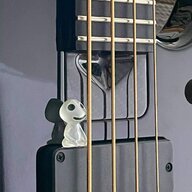
And they're pointless. There's only one nut height that is right for a given bass. Even if you change string gauges. Or adjust the truss rod. It's just one more needless adjustment that can go wrong. The only time you need to change the nut height is if you refret or grind the frets down.
I read once that John Entwistle requested height-adjustable nuts in his Alembic basses specifically because he changed his RotoSound strings so frequently, it would wear the nut slots on "regular" nuts down -- or at least he had such a concern. Interesting anecdote, anyway.
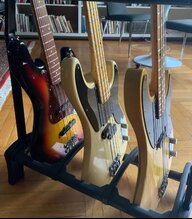

So I just installed an adjustable brass nut. As I mentioned, I got it not because I think brass (or adjustability) are superior qualities, but because I want the ability to switch between EADG and BEAD tunings. I don't know if there would be any issues running EADG in a nut filed for the larger BEAD string gauges (does anyone know?) but this way I can avoid that scenario either way.
So far so good, but I did run into an issue that I'll need to address. I think to save on machining costs, there are only two sizes of slots cut in the adjustment "screws" or whatever you want to call them, rather than 4 different sizes for 4 different string gauges. It uses two of the large size grooves for E and A, and two of the small size grooves for D and G. I'm running kind of beefy round wounds, and the D string (or A string when I'm in BEAD) tends to pop out of the nut slot. A minute or two with a file should fix it, but it highlights a potential issue with the design if there's side-to-side tension on the strings at the nut due to the headstock shape and tuner locations.
So far so good, but I did run into an issue that I'll need to address. I think to save on machining costs, there are only two sizes of slots cut in the adjustment "screws" or whatever you want to call them, rather than 4 different sizes for 4 different string gauges. It uses two of the large size grooves for E and A, and two of the small size grooves for D and G. I'm running kind of beefy round wounds, and the D string (or A string when I'm in BEAD) tends to pop out of the nut slot. A minute or two with a file should fix it, but it highlights a potential issue with the design if there's side-to-side tension on the strings at the nut due to the headstock shape and tuner locations.


