• TalkBass has been independent since 1998. Add your voice.
    Create a free account to reply to discussions, view embedded media, and browse with fewer display ads.
    Join freeLog in
    Want zero display ads or expanded classifieds tools? Compare plans.

Anyone here know about Cameo basses?

Today, I got a Facebook message from a musician offering me a 1970 Cameo bass. Part me of me says that it would be awesome to have a bass from 1970. But, my more rational side says that it's probably safe not to take the risk because it's a brand that I've never heard of and i can't find any info on it online.

12562742_1261642210518988_1030371860_o_zpsipvi4a9x.jpg
 
  • Like
Reactions: biguglyman
This is a pre-lawsuit era Japanese "badged" bass, which makes it of dubious quality in both materials and workmanship. Expect set-up issues.
The musician who is offering it to me said that the wiring was completely replaced in November as well as a string change and set up. If the set up isn't up to my liking, that's nothing that a trip to my local guitar tech can't fix.
 
The musician who is offering it to me said that the wiring was completely replaced in November as well as a string change and set up. If the set up isn't up to my liking, that's nothing that a trip to my local guitar tech can't fix.

True, provided your tech is proficient at neck-shimming and reverse bowing a neck. I grew up surrounded by basses like this, and the truss rod was never their strong suit.
 
  • Like
Reactions: bholder
True, provided your tech is proficient at neck-shimming and reverse bowing a neck. I grew up surrounded by basses like this, and the truss rod was never their strong suit.
Instruments like that are exactly why I was so prejudiced against Japanese imports for so long. But then, the ones that have survived this long are likely decently playable or they'd be in a landfill or fireplace by now.
 
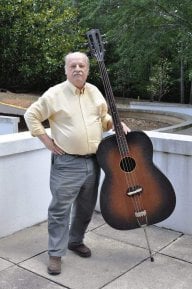
Okay, to address both JR and bh: I was born in 1949 and began playing very late in 1965. My very first bass

upload_2016-1-18_13-19-40.jpeg


of only marginally improved quality compare to the bass JR is considering, came out of a WoolCo department store, along with k-mart the Wal-Mart of its era. (The only other bass this Wal-Mart
had was a plastic-encased Egmond.)

Trigger alert: long Geezer blather to follow:

IMO, instrument shopping when I was growing up was like that cornfield in the movie Field of Dreams; it was heaven. For me, even the advantages of today's online shopping don't compare. My hometown business district, within a roughly six square block area, had six music stores that sold guitars and basses, two really good pawn shops, and a third really good pawnshop just across the Red River not far from Barksdale Air Force Base. We had everything at our disposal, from absolute treasure to the veriest trash. The bona fide music stores had their contracts with Gibson, Fender, Magnatone, Vox, and they took used instruments in trade. The air base provided the inventory for the pawn shops, which is where the poor-quality Japanese basses usually were found.
Further out from downtown were neighborhood pawn shops, and the Sears Roebuck, where we could get Danelectro, Harmony, and Teisco.

Big box stores like K-Mart and WoolCo could get no contracts with Fender, et al, and therefore had to get bass product from U.S. importer distributors, most of which is what we refer to as "badged" instruments: from Japan with minor variations on a theme, with an adhesive name label or decal with names like Cameo, Decca, Norma, Teisco, ad infinitum stuck on the headstock. Mail-order houses like Sears, Spiegel, and Montgomery Ward had it a little better. They could contract with manufacturers of mid-level instruments.

Saturday morning was a weekly ritual. Me and my buddies would converge downtown and hit *all* the music stores and pawn shops. The guitar player on the left in the pic above learned how to play the guitar riff to the Beatles' "And Your Bird Can Sing" on a Kapa electric twelve-string (nailed it) and, emboldened by his success, proceeded to do the same thing with the waltz portion
of "Die Fleidermaus." In the pic, that guitarist is playing a Harmony/Silvertone obtained from Sears, I have my unbadged WoolCo bass (you can see how tall I was compared to the drummer, who is seated), and the guitarist on the right got his instrument mail order from Lafayette Electronics. So you see, we all wanted the Fenders and Gibsons but at first could afford only lesser instruments, including the Japanese imports.

Geezer blather off.
 
Okay, to address both JR and bh: I was born in 1949 and began playing very late in 1965. My very first bass

View attachment 776406


of only marginally improved quality compare to the bass JR is considering, came out of a WoolCo department store, along with k-mart the Wal-Mart of its era. (The only other bass this Wal-Mart
had was a plastic-encased Egmond.)

Trigger alert: long Geezer blather to follow:

IMO, instrument shopping when I was growing up was like that cornfield in the movie Field of Dreams; it was heaven. For me, even the advantages of today's online shopping don't compare. My hometown business district, within a roughly six square block area, had six music stores that sold guitars and basses, two really good pawn shops, and a third really good pawnshop just across the Red River not far from Barksdale Air Force Base. We had everything at our disposal, from absolute treasure to the veriest trash. The bona fide music stores had their contracts with Gibson, Fender, Magnatone, Vox, and they took used instruments in trade. The air base provided the inventory for the pawn shops, which is where the poor-quality Japanese basses usually were found.
Further out from downtown were neighborhood pawn shops, and the Sears Roebuck, where we could get Danelectro, Harmony, and Teisco.

Big box stores like K-Mart and WoolCo could get no contracts with Fender, et al, and therefore had to get bass product from U.S. importer distributors, most of which is what we refer to as "badged" instruments: from Japan with minor variations on a theme, with an adhesive name label or decal with names like Cameo, Decca, Norma, Teisco, ad infinitum stuck on the headstock. Mail-order houses like Sears, Spiegel, and Montgomery Ward had it a little better. They could contract with manufacturers of mid-level instruments.

Saturday morning was a weekly ritual. Me and my buddies would converge downtown and hit *all* the music stores and pawn shops. The guitar player on the left in the pic above learned how to play the guitar riff to the Beatles' "And Your Bird Can Sing" on a Kapa electric twelve-string (nailed it) and, emboldened by his success, proceeded to do the same thing with the waltz portion
of "Die Fleidermaus." In the pic, that guitarist is playing a Harmony/Silvertone obtained from Sears, I have my unbadged WoolCo bass (you can see how tall I was compared to the drummer, who is seated), and the guitarist on the right got his instrument mail order from Lafayette Electronics. So you see, we all wanted the Fenders and Gibsons but at first could afford only lesser instruments, including the Japanese imports.

Geezer blather off.
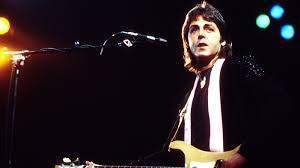
I read the caption to that photo l. It said you were going to "satisfy Knights" later.
Did you satisfy them?
 
I read the caption to that photo l. It said you were going to "satisfy Knights" later.
Did you satisfy them?


Gee, I wanted to; I really did. But I got stuck on the daze shift.

Incidentally, my senior class, to which five of the people in that pic belong, is making plans for its 50th class reunion, to be held later this year.
 
Okay, to address both JR and bh: I was born in 1949 and began playing very late in 1965. My very first bass

View attachment 776406


of only marginally improved quality compare to the bass JR is considering, came out of a WoolCo department store, along with k-mart the Wal-Mart of its era. (The only other bass this Wal-Mart
had was a plastic-encased Egmond.)

Trigger alert: long Geezer blather to follow:

IMO, instrument shopping when I was growing up was like that cornfield in the movie Field of Dreams; it was heaven. For me, even the advantages of today's online shopping don't compare. My hometown business district, within a roughly six square block area, had six music stores that sold guitars and basses, two really good pawn shops, and a third really good pawnshop just across the Red River not far from Barksdale Air Force Base. We had everything at our disposal, from absolute treasure to the veriest trash. The bona fide music stores had their contracts with Gibson, Fender, Magnatone, Vox, and they took used instruments in trade. The air base provided the inventory for the pawn shops, which is where the poor-quality Japanese basses usually were found.
Further out from downtown were neighborhood pawn shops, and the Sears Roebuck, where we could get Danelectro, Harmony, and Teisco.

Big box stores like K-Mart and WoolCo could get no contracts with Fender, et al, and therefore had to get bass product from U.S. importer distributors, most of which is what we refer to as "badged" instruments: from Japan with minor variations on a theme, with an adhesive name label or decal with names like Cameo, Decca, Norma, Teisco, ad infinitum stuck on the headstock. Mail-order houses like Sears, Spiegel, and Montgomery Ward had it a little better. They could contract with manufacturers of mid-level instruments.

Saturday morning was a weekly ritual. Me and my buddies would converge downtown and hit *all* the music stores and pawn shops. The guitar player on the left in the pic above learned how to play the guitar riff to the Beatles' "And Your Bird Can Sing" on a Kapa electric twelve-string (nailed it) and, emboldened by his success, proceeded to do the same thing with the waltz portion
of "Die Fleidermaus." In the pic, that guitarist is playing a Harmony/Silvertone obtained from Sears, I have my unbadged WoolCo bass (you can see how tall I was compared to the drummer, who is seated), and the guitarist on the right got his instrument mail order from Lafayette Electronics. So you see, we all wanted the Fenders and Gibsons but at first could afford only lesser instruments, including the Japanese imports.

Geezer blather off.
The second band I was in, in the mid-70s, everyone but me played Teisco-level imports. I didn't stay in that band very long. ;)
 
The second band I was in, in the mid-70s, everyone but me played Teisco-level imports. I didn't stay in that band very long. ;)

As I recall, and it's been a LONG time, that bass of mine had no dead spots, but developed terrible neck bow; and we did not know about truss rods. I traded it toward a Vox Cougar that had an arrow-straight neck, but *horrible* dead spots (and we did not know about C-clamps, either).
 
  • Like
Reactions: bholder
As I recall, and it's been a LONG time, that bass of mine had no dead spots, but developed terrible neck bow; and we did not know about truss rods. I traded it toward a Vox Cougar that had an arrow-straight neck, but *horrible* dead spots (and we did not know about C-clamps, either).
Nothing like reminiscing about the good old days to remind ourselves there have been some improvements since. ;)
 
Japan exported some unequivocally great instruments from the mid-70's through early 80's. The one in question is a student-type bass, and is probably quite flimsy, janky, etc.
Yeah, I'm ashamed to admit that for 30+ years I lumped them all together as junk, but there were some gems. I've found a couple since to rehab.
 
Japan exported some unequivocally great instruments from the mid-70's through early 80's. The one in question is a student-type bass, and is probably quite flimsy, janky, etc.

Yeah; figure 1978 - 85 as the Golden Era for Japanese basses. The Japanese figured it out with their better than the originals copies they were producing during the just-ended lawsuit era, and applying what they had learned to their own original designs. Aria, Ibanez, Daion, the Washburn Wing series -- all these were from that period. And the second-tier instruments -- Lotus, Vantage,
Memphis, the Aria Cardinal series -- were not all *that* bad.

The only American makers I can recall really trying to compete in that same box were Carvin (LB series), Guild (B series), and Martin (EB series).