• TalkBass has been independent since 1998. Add your voice.
    Create a free account to reply to discussions, view embedded media, and browse with fewer display ads.
    Join freeLog in
    Want zero display ads or expanded classifieds tools? Compare plans.

are You a passivist?

My active bass has the capacity to be passive (hence the on/off switch). Best of both worlds?

Meh - whatever helps people achieve their sound - I'm for that. The best part about music is that each of us has our own sound!
Which is awsome if "our" sound
Sits in the mix well and works with the music we play. I think sometimes in our efforts to be unique we can make things hard on the soundguy etc
 
  • Like
Reactions: StayLow
Passive. I was really into the active eq thing (never active pickups) when I gigged a lot a few years back, but right now that I do the occasional jam and mandatory bedroom concertos, I find passive basses to be sweeter, rich, straight to the chase, and very efficient. I definitely prefer to have an outboard preamp, like my tried and true SansAmp Bass Driver DI, or my recent purchase, the Aguilar Tone Hammer DI. I do like the control an active bass provides, but the same and more can be achieved with a great outboard preamp pedal or rack, TO ME.

I own 2 passive basses (one p bass and one cabronita p bass) and 1 active (G&L L-2500) which by the way is turning into a fully passive bass.

PS. Someone mentioned that the effect pedals react better (at least to him) with passive electronics, this is somewhat true. Overdrive just sounds amazing! Much warmer than with active pickups, which I find to be to raspy and aggressive.
 
I enjoy both. Really to me it comes down to whatever the song calls for. Creatively speaking, different basses will bring different ideas out of me. My bongo is active and the sound really is great, both for live playing and recording. The preamp makes it very versatile and excellent for direct recording. It has a huge output that could not be achieved with an active bass. My jazz bass is passive. It has a lower output, is not as tonally versatile, and is not as aggressive as the bongo. Rather, it has a more mellow and perhaps more organic sounding tone, which works very well for certain songs. Basically, to me a great bass is a great bass, and great basses come in many different configurations.
 
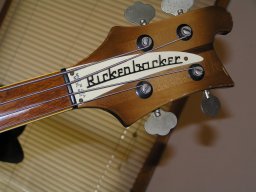
It depends on what you plan to use the bass for. To me, active basses seem to made for slapping or metal. If you play classic rock, country, jazz, folk, or classical, you probably don't need one. 11 of my 12 basses are passive, the sole exception being a blue '92 Carvin LB70. I bought it because the quality was unbeatable. Resale value is the opposite, you take a beating. I used it on gigs, but never really felt comfortable with it. It was more of a problem getting used to the 24 fret neck than the active EQ. Sounds like a 4001 only brighter. Great bass, though. Maybe someday I'll get it to sing.
 
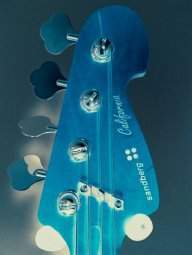
I have 2 active basses, a sandberg california and a stingray. I play the California basically flat, with the bass just slightly more than 1/2 way. It doesn't sound like an 'active' bass at all but like a regular p bass. The stingray is a different beast altogether and is full on active. I play this with the mid slightly boosted, cuts through everything. I like being able to tweak my sound on-the-run. I have several rechargeable 9v batteries that I swap out before a gig. No big deal.
 
Passive Guy here...

When I first started playing bass, I had a passive epiphone that was given to me for Christmas. As I began playing more, I switched over to active basses (MusicMan, etc.). I never really got the tone I wanted out of them. My worst fear was always that I would forget to switch the battery out before a show...

I then switched back to passive when I bought my first American Pbass and it was all downhill from there. I still own that bass to this day, along with another American Pbass, and an American Jazz. Between a passive Pbass and a passive Jazz, I have been able to get any tone I need for a set. I also recently acquired a late 60s Ampeg B25B Stack which has also helped my tone tremendously. To each his own though...
 
  • Like
Reactions: Handz Solow
While I'd would prefer passive, I find active (my Overwater has a very transparent pre-section) better sounding or more adaptable in 2 real-world situations: 1) long chains of multiple effects 2) playing in a place where the backline is an unknown entity, in which case an active tone will be a bit more predictable/managebale.