Hey all, I'm currently doing my Yr 12 Music Extension assignment task on Cliff Burton's use of distortion and Wah and then comparing how Jason fails to recreate this on the live recordings present on the Deluxe MOP album (Live at the country club was recorded post Cliff's death)
I was hoping anyone who has a good idea or perspective on this topic would be able to help me out in adding more detail to the assignment itself. In no way am I looking for people to write this for me, just opinions on the report and things to consider
Also mods if this more belongs in OT or Theory I'm sorry for posting in wrong category
I was hoping anyone who has a good idea or perspective on this topic would be able to help me out in adding more detail to the assignment itself. In no way am I looking for people to write this for me, just opinions on the report and things to consider
When Performing Metallica songs from Kill’em all, Ride the lightning and Master of puppets distortion must be used to present a convincing interpretation of the late Metallica bassist, Cliff Burton
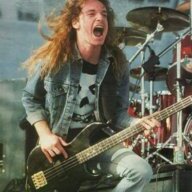
Clifford lee ‘Cliff’ Burton was the second Metallica Bassist and was active from 1980 until his untimely death in 1986. During this time Cliff appeared on the band’s first three albums Kill’em All, Ride the lightning and Master of Puppets as well as writing credits on ‘To live is to Die’ from the bands fourth album …And Justice for all and an appearance on the bands cover album Garage Inc. on the 1984 recordings of ‘Blitzkrieg’ and ‘Am I evil?’(source 1). Following this the band has had two other official bassist’s attempt to recreate Cliff’s bass playing, those being ‘Jason Newsted’ and ‘Roberto Trujilio’. However over the many years, though countless attempts have been made by the band the ability to recreate Cliff’s feel has been unsuccessful.
Many argue that the feel cannot be successfully recreated due to a lack of passion or that it was the instrument itself that led to Cliff’s signature feel. Though those reasons may have obvious reason to their claim, one indisputable fact is known by many, Cliff’s distortion played a heavy part in his effect and feel. Yet it is unknown how and why Cliff used the tone effect to model his bass playing into the heavy low end Metallica is known for today.
Cliff’s Tone – A history and evolution
Throughout Cliff’s run as Metallica’s bassist, Cliff’s heavy and distorted tone has always led him to be known as the writer and performer behind Metallica’s (Anethesia) Pulling Teeth off of Metallica’s debut album ’Kill’em all’. However Cliffs distorted tone didn’t just come naturally.
Cliff’s tone was built up of two main tone effects, Distortion and Wah, both of which appear on pulling teeth. Within the ‘Kill’em All’ and ‘Ride the lightning’ era Cliff used these effects constantly, whether it be live or studio recorded.
During this era Cliff used an EHX (Electro Harmonics) Big Muff PI which would be replaced by a Boss CS-2 Compressor around the time that Master of puppets was recorded in 1986 (source 2).
As well as using distortion, Cliff relied heavily on a Morley Power Wah pedal in his soloing work, an example of this pedal in effect would be in the recording of For whom the Bell tolls in the Intro section.
Kill’em All
In this section, Metallica’s (Anestesia) pulling teeth will be used as example, this is this piece successfully details and exemplify Cliff’s use of the EHX and the Morley Power wah as opposed to other Metallica songs that merely feature Cliff in the background
Kill’em all was ‘Metallica’s’ debut album and featured ten songs that kick-started Metallica’s reputation within the metal community. On the album was a four and a half minute long bass solo entitled (Anestesia) pulling teeth and was written and recorded by Cliff himself. The piece features a melodic and heavily technique style. The song itself is split into an A and B section, with the A section highlighting the use of the Morley Power Wah and the second section highlighting cliff’s use and tone with his EHX.
The song begins with Metallica’s rhythm guitarist and vocalist, ‘James Hetfield’ introducing the song with the statement “Bass solo, Take 1” and immediately the listener is introduced to Cliffs heavy and distorted bass tone, from there Cliff constantly changes the dynamics of how he plays his notes and utilises this manipulation to transition the song into its second section (2:09) which is where Cliff primarily uses his Morley power wah pedal.
As well as the album version of Anesthesia Cliff was recorded numerous times performing pulling teeth live would use these effects in a much more dominant tone. One such example is Metallica’s 1983 “Live Chicago 1983” performance (Source 3) where Cliff used his EHX to not only create a heavy distorted sound, but also utilised the pedal to make a synthetic tone as well. As well as the use of cliff’s EHX, Cliff’s Morley was heavily used within the performance to detail Cliff’s fingering and projection of notes.
Ride the Lightning
In this section, Metallica’s “For whom the bells Toll” shall be analysed to highlight Cliff’s use of the Power wah and the EHX as driving factors behind Cliff’s tone throughout this era of Metallica’s life cycle
Ride the lightning is ‘Metallica’s’ second album and was released in 1984 and unlike its previous album, only features eight tracks. The album’s third track, For whom the bells toll is unique in ‘Metallica’s’ discography for being Metallica’s first song as a band to feature a bass solo in the opening (This is unlike Pulling teeth as For whom the bell Tolls” was independently written by Cliff before his time in the band) and is a great example of Cliff’s lead bass playing style which would be very consistent on the album.
The song begins with a chiming sound of something banging against a bell followed by the band being introduced. Followed by this Cliff enters with his signature distorted bass tone (0.09) and powers this solo with his Morley Power wah where he constantly shifts between usage and the amount of Wah within the solo. As the solo concludes at 0.40 cliff’s real distorted tone can be heard as the main verse riff of the remainder of the song
In a live setting Cliff’s use of Wah and Distortion in for whom the bell tolls was not something that was done lightly. In Metallica’s live “1985 at Day on the Green”( source 4) Cliff features a more harsher, distorted tone as well as an overpowering use of his Morley power wah pedal in the live rendition’s introduction. When Cliff begins to play his solo in for whom the bell tolls’ intro Cliff uses his Wah pedal immensely.
Cliff vs Jason
In this final section, Live renditions of the intro section of the previously discussed song, “For whom the bell Tolls” will be analysed, the first being Cliff’s performance on “Live at the Meadowlands 1986” and secondly Jason Newsted’s version on “Live at the country club 1986”
1986 was one of the best and also one of the most tragic years in Metallica’s history. In the space of six months Metallica released their successful and most well-known album, Master of Puppets, in March of 1986 and would later suffer the loss of Cliff Burton in a freak bus accident in September later that year while on tour in Sweden. Following this Metallica would have Jason Newsted Join the band as the new Bassist and would remain with the band until 2000. As Jason joined Metallica, so did the bass dynamic of the band.
‘Live at the Meadowlands’ (Source 5) was the last ever recorded performance of Cliff before his tragic death and featured the bands iconic song for whom the bell tolls. In the performance cliff used his brand new Boss CS-2 Compressor which would replace his EHX which was used previously and offers a grainier and more clear tone then the EHX. This is also apparent in the verse section with a more distinctive and distorted tone.
‘Live at the country club’ (source 6) was Jason’s first recorded performance with Metallica and featured a live rendition of for whom the bell tolls. This version however features a clean bass tone for the solo and verse section. Jason’s rendition of the song is collectively much weaker and was eventually improved on in later performances with the addition of distortion and Cliff’s Power Wah which was given to Jason by cliff’s family.
Conclusion
In conclusion, Cliff Burton’s bass playing was something to marvel over during his span as the Metallica Bassist and although attempts to recreate the vibe of his bass playing has been attempted in the past, Tone is a key factor in recreating the late Bassist’s vibe.
Bibliography
Source 1
Cliff Burton full discography
Invalid Link Removed
Source 2
Cliff’s Power Fuzz Wah and Big Muff PI
[Invalid or Expired Link Removed]
Source 3
Live Chicago 1983, (Anesthesia) Pulling Teeth
Source 4
1985 at Day on the Green, For whom the bell Tolls
Source 5
1986 at the meadowlands, for whom the bell Tolls (Last CB show)
(13:10)
Source 6
1986 At the Country Club, For whom the bell Tolls (first JN show)
(8.04)
Clifford lee ‘Cliff’ Burton was the second Metallica Bassist and was active from 1980 until his untimely death in 1986. During this time Cliff appeared on the band’s first three albums Kill’em All, Ride the lightning and Master of Puppets as well as writing credits on ‘To live is to Die’ from the bands fourth album …And Justice for all and an appearance on the bands cover album Garage Inc. on the 1984 recordings of ‘Blitzkrieg’ and ‘Am I evil?’(source 1). Following this the band has had two other official bassist’s attempt to recreate Cliff’s bass playing, those being ‘Jason Newsted’ and ‘Roberto Trujilio’. However over the many years, though countless attempts have been made by the band the ability to recreate Cliff’s feel has been unsuccessful.
Many argue that the feel cannot be successfully recreated due to a lack of passion or that it was the instrument itself that led to Cliff’s signature feel. Though those reasons may have obvious reason to their claim, one indisputable fact is known by many, Cliff’s distortion played a heavy part in his effect and feel. Yet it is unknown how and why Cliff used the tone effect to model his bass playing into the heavy low end Metallica is known for today.
Cliff’s Tone – A history and evolution
Throughout Cliff’s run as Metallica’s bassist, Cliff’s heavy and distorted tone has always led him to be known as the writer and performer behind Metallica’s (Anethesia) Pulling Teeth off of Metallica’s debut album ’Kill’em all’. However Cliffs distorted tone didn’t just come naturally.
Cliff’s tone was built up of two main tone effects, Distortion and Wah, both of which appear on pulling teeth. Within the ‘Kill’em All’ and ‘Ride the lightning’ era Cliff used these effects constantly, whether it be live or studio recorded.
During this era Cliff used an EHX (Electro Harmonics) Big Muff PI which would be replaced by a Boss CS-2 Compressor around the time that Master of puppets was recorded in 1986 (source 2).
As well as using distortion, Cliff relied heavily on a Morley Power Wah pedal in his soloing work, an example of this pedal in effect would be in the recording of For whom the Bell tolls in the Intro section.
Kill’em All
In this section, Metallica’s (Anestesia) pulling teeth will be used as example, this is this piece successfully details and exemplify Cliff’s use of the EHX and the Morley Power wah as opposed to other Metallica songs that merely feature Cliff in the background
Kill’em all was ‘Metallica’s’ debut album and featured ten songs that kick-started Metallica’s reputation within the metal community. On the album was a four and a half minute long bass solo entitled (Anestesia) pulling teeth and was written and recorded by Cliff himself. The piece features a melodic and heavily technique style. The song itself is split into an A and B section, with the A section highlighting the use of the Morley Power Wah and the second section highlighting cliff’s use and tone with his EHX.
The song begins with Metallica’s rhythm guitarist and vocalist, ‘James Hetfield’ introducing the song with the statement “Bass solo, Take 1” and immediately the listener is introduced to Cliffs heavy and distorted bass tone, from there Cliff constantly changes the dynamics of how he plays his notes and utilises this manipulation to transition the song into its second section (2:09) which is where Cliff primarily uses his Morley power wah pedal.
As well as the album version of Anesthesia Cliff was recorded numerous times performing pulling teeth live would use these effects in a much more dominant tone. One such example is Metallica’s 1983 “Live Chicago 1983” performance (Source 3) where Cliff used his EHX to not only create a heavy distorted sound, but also utilised the pedal to make a synthetic tone as well. As well as the use of cliff’s EHX, Cliff’s Morley was heavily used within the performance to detail Cliff’s fingering and projection of notes.
Ride the Lightning
In this section, Metallica’s “For whom the bells Toll” shall be analysed to highlight Cliff’s use of the Power wah and the EHX as driving factors behind Cliff’s tone throughout this era of Metallica’s life cycle
Ride the lightning is ‘Metallica’s’ second album and was released in 1984 and unlike its previous album, only features eight tracks. The album’s third track, For whom the bells toll is unique in ‘Metallica’s’ discography for being Metallica’s first song as a band to feature a bass solo in the opening (This is unlike Pulling teeth as For whom the bell Tolls” was independently written by Cliff before his time in the band) and is a great example of Cliff’s lead bass playing style which would be very consistent on the album.
The song begins with a chiming sound of something banging against a bell followed by the band being introduced. Followed by this Cliff enters with his signature distorted bass tone (0.09) and powers this solo with his Morley Power wah where he constantly shifts between usage and the amount of Wah within the solo. As the solo concludes at 0.40 cliff’s real distorted tone can be heard as the main verse riff of the remainder of the song
In a live setting Cliff’s use of Wah and Distortion in for whom the bell tolls was not something that was done lightly. In Metallica’s live “1985 at Day on the Green”( source 4) Cliff features a more harsher, distorted tone as well as an overpowering use of his Morley power wah pedal in the live rendition’s introduction. When Cliff begins to play his solo in for whom the bell tolls’ intro Cliff uses his Wah pedal immensely.
Cliff vs Jason
In this final section, Live renditions of the intro section of the previously discussed song, “For whom the bell Tolls” will be analysed, the first being Cliff’s performance on “Live at the Meadowlands 1986” and secondly Jason Newsted’s version on “Live at the country club 1986”
1986 was one of the best and also one of the most tragic years in Metallica’s history. In the space of six months Metallica released their successful and most well-known album, Master of Puppets, in March of 1986 and would later suffer the loss of Cliff Burton in a freak bus accident in September later that year while on tour in Sweden. Following this Metallica would have Jason Newsted Join the band as the new Bassist and would remain with the band until 2000. As Jason joined Metallica, so did the bass dynamic of the band.
‘Live at the Meadowlands’ (Source 5) was the last ever recorded performance of Cliff before his tragic death and featured the bands iconic song for whom the bell tolls. In the performance cliff used his brand new Boss CS-2 Compressor which would replace his EHX which was used previously and offers a grainier and more clear tone then the EHX. This is also apparent in the verse section with a more distinctive and distorted tone.
‘Live at the country club’ (source 6) was Jason’s first recorded performance with Metallica and featured a live rendition of for whom the bell tolls. This version however features a clean bass tone for the solo and verse section. Jason’s rendition of the song is collectively much weaker and was eventually improved on in later performances with the addition of distortion and Cliff’s Power Wah which was given to Jason by cliff’s family.
Conclusion
In conclusion, Cliff Burton’s bass playing was something to marvel over during his span as the Metallica Bassist and although attempts to recreate the vibe of his bass playing has been attempted in the past, Tone is a key factor in recreating the late Bassist’s vibe.
Bibliography
Source 1
Cliff Burton full discography
Invalid Link Removed
Source 2
Cliff’s Power Fuzz Wah and Big Muff PI
[Invalid or Expired Link Removed]
Source 3
Live Chicago 1983, (Anesthesia) Pulling Teeth
Source 4
1985 at Day on the Green, For whom the bell Tolls
Source 5
1986 at the meadowlands, for whom the bell Tolls (Last CB show)
(13:10)
Source 6
1986 At the Country Club, For whom the bell Tolls (first JN show)
(8.04)
Also mods if this more belongs in OT or Theory I'm sorry for posting in wrong category