It seems appropriate to start a thread for Audio Kitchen since us bassists are finally finding out about the company and how well their pedals work for the low end. Guitarists have known about AK for some time but we seem to have been left in the dark and that's a shame because the pedals sound and feel great on bass.
The mastermind behind Audio Kitchen is Steve Crow, a man with a long beard and a penchant for making amps and pedals that are inspiring and sonically lush. He's built up a client list with up-and-coming acts like AC/DC, Radiohead and U2 among others. Seriously, how has AK managed to slip through the cracks? Secrets be damned, here's what I've added to my board:

I purchased the Fake Plastic Trees (FPT) after hearing this YT video showing a bit of the FPT's flavor on bass:
The thing that is not apparent in the video is how the pedal feels. It has a push-pull feel to it that is addictive and the four knobs go a long way. Here's a more in-depth review of the FPT here on TB by our favorite jounalist el murdoque.
And here's another review from Sound on Sound, with some more insight about what's inside the box (which is deeper than a standard enclosure).
After playing the FPT my GAS flared up so I snatched up The Small Trees DI (TSTDI). I wanted a small tube DI and this fit the bill.
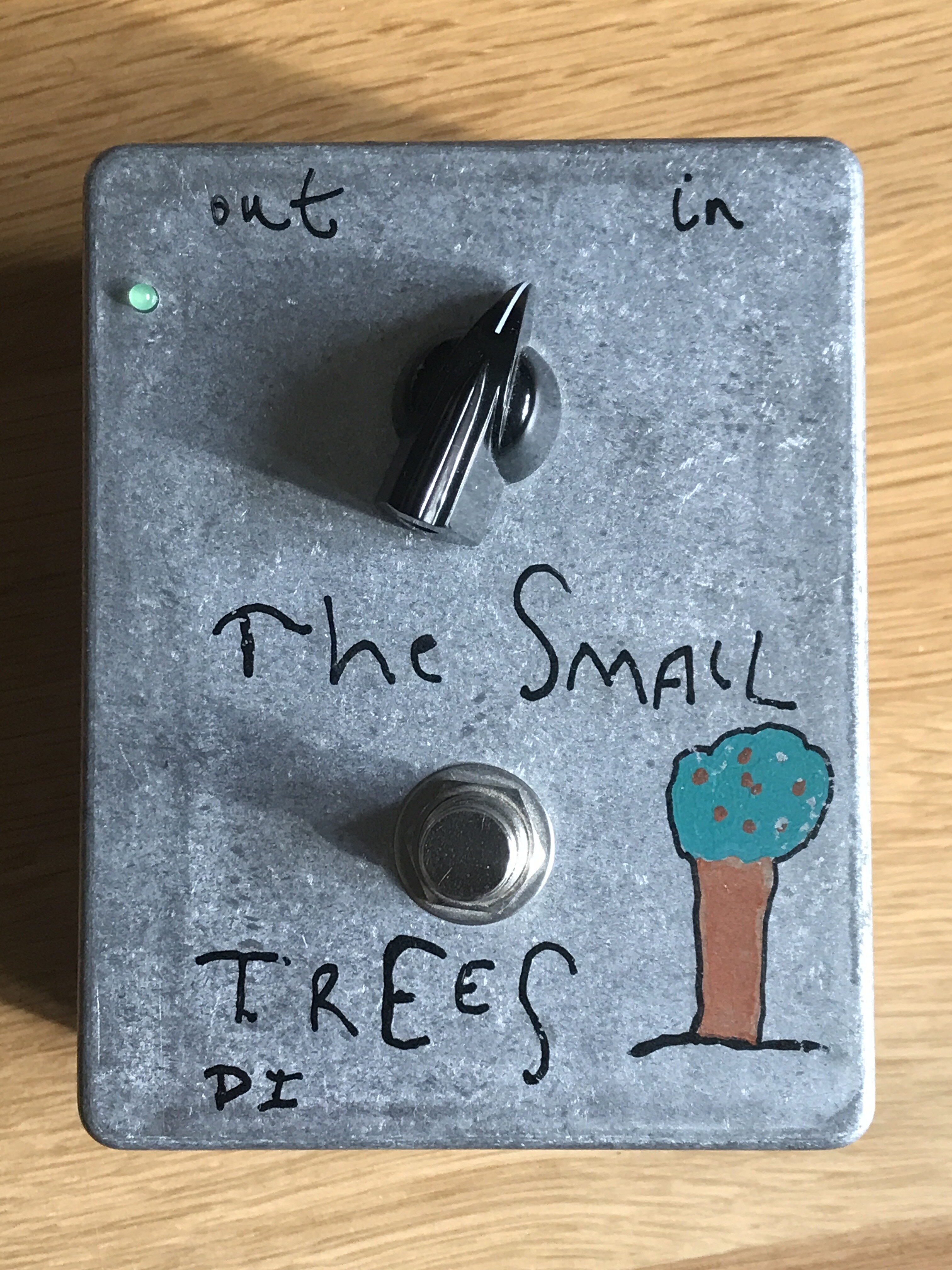

The FPT and TSTDI go together like P-bass and flats so of course I wanted MOAR!!! I began chasing the dragon, reading about The Small Trees' bigger brother, aptly named The Big Trees. Bigger brothers plural plus cousins would be a better descriptor because The Big Trees basically contains The Small Trees within it plus a 2.5W tube amp, which was the inspiration for the solid state Fake Plastic Trees. The amp side can be run without a cab attached, just like a normal pedal, with the bonus of having the amp output included in the signal. I'm going to let Sound on Sound provide the details on The Big Trees HERE.
After some self-reflection I decided to hold off on getting The Big Trees. I had enough preamps, dirt and fuzz pedals, pedals with tubes and needed to show some self-restraint. But then I came across this pic on the interwebz:

A DI'd The Big Trees or TBTDI?!? GAS went into inferno mode so I reached out to Steve at AK and asked if he could make it happen again. He obliged and after some emails back and forth I ordered one:

TBTDI has become my goto for home playing through headphones. It sits the bass in the mix in a way that remind me of the LA-1A but has a wider range of sounds thanks to it's 3 tubes. From the AK site: "The 2.5W amp, built around ECC82 and ECC83 pre-amp and single EL84 output valves, generates harmonic-rich tone, sculpted by its Baxandall-based EQ, and 'EL84 headroom control'. The Line output (incorporating a valve line driver stage) is either post power- amp stage, or discreet all-valve clean stage for empyreal DI tone." In short, The Big Trees DI sounds great and simplifies my playing process. I feel comfortable just plugging into TBTDI and forgetting about everything else; no more analysis paralysis or gain staging mess. It's no wonder this pedal has found its way into many a studio.
One last pedal from Audio Kitchen that I have not yet tried yet is The Flying Squirrel (TFS). If anyone has played one please share your thoughts on it.
I hope many of you will get to experience Audio Kitchen's goods and be inspired by them as much I have. Cheers!
The mastermind behind Audio Kitchen is Steve Crow, a man with a long beard and a penchant for making amps and pedals that are inspiring and sonically lush. He's built up a client list with up-and-coming acts like AC/DC, Radiohead and U2 among others.
Seriously, how has AK managed to slip through the cracks? Secrets be damned, here's what I've added to my board:I purchased the Fake Plastic Trees (FPT) after hearing this YT video showing a bit of the FPT's flavor on bass:
The thing that is not apparent in the video is how the pedal feels. It has a push-pull feel to it that is addictive and the four knobs go a long way. Here's a more in-depth review of the FPT here on TB by our favorite jounalist el murdoque.
And here's another review from Sound on Sound, with some more insight about what's inside the box (which is deeper than a standard enclosure).
After playing the FPT my GAS flared up so I snatched up The Small Trees DI (TSTDI). I wanted a small tube DI and this fit the bill.
The FPT and TSTDI go together like P-bass and flats so of course I wanted MOAR!!! I began chasing the dragon, reading about The Small Trees' bigger brother, aptly named The Big Trees. Bigger brothers plural plus cousins would be a better descriptor because The Big Trees basically contains The Small Trees within it plus a 2.5W tube amp, which was the inspiration for the solid state Fake Plastic Trees. The amp side can be run without a cab attached, just like a normal pedal, with the bonus of having the amp output included in the signal. I'm going to let Sound on Sound provide the details on The Big Trees HERE.
After some self-reflection I decided to hold off on getting The Big Trees. I had enough preamps, dirt and fuzz pedals, pedals with tubes and needed to show some self-restraint. But then I came across this pic on the interwebz:
A DI'd The Big Trees or TBTDI?!? GAS went into inferno mode so I reached out to Steve at AK and asked if he could make it happen again. He obliged and after some emails back and forth I ordered one:
TBTDI has become my goto for home playing through headphones. It sits the bass in the mix in a way that remind me of the LA-1A but has a wider range of sounds thanks to it's 3 tubes. From the AK site: "The 2.5W amp, built around ECC82 and ECC83 pre-amp and single EL84 output valves, generates harmonic-rich tone, sculpted by its Baxandall-based EQ, and 'EL84 headroom control'. The Line output (incorporating a valve line driver stage) is either post power- amp stage, or discreet all-valve clean stage for empyreal DI tone." In short, The Big Trees DI sounds great and simplifies my playing process. I feel comfortable just plugging into TBTDI and forgetting about everything else; no more analysis paralysis or gain staging mess. It's no wonder this pedal has found its way into many a studio.
One last pedal from Audio Kitchen that I have not yet tried yet is The Flying Squirrel (TFS). If anyone has played one please share your thoughts on it.
I hope many of you will get to experience Audio Kitchen's goods and be inspired by them as much I have. Cheers!
Last edited:

 Resistance is futile…

 I know it sounds really nice in person.