I'm new to playing bass...right at 2 years now. All I've ever played has been 5-string basses. I'm looking to purchase a Hofner violin bass and restring it B E A D instead of E A D G. I really like the flexibility that low B gives. Is my vision of stringing it up B E A D feasible/possible? Has anyone tried this?

Enjoy the benefits of a premium membership!
Upgrade Account
-
TalkBass has been independent since 1998. Add your voice.
Create a free account to reply to discussions, view embedded media, and browse with fewer display ads.
Join free Log in
Want zero display ads or expanded classifieds tools? Compare plans.
You are using an out of date browser. It may not display this or other websites correctly.
You should upgrade or use an alternative browser.
You should upgrade or use an alternative browser.
B E A D strings on Hofner violin bass
- Thread starter papolski
- Start date
More options
Who Replied?Won't work, you need a light gauge set to fit through tail piece. You also have to take into account how tiny those tuning posts are. I couldn't imagine wrapping a .120 string around that. Thickest E string you can use is .100 I think.

The violin bass is 30" scale, correct?
I have a 32" scale 5-string bass, and the B on it does pretty well, but it's not really the same kind of bass. Probably depends a lot on your playing style (your attack, preferred string height, etc).
I have a 32" scale 5-string bass, and the B on it does pretty well, but it's not really the same kind of bass. Probably depends a lot on your playing style (your attack, preferred string height, etc).


2 issues: You'd most likely need to replace the tuners, as the ones on it are basically old crappy GUITAR tuners and the thick B string will most likely not fit thru. Also, this bass is a 30" short scale, and the B string will most likely be extremely floppy. (Some people even find a lot of 34" scale B strings floppy, as you may find scouring Talkbass.
I have a 25.5" scale bass-ish thing tuned to EADG. So, I suppose you could.
That said, your tuners will not work, and maybe your tailpiece. On a 34" scale with roundwounds I like a .135 B string, so that would be a super thick string to make me happy on a short scale. I do wonder what the sound will be like though....
-Jake
That said, your tuners will not work, and maybe your tailpiece. On a 34" scale with roundwounds I like a .135 B string, so that would be a super thick string to make me happy on a short scale. I do wonder what the sound will be like though....
-Jake


I'm new to playing bass...right at 2 years now. All I've ever played has been 5-string basses. I'm looking to purchase a Hofner violin bass and restring it B E A D instead of E A D G. I really like the flexibility that low B gives. Is my vision of stringing it up B E A D feasible/possible? Has anyone tried this?
While it is possible for your particular instrument I don't believe it will be very practical. The biggest set back I can see with trying to do this on a violin bass is the bridge. I just don't think it's going to have the adjustment range to intonate properly. However don't let the nay sayers on short scale BEAD put you down. My main axe is a short scale Stagg EB-O copy with a bridge mud bucker. It took a bit of work to get it set up nicely, things to be expected (nut filing, drilling out the hole on the E string, etc.) but the end result was well worth it. I use 125 for the B and I will admit while it is low tension quite to my liking, it is far from tubby and dull sounding as many people on this forum would lead you to believe. This thing has growl for days and being one of the few people who feel a long scale bass just has too much tension to play comfortably for extended periods of time, its been helping me vastly improve my overall skill set as bassist just due to the simple fact that I'm able to spend a lot more time playing my instrument comfortably, rather than giving up entirely after a half hour session of struggling with suspension bridge wire


The instrument itself is not designed for such strings and tuning. Like forcing cello strings on a viola.

+1(...) don't let the nay sayers on short scale BEAD put you down.
OP: enlarge holes in tailpiece, file nut (or get new ones that you're more confortable modifying), get appropriate strings* (using the D'Addario string tension chart .pdf as a rough reference in order for the new set to not exceed total tension of an average pre-packaged set as Beatle basses come equipped with**), reposition floating bridge to get D and B strings intonated, live with the result as far as the other strings, Paul's your uncle.
*
But:(...) a US customer might put together a custom set of La Bella electric guitar singles (they go up to .120):
[Invalid or Expired Link Removed]
Same thing can be done in Europe with Pyramid (might wanna brush up your German first):
http://pyramid-saiten.de/de/custom-shop/custom-shop.php
Just measure and specify the correct string length tailpiece-to-nut, and the strings you'll get will appropriately taper before the tuners.La Bella will custom make strings in any length by request. Especially when you talk to the right dealerThey make up to a .150 round wound. You can choose the ball end size etc.
**
In practice, you only need a fat short scale B that's hasn't got more tension that the old G: you could just move the other strings one slot each, or get replacements with the same diameters. Tension won't rise, no damage in sight, no worries.
Now, the B string might still end up sounding like crap to you with that bass and those pickups in those positions, but you won't know until you try, right?

If you want to see how it will feel, take a regular 5-string bass with a regular medium scale set of strings. Down tune it to A-D-C-F. Then capo it at the 2nd fret. That gives you the equivalent of B-E-A-D at the Hofner scale.
I tried that, and the B string was too floppy, too dark, and too inconsistent of tone.
If you want to do it anyway with some larger scale strings, like you would get from somewhere like CircleK, then you would need to:
1) enlarge the slots in the tailpiece;
2) enlarge the nut slots;
3) purchase tuners with larger holes or slots in the tuner posts;
4) raise the action for the greater string excursion;
5) possible reset the height of the pickups accordingly.
I tried that, and the B string was too floppy, too dark, and too inconsistent of tone.
If you want to do it anyway with some larger scale strings, like you would get from somewhere like CircleK, then you would need to:
1) enlarge the slots in the tailpiece;
2) enlarge the nut slots;
3) purchase tuners with larger holes or slots in the tuner posts;
4) raise the action for the greater string excursion;
5) possible reset the height of the pickups accordingly.

Hofner necks are very fragile - I don't think it can handle the tension, unless they are REALLY light gauge strings. When I bought my old Hofner many years ago, the neck was warped from having some heavy gauge strings on it.
Addendum to my post above: you could even bypass the need for custom strings entirely.
Create a new attachment point at the tailpiece, get a fat off-the-shelf, long-scale B string, discard G string, move others.
As far as which B, a D'Addario .145 has about the same tension as a .045 G, scale length being equal (so if you take out the G, you can put it the B with no increase in stress for the neck), whilst a .130 B is in the ballpark of a .040 G tensionwise.
But yes, a thin neck probably narrows the Goldilocks zone for good tone+safe tension. I only wanted to show that, if the OP really wants to try BEAD on a Beatle bass, there are ways to circumvent difficulties and get it done without major overhauls.
Create a new attachment point at the tailpiece, get a fat off-the-shelf, long-scale B string, discard G string, move others.
As far as which B, a D'Addario .145 has about the same tension as a .045 G, scale length being equal (so if you take out the G, you can put it the B with no increase in stress for the neck), whilst a .130 B is in the ballpark of a .040 G tensionwise.
If the string tapers down to a thin enough diameter he won't strictly need new tuners IMO; however, proper bass tuners surely work better with bass strings.3) purchase tuners with larger holes or slots in the tuner posts;
This is valid advice, but not specifically relevant to this scenario: as I said, if the new B string hasn't got more tension than the discarded G (chances are it hasn't), and if the E, A and D are the same as before or have the same diameters, there has been no significant increase in tension. It's not like the B will warp the neck merely by virtue of being fatter!Hofner necks are very fragile - I don't think it can handle the tension, unless they are REALLY light gauge strings. When I bought my old Hofner many years ago, the neck was warped from having some heavy gauge strings on it.
But yes, a thin neck probably narrows the Goldilocks zone for good tone+safe tension. I only wanted to show that, if the OP really wants to try BEAD on a Beatle bass, there are ways to circumvent difficulties and get it done without major overhauls.



What if you were to just get baritone guitar strings (there has to be atleast one that starts on a b)
Have the bass itself and octavhigher, then jsut drop it with the octave pedal.
I see the angles on how it can be a bad idea, but if I were to ever do it, I would be thinking the exact same thing: "how am I gonna make this work on a hofner"
Have the bass itself and octavhigher, then jsut drop it with the octave pedal.
I see the angles on how it can be a bad idea, but if I were to ever do it, I would be thinking the exact same thing: "how am I gonna make this work on a hofner"

Ric5
Inactive
- Jan 29, 2008
- 29,772
- 30,452
- Disclosures
- I like 5, 8, 10, and 12 string basses
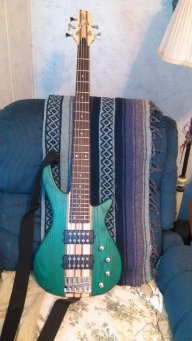
I Don t know what you ended up doing but Aliexpress now sells a 5 string violin bass


