• TalkBass has been independent since 1998. Add your voice.
    Create a free account to reply to discussions, view embedded media, and browse with fewer display ads.
    Join freeLog in
    Want zero display ads or expanded classifieds tools? Compare plans.

Bad learning technique

It all depends on your goals.

What goal are you really trying to achieve?

There is a best path to every place on the instrument and many people here can help you with that, but its obviously crucial to know exactly where that place is first.
This. For helpful directions, you need a specific destination.

Focus on fun for now. If/When you’re ready to dig deeper, ask us then.
 
  • Like
Reactions: Auspis
If playing in the comfort of your home is all you plan on doing, just do whatever is fun to you.
Should playing with others be on the list, even as a distant goal, it'll be incredibly helpful to learn the vocabulary, and one of the first things is to know what note is where on the neck.

Something helpful: Most people I've worked with will call an E an E, no matter how they tune their guitar or bass - so even when they play in Eb, they will still name the notes the way they are when tuned to E.
 
  • Like
Reactions: Auspis
Thanks for all your answers on this tread, I read them all today (3 weeks later)

I am building my mindset right now, my goals, I don't have any right now, the instruments just appeared in my basements and fortunately I listen to a lot of jazz and other music. The ecosystem is right.

Playing with others right now, zero clue about that.

My first solid goal, I want to improvise a basic jazz walking, that is my very first goal. I am working with AI on that and it developed a 4 bar walking section for me. My idea is to be able to play something first out of these 4 chords.. to give me some initial motivation.

Just finding them on the neck first.

Bar 1: Abm7
Beat 1: Ab (root)
Beat 2: Cb (minor 3rd)
Beat 3: Eb (5th)
Beat 4: F (approach to Db)

Bar 2: Db7
Beat 1: Db
Beat 2: F
Beat 3: Ab
Beat 4: Cb (approach to Gb)

Bar 3: Gbmaj7
Beat 1: Gb
Beat 2: Bb
Beat 3: Db
Beat 4: F (approach to Bb)

Bar 4: Bbm7
Beat 1: Bb
Beat 2: Db
Beat 3: F
Beat 4: Ab (approach to next chord)

===============================
Ok i took notes of thing to answer in this thread, i don't have the time very much.

Rich Brown's YouTube Channel
How much do i want to invest: I don't know yet.
Invest in lessons: Yes, double bass teachers are not too common close to my home. Need to search more.

@JonathanPDX Making stuff up or jamming along to records is great and important, but that's playing, not really practicing in most cases: Ok

Victor Wooten's book The Lesson

@scrubhelmet Bought an approximately 200 USD Washburn bass and played the bass lines of the songs that I like from start to finish until little by little the bass grew on me: I'll probably do a mix of that and practice.

What goal are you really trying to achieve? Yeah playing the walking for myself, i'ts my only micro objective for now.

@mambo4 if there is no pressure to play with others, do what ya feel and have fun: There is no pressure to play with others, I aready work with other at the office. :smug:

you don't "fix" scales to be less boring, you have to fix your own mindset: Working on this, yes.

@Ostie Once I learned the basic 1-4-5 progression and variations, things fell into place. Thanks. Ostie, is it related to "ostie d'calisse de tabaranaque" or it's something else? 🤣

@jthisdell Learning scales and chords, etc. help you “find the notes” easier, enabling you to play songs you don’t know with people you have just met.: Understood

For helpful directions, you need a specific destination: Yes

@el murdoque If playing in the comfort of your home is all you plan on doing, just do whatever is fun to you.: Thanks for this comforting advice. 😀

Something helpful: Most people I've worked with will call an E an E, no matter how they tune their guitar or bass - so even when they play in Eb, they will still name the notes the way they are when tuned to E.: This is good to know, thanks.
 
  • Like
Reactions: jthisdell
My first solid goal, I want to improvise a basic jazz walking, that is my very first goal. I am working with AI on that and it developed a 4 bar walking section for me. My idea is to be able to play something first out of these 4 chords.. to give me some initial motivation.

Just finding them on the neck first.

Bar 1: Abm7
Beat 1: Ab (root)
Beat 2: Cb (minor 3rd)
Beat 3: Eb (5th)
Beat 4: F (approach to Db)

Bar 2: Db7
Beat 1: Db
Beat 2: F
Beat 3: Ab
Beat 4: Cb (approach to Gb)

Bar 3: Gbmaj7
Beat 1: Gb
Beat 2: Bb
Beat 3: Db
Beat 4: F (approach to Bb)

Bar 4: Bbm7
Beat 1: Bb
Beat 2: Db
Beat 3: F
Beat 4: Ab (approach to next chord)
You have the right starting point here. I see the most basic evolution of learning to walk as:
1. Just play the root.
2. Play halftime, root, fifth, over each chord.
3. Walk quarter notes playing triads or arpeggios
4. Add non-chord tones and chromatic transition notes, as well as rhythm variations.

You can open up your Real Book or any chart and use this approach to walk through stuff you've never seen before, which will keep you from falling into predictable patterns, which aren't really walking.
 
  • Like
Reactions: Auspis
Thanks for all your answers on this tread, I read them all today (3 weeks later)

I am building my mindset right now, my goals, I don't have any right now, the instruments just appeared in my basements and fortunately I listen to a lot of jazz and other music. The ecosystem is right.

Playing with others right now, zero clue about that.

My first solid goal, I want to improvise a basic jazz walking, that is my very first goal. I am working with AI on that and it developed a 4 bar walking section for me. My idea is to be able to play something first out of these 4 chords.. to give me some initial motivation.

Just finding them on the neck first.

Bar 1: Abm7
Beat 1: Ab (root)
Beat 2: Cb (minor 3rd)
Beat 3: Eb (5th)
Beat 4: F (approach to Db)

Bar 2: Db7
Beat 1: Db
Beat 2: F
Beat 3: Ab
Beat 4: Cb (approach to Gb)

Bar 3: Gbmaj7
Beat 1: Gb
Beat 2: Bb
Beat 3: Db
Beat 4: F (approach to Bb)

Bar 4: Bbm7
Beat 1: Bb
Beat 2: Db
Beat 3: F
Beat 4: Ab (approach to next chord)

===============================
Ok i took notes of thing to answer in this thread, i don't have the time very much.

Rich Brown's YouTube Channel
How much do i want to invest: I don't know yet.
Invest in lessons: Yes, double bass teachers are not too common close to my home. Need to search more.

@JonathanPDX Making stuff up or jamming along to records is great and important, but that's playing, not really practicing in most cases: Ok

Victor Wooten's book The Lesson

@scrubhelmet Bought an approximately 200 USD Washburn bass and played the bass lines of the songs that I like from start to finish until little by little the bass grew on me: I'll probably do a mix of that and practice.

What goal are you really trying to achieve? Yeah playing the walking for myself, i'ts my only micro objective for now.

@mambo4 if there is no pressure to play with others, do what ya feel and have fun: There is no pressure to play with others, I aready work with other at the office. :smug:

you don't "fix" scales to be less boring, you have to fix your own mindset: Working on this, yes.

@Ostie Once I learned the basic 1-4-5 progression and variations, things fell into place. Thanks. Ostie, is it related to "ostie d'calisse de tabaranaque" or it's something else? 🤣

@jthisdell Learning scales and chords, etc. help you “find the notes” easier, enabling you to play songs you don’t know with people you have just met.: Understood

For helpful directions, you need a specific destination: Yes

@el murdoque If playing in the comfort of your home is all you plan on doing, just do whatever is fun to you.: Thanks for this comforting advice. 😀

Something helpful: Most people I've worked with will call an E an E, no matter how they tune their guitar or bass - so even when they play in Eb, they will still name the notes the way they are when tuned to E.: This is good to know, thanks.
Ok, if achieving "basic bass jazz walking" is your short-term objective, I suggest you get a jump start with bebop major blues in F or Bb. Jarod Plane has a Youtube channel with two etudes (short pieces) with tab and notation, and he gives the best 2 minutes of solid walking you could ask for on the major bebop blues form. Why blues? Because 12 bar jazz blues is simple yet offers opportunities to create movement in walking lines. Why bebop and not just basic F blues? Because bebop adds the extra chromatic notes to the regular major scale (flat 6th and flat 7th) that facilitate walking in 4/4 time while landing on chord tones on the strong beats. IMO Rich Brown's material is not good for walking. That's not his forte, though he has a couple really basic beginner level lessons on it. Anyway, go to Jared's channel, search back into the older stuff (he has lots, and lots of lessons) until you find the Walking Blues Etudes (one in F, one in Bb). Do the F blues first, it is more fundamental.

I am not a fan of tab but it has its purpose here. You will see how using the different strings adds to the walking, creates movement and tension. And Jared uses rhythm and phrasing well in his etude. That's the other ingredient to good walking.
 
  • Like
Reactions: Ynherag and Auspis
I am working with AI on that and it developed a 4 bar walking section for me.

I don't know if it's just me, but it seems that it's a bad practice to rely on AI with this. In real life, you've got to be used to walking on your own in real time.

I've read Ed Friedland's Building Walking Basslines and Jim Stinett's book about jazz bass lines. Those gave me the fundamentals on how to create walking bass lines on the fly.

If you want to get to the next level, you can transcribe and analyze bass lines of jazz recordings. Also, read around this website; once or two you'd see TalkBassists discussing books with etudes and exercises.
 
  • Like
Reactions: EddiePlaysBass
I don't know if it's just me, but it seems that it's a bad practice to rely on AI with this. In real life, you've got to be used to walking on your own in real time.

I've read Ed Friedland's Building Walking Basslines and Jim Stinett's book about jazz bass lines. Those gave me the fundamentals on how to create walking bass lines on the fly.

If you want to get to the next level, you can transcribe and analyze bass lines of jazz recordings. Also, read around this website; once or two you'd see TalkBassists discussing books with etudes and exercises.

I could not agree more. Walking is a feeling, motion without just linearity or too much predictability. How can an AI understand tension and release, or feeling? Well, perhaps "Data" from Star Trek could take crack at it, but not the AI that mangles my TB posts, that's for certain!
 
  • Like
Reactions: scrubhelmet
I could not agree more. Walking is a feeling, motion without just linearity or too much predictability. How can an AI understand tension and release, or feeling? Well, perhaps "Data" from Star Trek could take crack at it, but not the AI that mangles my TB posts, that's for certain!
The idea of AI reading Talk Bass and then giving authoritative answers is pretty scary. Can AI determine who is being serious and who is joking and who is trolling?
 
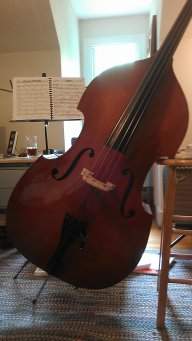
Well I am back after some time, and you know, to summarize my situation, I inherited a bass guitar and a double bass so I am learning how to learn how to play them. Natively I play drums as a hobby but I love bass as well, I can easily memorize basslines, I like to sing a basslines.

Previously, I asked questions about learning the neck and practicing scales. But it's just not taking off, it's boring me to death.

What I do, I take the bass and play a song, finding the notes on the neck by trial and error until I mechanically can remember their position.

My question is.. given that it's only a hobby.. is it acceptable to learn this way or it's an outrage? Like, shoveling forward, thinking that I'll get on the scales later, internally knowing that I try to skip it.

Then ok, I discovered that tuning my bass 1/2 tone lower, some songs require a lower big string often, then all the notation from the standard tuning schematic is messed up because of that, all notes are 1/2 tone lower, it feels like learning a second neck. Then I ask myself, what should I do? learn the scales with the bass tuned 1/2 tone lower or with standard EADG? Then honnestly in my head my answer is **** it, picking up the base and finding the notes by ear. It gives fast result but I might shoot myself in the feet.

🤔

Not sure of how wrong this is exactly.

This is how i started to play and it served me well. I would just throw on a recording and play along, using my ear to determine what was right or wrong. if i couldn't figure something out i'd pull up a tab sheet. I started learning the theory a couple years later after i could already get around on the instrument.

how did you learn drums? did you start with a snare drum and rudiment book or just start playing them? bass is the same.
 
Last edited:
  • Like
Reactions: EddiePlaysBass