• TalkBass has been independent since 1998. Add your voice.
    Create a free account to reply to discussions, view embedded media, and browse with fewer display ads.
    Join freeLog in
    Want zero display ads or expanded classifieds tools? Compare plans.

Bass Cleff - Isobar 410

Dec 1, 2022
24
82
CH
I created my little jewel.
I show you the work done.

The concept
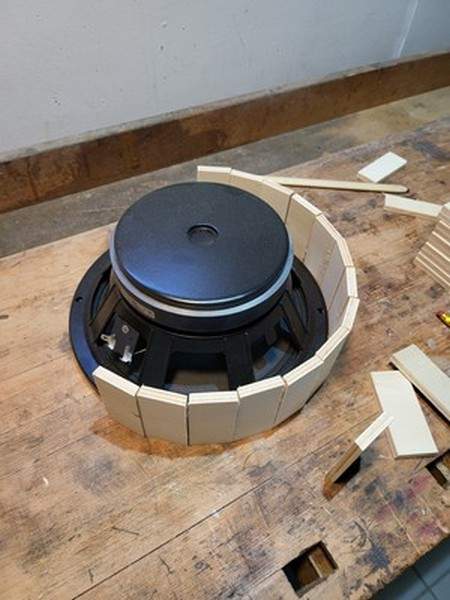
1 The concept.jpg


The Isobaric Chamber
2 The isobaric chamber.jpg


3 The isobaric chamber.jpg


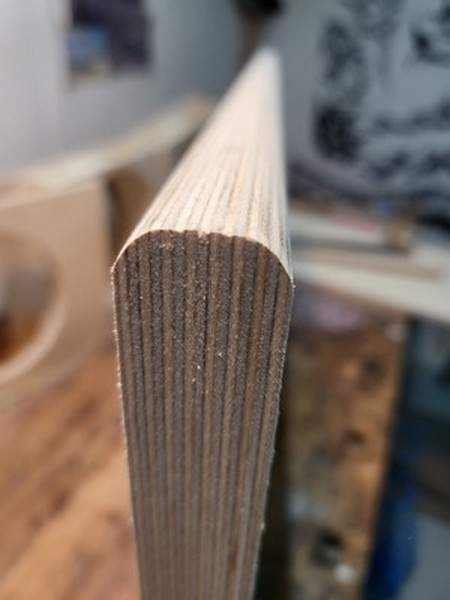
Birch 24 mm
4 Birch 24 mm.jpg


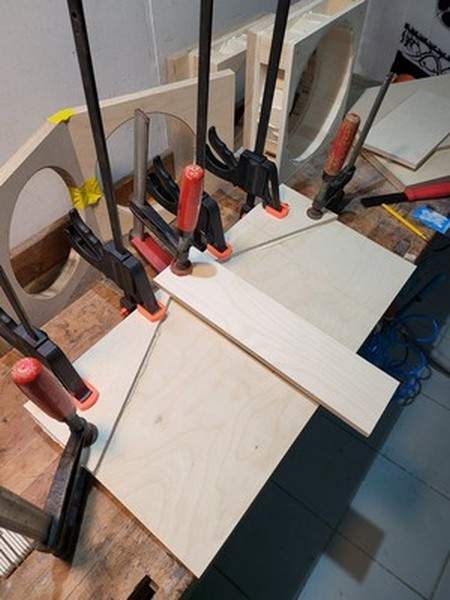
135° Deg.
5 135° Deg..jpg


Wave Convergence
6 Wave convergence.jpg


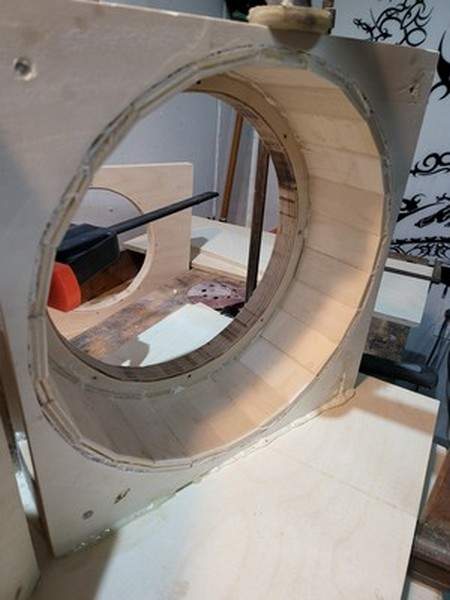
The Isobaric Heart
7 The isobaric heart.jpg


Core of Cohesion
9 Epoxy strength.jpg


Epoxy Strenght
8 Core of cohesion.jpg


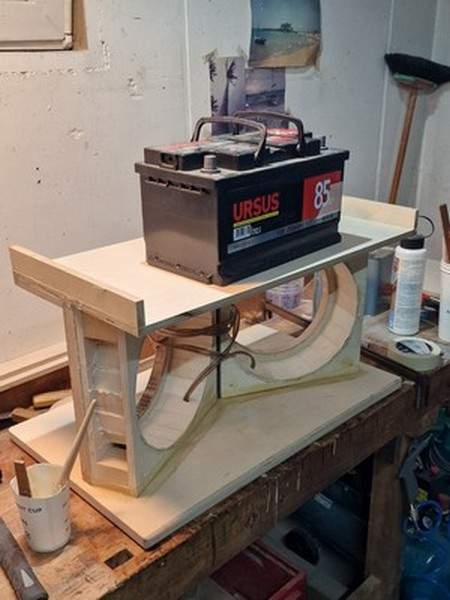
Thanking the Weight
10 Thanking the weight.jpg


All lined up
11 All lined up.jpg


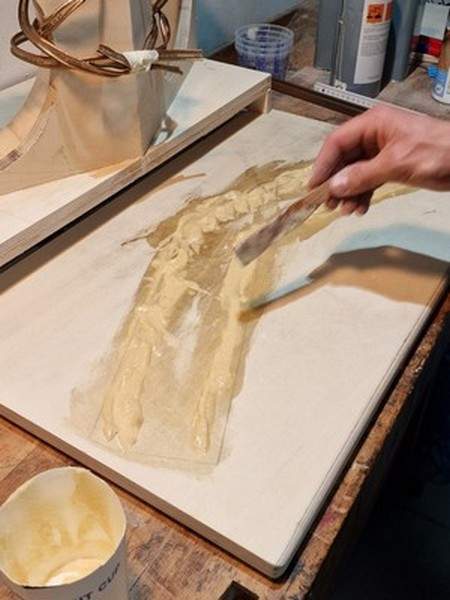
Waiting for the Glue
12 waiting for the glue.jpg


The Attention to Detail
13 The attention to detail.jpg


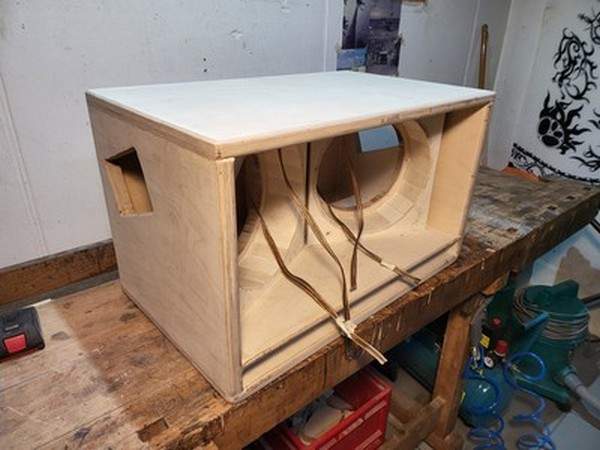
Takes Shape
14 Takes shape.jpg


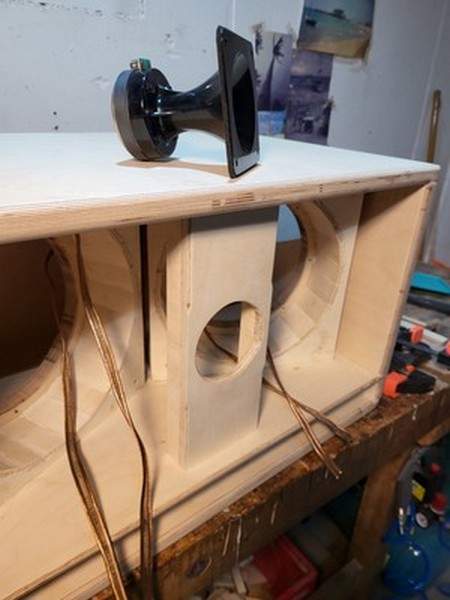
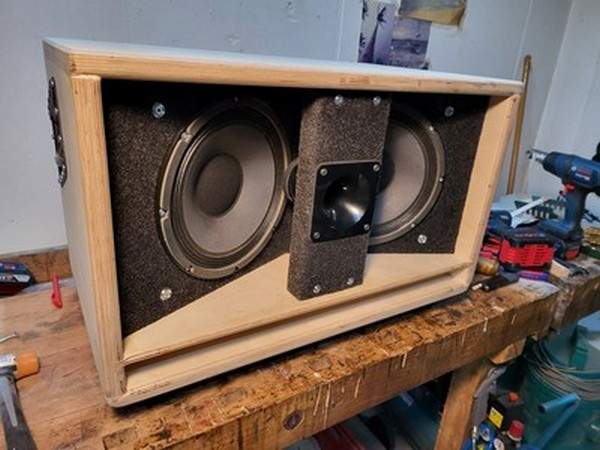
The Tweeter Hole
15 The tweeter hole.jpg


The Tweeter black Hole
16 The tweeter  black hole.jpg


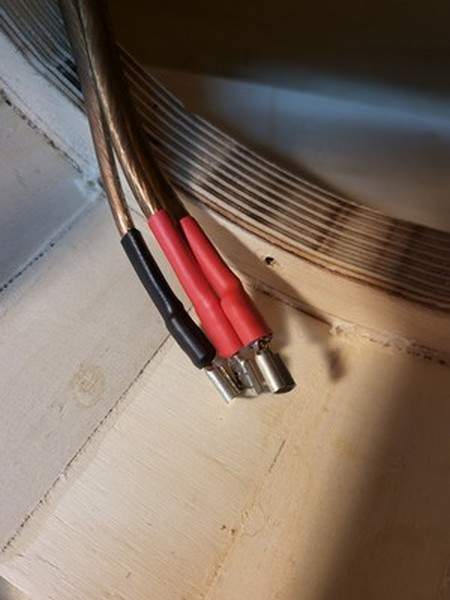
It's Time to connect
18 It's time to connect.jpg


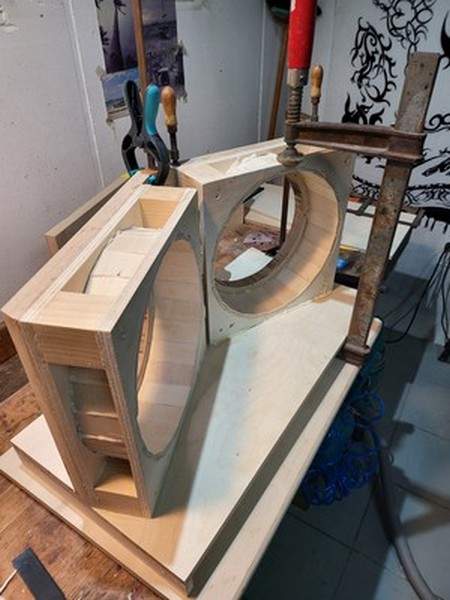
Temporary assembly
19 Temporary assembly.jpg


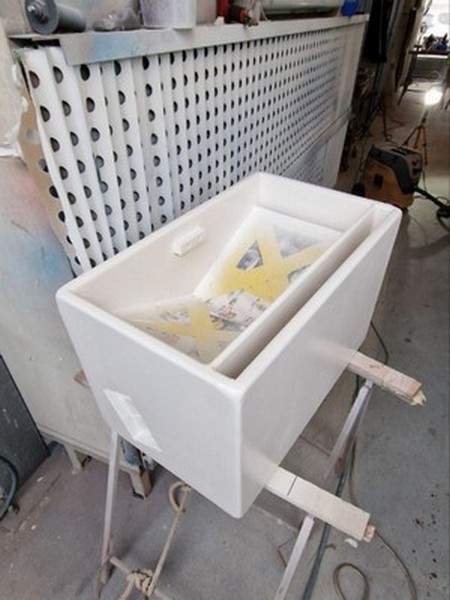
Epoxy Prime
21 Epoxy Prime.jpg


Satin black Finish
22 Satin black finish.jpg


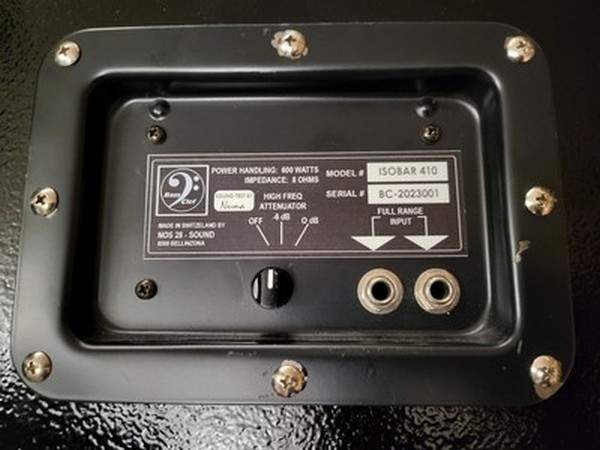
Inputs
23 Outputs.jpg


Finally Home
24 Finally Home.jpg


25 Finally Home.jpg


And now it's playng!
26 And now it's playing!.jpg
 

Attachments

  • 17 Thanks to Knipex.jpg
    17 Thanks to Knipex.jpg
    22.1 KB · Views: 59
  • 20 Aggressive gaze.jpg
    20 Aggressive gaze.jpg
    34.8 KB · Views: 64
Seems like a really, really nice build of a really questionable concept. That is, if it truly is isobaric; the pictures don't show it, but I had been presuming there were two more drivers behind the ones we can see to form the isobaric portion. Is this the case? Have you been able to perform any sort of amplitude response testing?

Edited to soften harsh language.
 
Last edited:
Seems like a really, really nice build of a really, really questionable concept. That is, if it truly is isobaric; the pictures don't show it, but I had been presuming there were two more drivers behind the ones we can see to form the isobaric portion. Is this the case? Have you been able to perform any sort of amplitude response testing?

You're right, you can't see it from the pictures, I'll have to open it, I'm missing a picture...
In the image "The Isobaric Heart" you can see the support where the internal speakers are fixed,

Anyway yes, of course, they are 2 10" speakers placed in front of two other identical ones.


I haven't done any tests with the analyzer yet, at the moment I'm content to hear the thunder coming out of that little thing.

However, the sound is decidedly deep and extremely defined.
The notes are perceived clearly.
Not having any intention of producing others commercially, I'm in no rush to test, I really like the way it sounds and I enjoy it that way.

It has one flaw however, it weighs over 100 pounds...
 
Tried to find a internal view of an Orange Isobaric. Best I can find:
images


Appears to be a much simpler build.

I am curious if the more sophisticated build provides any advantages.
 
Forgive my ignorance, but what’s the point of an isobaric cab? I know they were popular about 20-30 years ago in the car audio world, but never understood the purpose.

AFAIK the main advantage is you could stuff the same drivers in almost half the cubic volume and get the some LF response. Some claimed the sound is more clear as well.

Probably doesn't make sense anymore as you can buy modern drivers that work fine in small boxes.

A claimed benefit was an isobaric can handle twice the power, but IMHO this is actually a liability. With a regular 210 the combined sensitivity of both drivers goes up +3dB over a 110. With an isobaric, you don't get the the +3dB of sensitivity, rather sensitivity goes down -3dB. So, essentially a 110 will play at the same max volume as a 210 isobaric with 1/2 of the power.
 
Probably doesn't make sense anymore as you can buy modern drivers that work fine in small boxes.
They make a little more sense in home hi-fi since they (typically) aren't intended to be moved around once they're installed, so size is more of a liability than mass. The Linn Isobariks were interesting in part because they didn't have to be placed in the middle of the room the way hi-fi speakers usually had to be, so you not only got a relatively compact speaker with the bass extension of something larger, you also freed up the floor space that a typical hi-fi speaker would be occupying.