
• TalkBass has been independent since 1998. Add your voice.
    Create a free account to reply to discussions, view embedded media, and browse with fewer display ads.
    Join freeLog in
    Want zero display ads or expanded classifieds tools? Compare plans.

Double Bass Bass Rosin

You all are a bunch of wusses. Real bass players make their own resin...er...rosin.
http://www.instructables.com/id/Rosin/
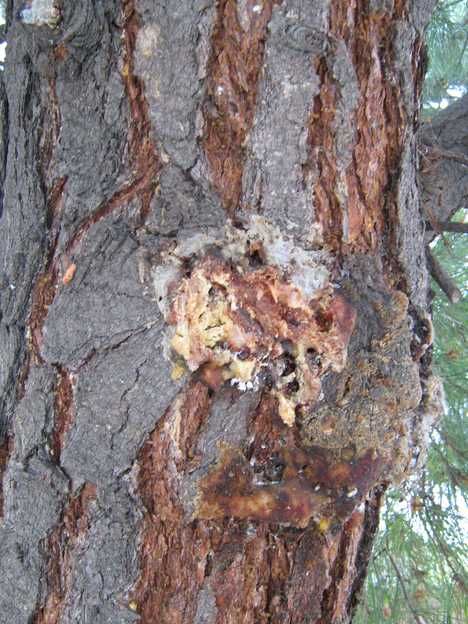
FCNVMKTGZUB3CII.LARGE.jpg
 
But this brings up a question I asked in another thread - he plays near the end of the fingerboard, and never really much lower, and sometimes over the fingerboard. He doesn't seem to lack anything in terms of dynamic range but I have always found that, at least on my bass, playing near the end of the fingerboard is a bit sweeter sounding, and playing midway between the end of the fingerboard and the bridge is where I usually aim because it speaks more strongly.

-S-

I have seen some absolutely fantastic players using "poor", "extreme" or "weird" technique with fantastic results. Somehow, great players make some/all of these techniques work.

Professional symphonic bassists are a rare breed. They got there by a mix of a hard work, talent, and luck. They have worked through years of private lessons, youth orchestras, fantastic conservatories or universities, practicing their faces off, auditions, and careers surrounded by similarly remarkable players. Unless your life consists entirely of waking up and playing bass, you're already at a disadvantage. For example, you can buy subscriptions to 78 Berlin Philharmonic concerts this season alone, and that is not including the chamber music concerts, tours, teaching, and many other engagements these players have. Some professional orchestras actually have two rotating "orchestras" and many have rotating subs, so they can allow the players to rest to prevent serious injury.

Another huge factor are the tools that they have at their disposal. I completely agree that the technique makes the player who they are, but the relationships they develop with a bass and a bow are a huge part of that as well. I have played an Italian instrument that made me sound like an entire section. I have played a Sartory that made spiccato completely effortless. I can't imagine the sounds I could create with both of those if I had years to spend with them instead of fleeting moments. Basses and bows don't magically make everything happen, but the players that are in the biggest orchestras in the world have the means and connections to acquire the best basses and bows in the world.

I have had the privilege of a few lessons and masterclasses with some of these great bassists. Joel Quarrington played my bass and bow. He sounded like Joel, but you could see he was having to work for it. The tools that I have available to me are not in the same league as his. Things that would have been easier on his bass and bow were more challenging on mine, and achieving the sound he was looking for wasn't a walk in the park. It was humbling as it made me realize that my technique had a long way to go, and that my tools are capable of producing sounds that I am not at this point in my career. It also showed me that even with very good tools (my bass is fully carved and professional set up, and my bows are by well respected Canadian bow makers) there are better tools out there, and they definitely make a difference.

A combination of amazing technique and fantastic tools means they can do some things that we can't. Stick to what works for your technique and your instrument, never stop learning, and someday sell your house and buy a bass. With all of that on your side, you might get away with playing over the fingerboard.
 
  • Like
Reactions: Who da Ville
Great reply, Mike. You know, later, I watched another YouTube, this time with the entire section playing as a double bass sextet and, sure enough, he played further down. I think he was just busy talking and making musical points, and his technique is such that, as you say, he could make anything work.

I've seen the same sort of thing in other ways, too, e.g., my son is fine trumpet player and I'm a hack. When he plays some $100 trumpet I've found on ebay, he still sounds fantastic, and when I play his pro instrument, I still sound like crap. Maybe the switch to my junk trumpet takes away something from him, but not much. And I'm blessed to be the same way with guitars - I've spent 50 years playing that instrument and I can make it work on just about anything or any which way I might need.

Today, more double bass practice!

-S-
 
I've got a question for anyone who can answer: how should I store my rosin? Is it fine on its own or should it be in a ziploc bag? Help is much appreciated!

It's generally recommended to keep it in an airtight container when not in use. If it came in a plastic cup that seals well, that is sufficient. But if it came in a cardboard container, velvet bag, or container that doesn't really seal airtight, I suggest that a ziploc bag will help keep it from getting stale sooner.
 
  • Like
Reactions: Who da Ville
Pops does what you need it to do, there is a comfortable median of rosin though. If you apply too much you are gonna regret it. Experiment with how much you can put on without it going super gunky. Also watch the summer, pops can turn your hair into one big gross mess.

This is my first summer using Pops. I live in the Pocono Mountains of Pennsylvania. I've noticed that one of the perks of using Pops in warm weather is waking up every morning with, what looks like, a shiny new rosin puck. I just leave it in the waxed paper inside the tightly closed red plastic cup. If I take it to a gig I keep it in my little beer cooler.
 
  • Like
Reactions: Mark Gollihur
I've got a question for anyone who can answer: how should I store my rosin? Is it fine on its own or should it be in a ziploc bag? Help is much appreciated!
For about a year now, I have been storing my Pops in "Rosin Saver" containers. This container keeps the rosin from drying out. It comes with a nice latex cup that replaces the paper cup the Pops comes in. I have gone from buying 8-10 pops per year to one which is still doing great after 9 months.
 
For about a year now, I have been storing my Pops in "Rosin Saver" containers. This container keeps the rosin from drying out. It comes with a nice latex cup that replaces the paper cup the Pops comes in. I have gone from buying 8-10 pops per year to one which is still doing great after 9 months.

Hi Kjetil, this sounds interesting. Do you have a link?
 
  • Like
Reactions: wathaet
Call me crazy, but this looks like a possible solution to the "how do I store/carry my rosin?", (esp. Pops or other "wet/loose" brands), or for those of us who "cook/melt" their own, and need small cups for the new/old cakes.
24 little silicon cups (after they've been cut out individually.)
Yes - you'll still need to cover in plastic wrap (and store in a sealed container to transport) to minimize the drying out of the exposed layer.
Hmmm......

  • 7195Fc1-G8L._SX522_.jpg
Roll over image to zoom in
Silicone Mini Muffin Pans, SySrion 24 Cup Premium Cupcakes Pan Shapes, Non-stick, BPA-free Food Grade Silicon Mold Material, Red