Ever plugged your bass through a DI into the mixer console but the sound that comes out of the house just sounds terrible. It cracks and rattles instead of having the full punchy tone? Does pre amps have a part to do with this? What are pre amps anw? What about Mic-ing the bass amp instead?

Enjoy the benefits of a premium membership!
Upgrade Account
-
TalkBass has been independent since 1998. Add your voice.
Create a free account to reply to discussions, view embedded media, and browse with fewer display ads.
Join free Log in
Want zero display ads or expanded classifieds tools? Compare plans.
You are using an out of date browser. It may not display this or other websites correctly.
You should upgrade or use an alternative browser.
You should upgrade or use an alternative browser.
Bass sound during live gigs.
- Thread starter ramsorde
- Start date
More options
Who Replied?
Not sure what you means by "cracks and rattles".
If by cracks, you mean it's distorted, then it means the soundguy had the Trim set too high on the mixer.
If the rattles are fret noise, then it may just be a case of you missing the natural EQ of your bass amp. Most amps fatten up the low end, and scoop out the midrange frequencies that can make your bass sound overly bright and grindy.
If that's the case, an amp simulator/preamp like the Aguilar Tone Hammer, Eden WTDI, or Tech 21's BDDI or VT Bass could be just the ticket. They put the "amp sound" back into your DI'd signal.
If by cracks, you mean it's distorted, then it means the soundguy had the Trim set too high on the mixer.
If the rattles are fret noise, then it may just be a case of you missing the natural EQ of your bass amp. Most amps fatten up the low end, and scoop out the midrange frequencies that can make your bass sound overly bright and grindy.
If that's the case, an amp simulator/preamp like the Aguilar Tone Hammer, Eden WTDI, or Tech 21's BDDI or VT Bass could be just the ticket. They put the "amp sound" back into your DI'd signal.

I've listened to enough bar bands to notice how much of the click and "rattle" of the bass tone is swallowed up by other instruments when the full band is playing.
Often times I hear what is a big fat bass tone, but when the bassist plays something by themselves you hear all that high end click all the sudden.
Often times I hear what is a big fat bass tone, but when the bassist plays something by themselves you hear all that high end click all the sudden.

thank you oreomeister365 for the concise observation, every time somebody has an issue clicking, buzz, or hum i wonder if it can be heard in the mix, i myself have been clicking away for a while now and nobody ever notices until the drums stop
I work with a lot of bassists who's DI tone has that. It's their technique: they pluck the strings down instead of sideways, so the strings are always smacking the frets, and MUCH worse, the pickups.

Try add a tube in there eg Tube DI, or tube OD pedal set reasonably clean.
When ampless I always add a tube somewhere for tonal changes and light compression on those clacky sounds.
You may also need a hi pass filter to filter out any messy subharmonics. Some people disagree to this, but it'll allow the FOH engineer to turn up your volume or just the bass shelf EQ on the board without messing up the bass vs kick drum balance.
When ampless I always add a tube somewhere for tonal changes and light compression on those clacky sounds.
You may also need a hi pass filter to filter out any messy subharmonics. Some people disagree to this, but it'll allow the FOH engineer to turn up your volume or just the bass shelf EQ on the board without messing up the bass vs kick drum balance.
Let the mixperson decide whether or not the bass needs a high-pass or any other EQ. There's nothing like fighting for bass tone all night, then finding out that the problem was because the bassist was "helping me" by using a HPF or EQ.
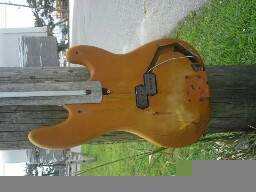
Can you not bring an amp? There are some small amps out there that have great DI's.
I have been through a lot of iterations of how to get a great tone to the sound guy. Some of these were very simple by using a passive DI. Works OK, but lacks the tonal quality from a good post-pre XLR send such as from my old SWR SM-400 or Seymour Duncan 400x2 heads. (I love my Trace V6, but the DI is nothing to write home about. You can get a better sound blending a mic with that rig IMHO.) Last two years I play nothing but a Genz Benz head and get exactly the tone I am looking for!
Try a new Genz Benz head! I never thought I would ever go Class D, but after gigging with a friend's EA rig a couple of times got a Genz Benz. I have had great luck with the output on the Genz Benz Suttle MAX 6.0! It gets a great tone to the board with or without the cab. I do stick a Fulltone Fat Boost up front to warm it up a bit. I also put in a different tube that has a tone I like. I have had compliments on the GB send to the board from a variety of sound guys on diffent gigs with various bands using diffent basses.
I have been through a lot of iterations of how to get a great tone to the sound guy. Some of these were very simple by using a passive DI. Works OK, but lacks the tonal quality from a good post-pre XLR send such as from my old SWR SM-400 or Seymour Duncan 400x2 heads. (I love my Trace V6, but the DI is nothing to write home about. You can get a better sound blending a mic with that rig IMHO.) Last two years I play nothing but a Genz Benz head and get exactly the tone I am looking for!
Try a new Genz Benz head! I never thought I would ever go Class D, but after gigging with a friend's EA rig a couple of times got a Genz Benz. I have had great luck with the output on the Genz Benz Suttle MAX 6.0! It gets a great tone to the board with or without the cab. I do stick a Fulltone Fat Boost up front to warm it up a bit. I also put in a different tube that has a tone I like. I have had compliments on the GB send to the board from a variety of sound guys on diffent gigs with various bands using diffent basses.
Groove Doctor said:Try add a tube in there eg Tube DI, or tube OD pedal set reasonably clean.
When ampless I always add a tube somewhere for tonal changes and light compression on those clacky sounds.
You may also need a hi pass filter to filter out any messy subharmonics. Some people disagree to this, but it'll allow the FOH engineer to turn up your volume or just the bass shelf EQ on the board without messing up the bass vs kick drum balance.
Hey sry may I ask what a tube DI is exactly? How different is it from normal active DIs? And when you talk about compression and hi pass filters, you mean those at the sound board or your own say, pedals?
You may also need a hi pass filter to filter out any messy SUBHARMONICS.
@Timmyp: Maybe Rumble Filter was a better way to describe what I was trying to say..... sorry for confusion.
SUB-harmonics = lower than fundamental frequency
eg E string approx 41Hz, B string 31Hz - so HPF @30Hz won't affect musical notes coming from bass itself, only subsonic rumble. Having a bass amp that reproduces down to 20Hz I learnt all this stuff the hard way!!!
This isn't a product plug, but this clearly shows what I mean in low end.
[Invalid or Expired Link Removed]
[Invalid or Expired Link Removed]
Effects [BG] - TalkBass Forums[sfx]-micro-thumpinator-816423/"I also used it in a studio with really large monitors (15 JBL woofers) that usually bump and grind if we don't have the HPF engaged, the MicroThumpinator did the trick even better than the studios White Instruments EQs HPF which is 12db at 30Hz. (For those who arent familiar White Instruments make some of the best equalizers in the business, the standard for many years)."
....what is a tube DI is exactly? How different is it from normal active DIs?
Regular DI but has added benefit of tube characteristics.
Basic unit: Applied Research & Technology: Tube Mic Preamps
My unit: Invalid Link Removed
If you're just used to the sound of bass thru a bass amp, when you hear it thru a DI it will sound different. Shows up technique 'problems'. A tube DI sounds and responds more like an amp, plus it may cover up some of your 'less than perfect' technique.
And when you talk about compression and hi pass filters, you mean those at the sound board or your own say, pedals?
HPF and Comp.... best to speak to your actual sound engineer to work out what they do/don't want.
 Read a bunch of threads on the topic, plenty info here on TB.
 The cracks and rattles you mentioned may be a result of low end rumble or transients (sudden spikes in you signal) running to the desk. TimmyP is right about strings hitting pickup pole pieces. :scowl:
Sans amp [Invalid or Expired Link Removed]
Has instrument level 1/4 out and XLR out so it can be ran into your amp and to mixer. I set my amp flat and use the DI to adjust tone. That way I know the FOH is getting the same tone I'm hearing.
Circuitry in it is designed to give a fatter tube type tone. It actually compresses some too giving a more even vol level depending on how much drive is used.
Has instrument level 1/4 out and XLR out so it can be ran into your amp and to mixer. I set my amp flat and use the DI to adjust tone. That way I know the FOH is getting the same tone I'm hearing.
Circuitry in it is designed to give a fatter tube type tone. It actually compresses some too giving a more even vol level depending on how much drive is used.

Went back and forth with one of the sound company's we work with about this. It was always my DI/amp that was causing noise, finally switched me to another channel and voila
cured... bad channel in the snake...
cured... bad channel in the snake...

I've had really good luck of late in convincing FOH guys (not that I play THAT many full sound reinforcement gigs these days - maybe 6 or 7 a year) to just put a decent mic on my cab and scratch the DI. When given any kind of choice, this is my choice. I play a vintage SVT through JBL 15"s, that's my sound, and fortunately a lot of mixing guys are realizing that by taking the bass this way they will actually have to do a lot less fiddling to get it sounding nice.

aside from the possible reasons that are already given, the crackles and whatever could be things that are always present in your bass (or bass playing) to some extent, but may be eq'd out when you use your amp. you bass going straight into a DI is never going to sound like your amp does, every amp color the sounds a bit, if thats not what they were for we all just plug into a power amp. ill never understand bypassing an amp onstage, i want my sound, no matter where i play

I had an experience like this last weekend. My head was cutting out intermittently (later traced to a bad connection with a pedal), so I sent a signal from the DI on my Aphex Punch Factory compressor to the PA. Through the monitors, it was bright and twangy, with some static the sound guy and I couldn't track down. But he said it sounded great through the mains, and he's a good bass player, so I trusted his judgment. Fortunately I figured out the problem in my signal chain early in our second set, so my rig could start carrying more of the load.
Point is, what you hear in the stage monitors probably won't represent what the audience gets through the mains. Different speakers, probably different EQ, etc.
Point is, what you hear in the stage monitors probably won't represent what the audience gets through the mains. Different speakers, probably different EQ, etc.

I run a Zoom B9.1ut for my multi effects, preamp and DI capabilities. The stereo XLR outs are a very nice feature, as is the amp and cab modeling features. I change my sound a great deal from one song to the next, from a classic B15 to v-synths, etc., and sending direct out of it as opposed to my head or micing my cab gets the best result. This way I'm getting the pure sound from the preamp and modeling, not something colored my my amp head. And I also get the full range of sound from the synths, uncolored by my cabinets. Usually after the first set, I know who the bass players are in the audience, because they come up and ask about my Zoom. I use my amp silly for.monitoring, and keep the Eq relatively flat, making minor adjustments for the room. I also have monitor mix support that is very good, so that helps me get a pretty good bead in what is happening FOH vs. what my amp sounds like.
.... It cracks and rattles instead of having the full punchy tone? Does pre amps have a part to do with this? What are pre amps anw? What about Mic-ing the bass amp instead?
+1 for bad technique.
Miking an amp will just cover up bad technique by "adding" an LPF. Practice with DI+headphone or an "hi-Fi"ish steup and learn how to play clean.
There is no substitute for bad technique. Equipement will cover it but will never correct it.

Agreed. And I'm a cab mic'er.+1 for bad technique.
Miking an amp will just cover up bad technique by "adding" an HPF. Practice with DI+headphone or an "hi-Fi"ish steup and learn how to play clean.
There is no substitute for bad technique. Equipement will cover it but will never correct it.


