• TalkBass has been independent since 1998. Add your voice.
    Create a free account to reply to discussions, view embedded media, and browse with fewer display ads.
    Join freeLog in
    Want zero display ads or expanded classifieds tools? Compare plans.

Double Bass bass with no tail piece?

James, have you ever tried a light tailpiece to which you can add mass to avoid dismounting the strings. It would not be optimal, but might direct you quicker towards a normal heavier tailpiece of a certain weight if you approximately know the amount of mass that works well in a certain situation.

Just an idea ...
 
James, have you ever tried a light tailpiece to which you can add mass to avoid dismounting the strings. It would not be optimal, but might direct you quicker towards a normal heavier tailpiece of a certain weight if you approximately know the amount of mass that works well in a certain situation.

Just an idea ...
That's what clamps are for! :cool:
 
  • Like
Reactions: james condino
I think that would be a bit much mass.
I rather thought about a tailpiece made of light wood with holes of different sizes in it to be able to add mass by screwing thinner or thicker nuts and bolts on it.
Iron C-clamps come in many sizes, starting at 1". And you can use them to clamp pieces of aluminium, steel and lead to different parts of the tailpiece/peghead/etc.

For permanent weight additions, self-stick wheel weights are great.
 
Jake has got it. C clamps asnwer those questions on the tailpiece, bridge, and scrolll.

At the Oberlin workshops a couple of years ago, there was a presenter who made rather complicated variable mass tailpieces that were adjustable, but I have not seen or hear anything from him since.
 
Jake has got it. C clamps asnwer those questions on the tailpiece, bridge, and scroll.

At the Oberlin workshops a couple of years ago, there was a presenter who made rather complicated variable mass tailpieces that were adjustable, but I have not seen or hear anything from him since.

I have a prototype bass model from him. Its an attractive tailpiece and the adjusteable mass works nicely.
 
  • Like
Reactions: keiranohara
Show us some pictures!!!!

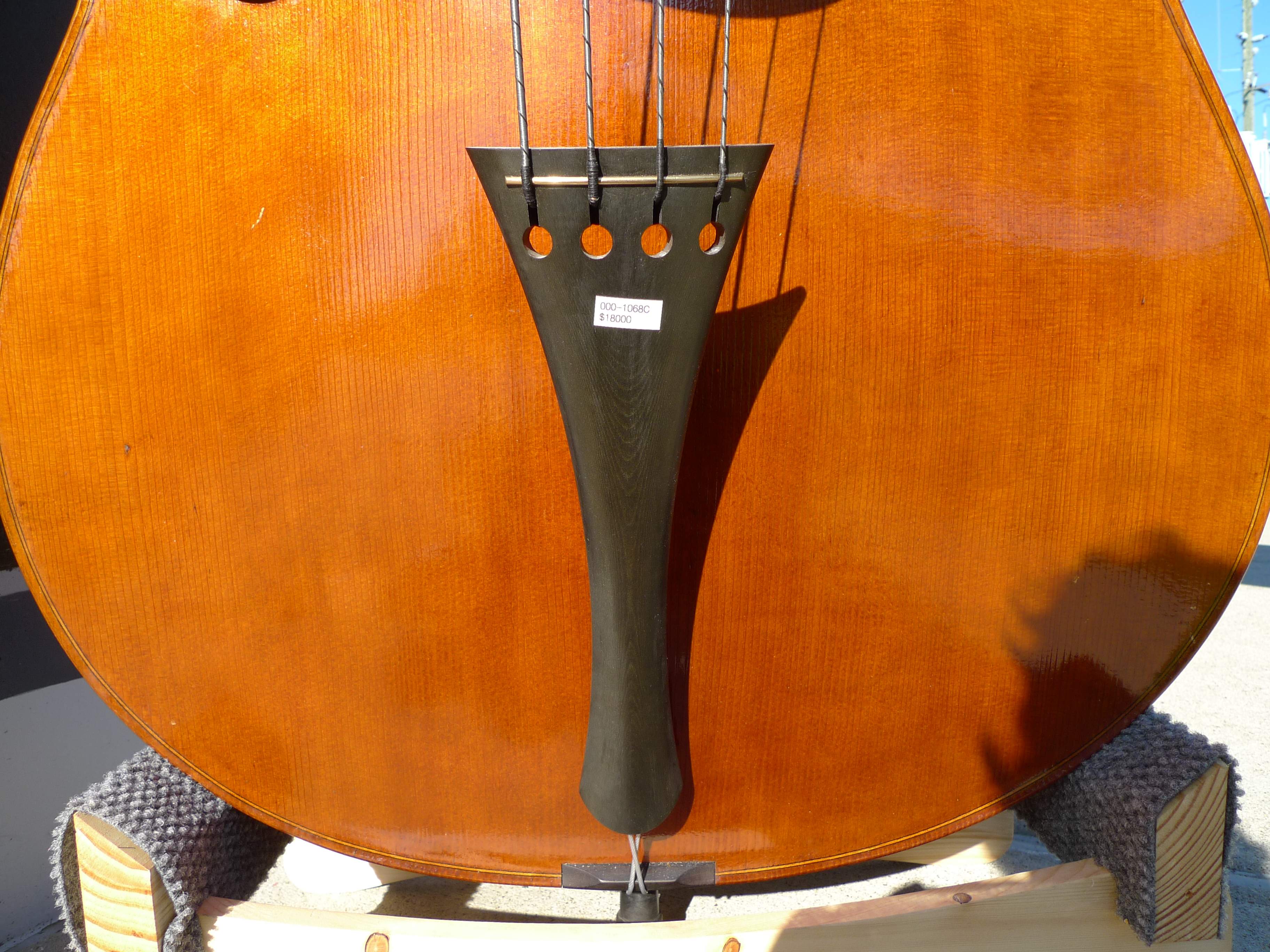
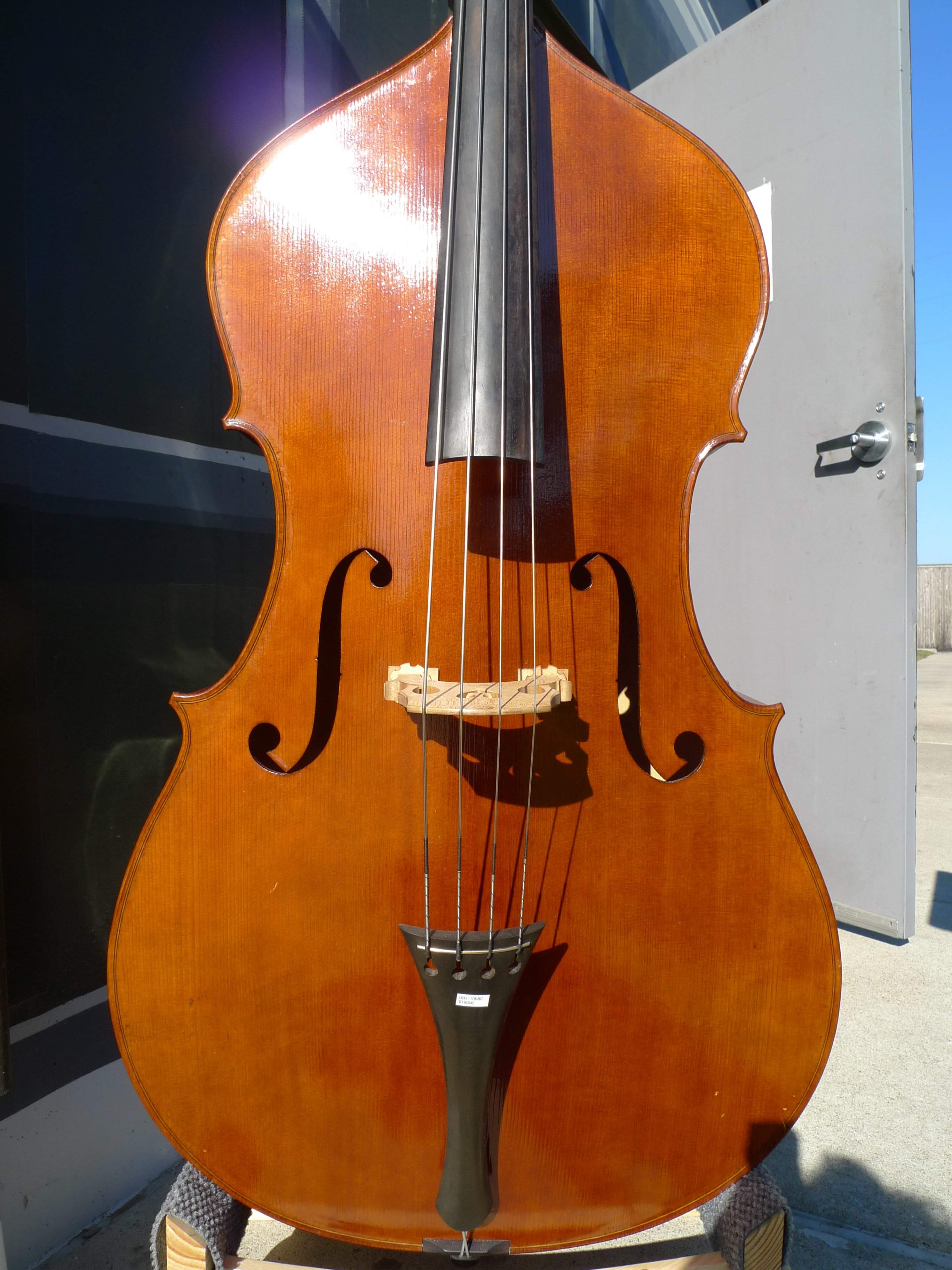
Here you go. One thing to note is the tailpiece is 325 mm long which is pretty short for this bass. I've tried to encourage Ted to make a 350mm long model for these bigger basses. This tailpiece features a channel carved in the back with a brass weight that fits in it. You can slide the brass weight up and down or swap it out with a different sized weight. This allows you to adjust the resonant frequencies of the tailpiece assembly while the bass remains under tension.

 
  • Like
Reactions: james condino
Here you go. One thing to note is the tailpiece is 325 mm long which is pretty short for this bass. I've tried to encourage Ted to make a 350mm long model for these bigger basses. This tailpiece features a channel carved in the back with a brass weight that fits in it. You can slide the brass weight up and down or swap it out with a different sized weight. This allows you to adjust the resonant frequencies of the tailpiece assembly while the bass remains under tension.

Sounds interesting - but I still don't see any pix!!
 
On purpose. The tailpiece vibrates a lot on certain notes and the tail gut was actually buzzing inside the holes. Putting a twist in the tail gut pinched the holes and prevented the buzzing. This was my quick fix as I was prepping the bass for ISB, but it's working so well, I haven't bothered to change it. I have played around with the tail gut twist in the past. Every now and then, it'll have a noticeable change in playability, sometimes for better, sometimes for worse. More often than not, it doesn't do anything so it's pretty low on my list of things to try on a bass.
 
On a personal level, my number one complaint about tailpieces is why do so many folks make tailpieces with a traditional string "keyhole" with a hole that is too small for the string ball to fit through, so you have to completely unwind the strong ng and pass the whole string through rather than pop it out in three seconds???????????

YEAH! I asked myself that question two minutes into my first string change (over thirty years ago) and still don't have an answer.
If the hole is smaller than the ball, why make the notch at all? I suppose it's a legacy from guts.
 
  • Like
Reactions: james condino
Thanks James for that answer. I thought of you, because you don't shy away from a trying something different.

So, as I do play almost exclusively pizz on a fairly light 1930's hybrid, an extremely lightweight tailpiece might be a good thing for me. Not that I'm trying to fix something, I'm actually quite happy with my sound at the moment. So if I'm going to try this Ill make sure it's going to be reversible.