
Enjoy the benefits of a premium membership!
Upgrade Account
-
TalkBass has been independent since 1998. Add your voice.
Create a free account to reply to discussions, view embedded media, and browse with fewer display ads.
Join free Log in
Want zero display ads or expanded classifieds tools? Compare plans.
You are using an out of date browser. It may not display this or other websites correctly.
You should upgrade or use an alternative browser.
You should upgrade or use an alternative browser.
Best (free) resources for learning to read music?
- Thread starter wishface
- Start date
More options
Who Replied?


You first have to recognize the fly speck and know what note that fly speck represents. Then you are ready to start finding that note on your bass neck.
My point; you first have to be able to identify the note - in the time it takes you to say your first name - or the music will have gone off and leave you. Start with just the bass clef first. Plenty of time for the treble clef later. Find your notes in first position - first 5 frets.
So get some standard notation sheet music, it's all over the Internet, Google can find some for you and start reading. Yes with your bass on it's stand. When you can identify and visualize where that note is on the neck, you are ready to start exercises.
To read standard notation you have to read standard notation every day, or rust develops, so take SN sheet music with you where ever you go and get some reading in any time you have a few moments.
Good luck.
My point; you first have to be able to identify the note - in the time it takes you to say your first name - or the music will have gone off and leave you. Start with just the bass clef first. Plenty of time for the treble clef later. Find your notes in first position - first 5 frets.
So get some standard notation sheet music, it's all over the Internet, Google can find some for you and start reading. Yes with your bass on it's stand. When you can identify and visualize where that note is on the neck, you are ready to start exercises.
To read standard notation you have to read standard notation every day, or rust develops, so take SN sheet music with you where ever you go and get some reading in any time you have a few moments.
Good luck.
Last edited:
There are plenty of good books, any will work to a certain level.
But to get your reading up to speed, you have to (IMHO) get with a group of musicians, swallow your pride and do what you can to keep up. Find some community groups that might be interested in having a bass. Also church groups and praise bands... if they read standard notation.
As far as books go, get ones that have play along recordings.
Without trying to keep up with other players or a CD all you'll be doing with a 'book on reading' is trying to learn a bunch of facts and symbols that have no practical application.
Read music to make music.
But to get your reading up to speed, you have to (IMHO) get with a group of musicians, swallow your pride and do what you can to keep up. Find some community groups that might be interested in having a bass. Also church groups and praise bands... if they read standard notation.
As far as books go, get ones that have play along recordings.
Without trying to keep up with other players or a CD all you'll be doing with a 'book on reading' is trying to learn a bunch of facts and symbols that have no practical application.
Read music to make music.
Some of the free stuff from Google.

Strings = Good Boys Do Fine Always
Spaces = All Cows Eat Grass
I let D be my home base and read from there.
Invalid Link Removed
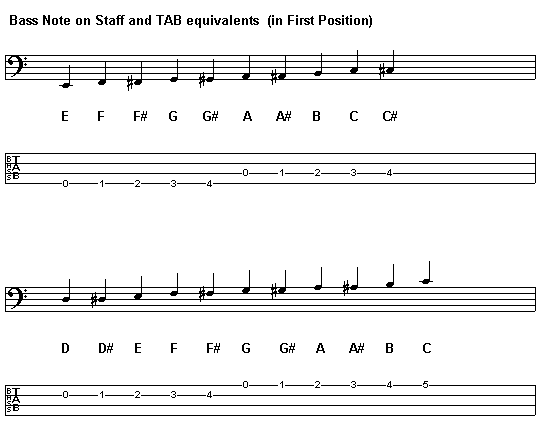
First position - first five frets. C is my home base. D is over two frets, B is back a fret. F is up a string and G is down a string. E is over the B and A is under the D.
Strings = Good Boys Do Fine Always
Spaces = All Cows Eat Grass
I let D be my home base and read from there.
Invalid Link Removed
First position - first five frets. C is my home base. D is over two frets, B is back a fret. F is up a string and G is down a string. E is over the B and A is under the D.
Yes with your bass on it's stand. When you can identify and visualize where that note is on the neck, you are ready to start exercises..
This is excellent advice. I don't know why this never occurred to me, but I will use it. Thank you.
For myself, I'm going to sign up for the sight reading course on talkingbass.net. It looks pretty good and I'm expecting to get a lot out of it. As MrLenny1 said, it's something worth investing a couple of bucks in.

IMSLP.org
Just kidding. Or am I?
Thats how I learned to read music.. Its very much a brute force approach and doesn't work for everyone. But starting with notes and finding then and playing them in lower 5 or 7 frets will help to start forming the mental connection between how the bass feels playing a note and what it sounds like and what it looks like on the staff.
Drilling flash cards can help reinforce what note is where on the staff as well but you'll also have too keep key signatures in mind when you start reading music more.
For myself, I'm going to sign up for the sight reading course on talkingbass.net. It looks pretty good and I'm expecting to get a lot out of it. As MrLenny1 said, it's something worth investing a couple of bucks in.
It is a very good course, well worth the investment. Mark usually has a sale around the Holiday's, so you can get a really good discount if you can wait for it.
If you don't already have them, you will need to make two acquistions: First, a metronome. Free online, through a phone app or just outright purchase one. Gotta have it. Second, music transcription software. While you are provided ample music scores in the study material, if you practice alot memory will begin to to enter your practice sessions. Fresh scores will really help in accelerating the learning process. MuseScore is available as a free download or you can purchase some transcription software.

I go to the ear-training exercises every few years, but all it does is confirm how tone-dead I am!
There are some training apps in the app store. Music sign, Rush Music, they're helpful at the start of you don't mind being a smartphone-zombie for hours at a time.
But, i like this question. This thread comes with some pretty awesome answers. The "learn-your-fretboard-comment" is really a good one.
But, i like this question. This thread comes with some pretty awesome answers. The "learn-your-fretboard-comment" is really a good one.
Hi,
Soon after the printing press was invented I bought a Mel Bay book to get me started. Something like this...
Note Reading Studies for Bass eBook - Mel Bay Publications, Inc. : Mel Bay
You'll want introductory lessons in key signatures, time signatures, and musical notation as well as where the notes are located on the staff (the lines on that page of music) and on the neck. Soon you'll be able to play stuff like this:

Actually, you'll probably start with something like this:
Thank you for your indulgence,
BassCliff
Any recommendations?
Soon after the printing press was invented I bought a Mel Bay book to get me started. Something like this...
Note Reading Studies for Bass eBook - Mel Bay Publications, Inc. : Mel Bay
You'll want introductory lessons in key signatures, time signatures, and musical notation as well as where the notes are located on the staff (the lines on that page of music) and on the neck. Soon you'll be able to play stuff like this:
Actually, you'll probably start with something like this:
Thank you for your indulgence,
BassCliff
Last edited:
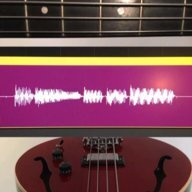
I've reworked that video from the previous post.....so here to is again:
I'm working on a series of videos to help people absorb rhythm patterns, with notation, the one is above is the simplest of all, just beat one....but here's the offbeat:
..there will be more...hope it's useful!
I'm working on a series of videos to help people absorb rhythm patterns, with notation, the one is above is the simplest of all, just beat one....but here's the offbeat:
..there will be more...hope it's useful!

Pitch is easy, rhythm is hard.
Separate the two so you can focus
I like Cliff Engle's Rhythm Exercise PDF
Separate the two so you can focus
I like Cliff Engle's Rhythm Exercise PDF
Also Google how to play drums. Learning the basic fundamental parts of playing drums, aka the beat would be time well spent.
Latest posts
-

-
Double Bass Finally got to play a real Double Bass this weekend
- Latest: bass player 53
-

-

