
Enjoy the benefits of a premium membership!
Upgrade Account
-
TalkBass has been independent since 1998. Add your voice.
Create a free account to reply to discussions, view embedded media, and browse with fewer display ads.
Join free Log in
Want zero display ads or expanded classifieds tools? Compare plans.
You are using an out of date browser. It may not display this or other websites correctly.
You should upgrade or use an alternative browser.
You should upgrade or use an alternative browser.
Double Bass Best New Basses
- Thread starter basteout
- Start date
More options
Who Replied?
Anyone played one of the "American" model basses from Cincinnati Bass Cellar?
I did, briefly. Very nice. I decided to have them do my new fingerboard based on the great board on the "American".
Was the sound "Huge" like they say? They didn't have one ready when I was down there 
I did, briefly. Very nice. I decided to have them do my new fingerboard based on the great board on the "American".

hmmm.. think it's all in house but I'm really not sure. If I ever get an opportunity to play one I'll ask.
Where is the "American" made? Completely at CBC?
AFAIK, the CBC American's body is carved and put together in house and the necks are outsourced. That keeps their price down. They were working on one while I was there.
I don't know if the bass I played had a huge sound, but I liked what I heard while playing it. I didn't listen to it being played by someone else.
I don't know if the bass I played had a huge sound, but I liked what I heard while playing it. I didn't listen to it being played by someone else.

I think Andy has probably worked on more Prescotts than just about any other luthier in America. If anyone can get that sound of of a new bass, he should be able to.
On the other front, Steve Swan will be showing Roberto Giorment's bass at ISB, so you can check it and let me know (preferably privately) and notes, comments etc etc that I should pass on to Roberto as he builds his third hand-made bass.
Thanks.
Louis
On the other front, Steve Swan will be showing Roberto Giorment's bass at ISB, so you can check it and let me know (preferably privately) and notes, comments etc etc that I should pass on to Roberto as he builds his third hand-made bass.
Thanks.
Louis

Gerard Samija has almost finished his double bass. We are holding a playing session for an invited group of bassists soon at Vancouver Community College, where I teach. There will also be a couple of Seth Kimmel's basses. Perhaps I'll start a thread with photos and comments afterwards.
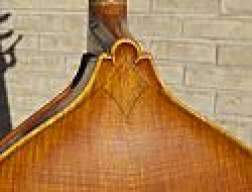
Gerard Samija has almost finished his double bass. We are holding a playing session for an invited group of bassists soon at Vancouver Community College, where I teach. There will also be a couple of Seth Kimmel's basses. Perhaps I'll start a thread with photos and comments afterwards.
That would be great. Seth is bringing a couple of basses that I am considering buying. I'm looking forward to seeing what the Vancouver crowd thinks.
It'd be great if you started a thread on the VCC event Laurence. I'm fairly excited about how it's going to go to say the least. Haven't met Seth, but his work is plainly very good and he seems from our email exchanges to be a great guy. I'll be fitting the soundpost today, after getting the trunk finished for my trip down to San Francisco. Just got to get a piano hinge and do a bit more foam work and put on a couple of handles. Always seems I'm pushing at the last possible minute...
Best of luck, hope you find the one that you never wanna let go
And a bass, too, of course.
.
Thanks for posting the pics. How did they sound? I think that might be Seth's first gamba style bass. I've heard one of his 3rd Ave basses an it sounded fantastic....wondering about the walnut Milano bass.I posted a few pictures from today at my Flickr site: Flickr: bass_dad's Photostream
Dylan Palmer, the principal bassist from the VSO, liked the Gamba the best, but it was a close call with the 3rd avenue. He thought it was the most like his own bass, with a full, bright sound. The walnut bass was quite dark, which Seth thought was due to the Pine top being a little thick. He is thinking of re-graduating it sometime over the summer.
My favourite was the 3rd avenue for its wide, spreading, low end. Out in the hall, I found that the sound was much fuller than it was up close to the instrument. The Gamba sounded better from the player's position, but projected well too. But again, it was a really close call between the two.
Seth had everything strung with Bel Cantos, which are fairly dark to my ear, and have a pleasant sound. My preferred strings are Dominants, but there was no opportunity to try them on a bass. Seth is really easy going and friendly.
Gerard Samija's bass is a wonder! We all tended to agree that it would make a fantastic solo bass, though it could be used in a section as well. It projects a surprisingly big sound, and is really ergonomic and beautiful. The detachable neck and travel case make it a real winner for anyone who is touring, and you can change the string height with the turn of one hex nut.
My favourite was the 3rd avenue for its wide, spreading, low end. Out in the hall, I found that the sound was much fuller than it was up close to the instrument. The Gamba sounded better from the player's position, but projected well too. But again, it was a really close call between the two.
Seth had everything strung with Bel Cantos, which are fairly dark to my ear, and have a pleasant sound. My preferred strings are Dominants, but there was no opportunity to try them on a bass. Seth is really easy going and friendly.
Gerard Samija's bass is a wonder! We all tended to agree that it would make a fantastic solo bass, though it could be used in a section as well. It projects a surprisingly big sound, and is really ergonomic and beautiful. The detachable neck and travel case make it a real winner for anyone who is touring, and you can change the string height with the turn of one hex nut.
Dylan Palmer, the principal bassist from the VSO, liked the Gamba the best, but it was a close call with the 3rd avenue. He thought it was the most like his own bass, with a full, bright sound. The walnut bass was quite dark, which Seth thought was due to the Pine top being a little thick. He is thinking of re-graduating it sometime over the summer.
My favourite was the 3rd avenue for its wide, spreading, low end. Out in the hall, I found that the sound was much fuller than it was up close to the instrument. The Gamba sounded better from the player's position, but projected well too. But again, it was a really close call between the two.
Seth had everything strung with Bel Cantos, which are fairly dark to my ear, and have a pleasant sound. My preferred strings are Dominants, but there was no opportunity to try them on a bass. Seth is really easy going and friendly.
Gerard Samija's bass is a wonder! We all tended to agree that it would make a fantastic solo bass, though it could be used in a section as well. It projects a surprisingly big sound, and is really ergonomic and beautiful. The detachable neck and travel case make it a real winner for anyone who is touring, and you can change the string height with the turn of one hex nut.
I've played Dave Williamson's 3rd Avenue model in St Paul, and it is great...HUGE warm, complex tone, easy to play. The notes just bloom off the strings, yet it is very responsive.
I hope to fly out and try Seth's current basses in 2 weeks, if they are still available after ISB. I have a feeling Seth's basses are going to be in high demand.
I should mention that on Gerard's bass, it's as though the shoulders disappear. You can touch the bridge easily, even though it has about a 42" scale. His inventions and improvements are really cool. As a machinist, he was able to design a detachable neck that also can be used to adjust the string height, while maintaining a solid bridge. Touring with this bass would be a joy -roll in, unpack, string up and go! No more "Bass of the Day" horror stories on tour, and no overcharges or refusals at the airport.
I wonder if that's similar to my Azola UltrAcoustic Bugbass neck. It's detachable and the neck angle/string height are adjustable from behind with an allen wrench.I should mention that on Gerard's bass, it's as though the shoulders disappear. You can touch the bridge easily, even though it has about a 42" scale. His inventions and improvements are really cool. As a machinist, he was able to design a detachable neck that also can be used to adjust the string height, while maintaining a solid bridge. Touring with this bass would be a joy -roll in, unpack, string up and go! No more "Bass of the Day" horror stories on tour, and no overcharges or refusals at the airport.
So far as I'm aware, my neck adjustment geometry is not being used by any other maker, so far anyway. I'm looking forward to input from other luthiers and bassists on this design at the convention, and in the longer term hope to see variants from other luthiers, and perhaps some useful additional touches. I'd like to see the friction for adjustment reduced a bit for instance and haven't devoted enough time yet to that element, though mine is not absurdly difficult, just a bit too much effort needed for my tastes.
The difference between my adjuster and every other one I've seen on upright electric or acoustic designs is that the string angle over the bridge remains constant, regardless of neck height adjustment relative to the strings. That means string tension is constant, maintaining pitch no matter what the string height. A useful feature when changing action between pieces on stage. But more importantly it means the pressure on the top of the instrument remains the same no matter the string height. This means there is no tonality change, the bass will always sound exactly the same no matter the string height. Once the ideal soundpost position is found (for a given climate or season, anyway) the sound need not change.
This was something which bothered me quite a lot about some other designs, as they either tilted the neck forward and backward to adjust height of the strings - resulting in reduced and increased tensions respectively, as in the case of Patrick Charton's B21 bass, or Mario Lamarre's and others' neck heel bolt dropping into the top block vertically - or sliding it forward and backward on a rail, as Jim Ham has been doing and later Brock Radelet. That Ham design reduces the tension change, but there is still a significant angle change over the bridge with adjustment, so inconsistent tonal characteristics at different heights.
So when a few years ago a different idea jumped into my awareness, a simple change which would result in the elimination of this tension changing which I regard as a problem, of course I set about modifying a bass already long underway to implement it. The change involves sliding the neck heel forward and backward on a curved surface, which is a radius drawn from the nut where the strings start. Of course not all the strings are at the same height, so this is an approximation, and there will be tiny changes in angle which might change pitch just slightly if the adjustment is extreme. But this is a matter of no more than a few seconds of arc, nothing most musicians would even notice enough to bother re-tuning, and again, only comes up with rather massive changes in string height.
I will be posting detailed images of this mechanism on my website fairly soon, but probably not before the ISB convention. It's just such a busy time for me, trying to get a couple more repairs finished for musicians before we leave for the train early Saturday morning... I'll try to get images of this finished bass up on luthier.ca within a week or so of returning to Vancouver.
The difference between my adjuster and every other one I've seen on upright electric or acoustic designs is that the string angle over the bridge remains constant, regardless of neck height adjustment relative to the strings. That means string tension is constant, maintaining pitch no matter what the string height. A useful feature when changing action between pieces on stage. But more importantly it means the pressure on the top of the instrument remains the same no matter the string height. This means there is no tonality change, the bass will always sound exactly the same no matter the string height. Once the ideal soundpost position is found (for a given climate or season, anyway) the sound need not change.
This was something which bothered me quite a lot about some other designs, as they either tilted the neck forward and backward to adjust height of the strings - resulting in reduced and increased tensions respectively, as in the case of Patrick Charton's B21 bass, or Mario Lamarre's and others' neck heel bolt dropping into the top block vertically - or sliding it forward and backward on a rail, as Jim Ham has been doing and later Brock Radelet. That Ham design reduces the tension change, but there is still a significant angle change over the bridge with adjustment, so inconsistent tonal characteristics at different heights.
So when a few years ago a different idea jumped into my awareness, a simple change which would result in the elimination of this tension changing which I regard as a problem, of course I set about modifying a bass already long underway to implement it. The change involves sliding the neck heel forward and backward on a curved surface, which is a radius drawn from the nut where the strings start. Of course not all the strings are at the same height, so this is an approximation, and there will be tiny changes in angle which might change pitch just slightly if the adjustment is extreme. But this is a matter of no more than a few seconds of arc, nothing most musicians would even notice enough to bother re-tuning, and again, only comes up with rather massive changes in string height.
I will be posting detailed images of this mechanism on my website fairly soon, but probably not before the ISB convention. It's just such a busy time for me, trying to get a couple more repairs finished for musicians before we leave for the train early Saturday morning... I'll try to get images of this finished bass up on luthier.ca within a week or so of returning to Vancouver.
Very Cool!So far as I'm aware, my neck adjustment geometry is not being used by any other maker, so far anyway. I'm looking forward to input from other luthiers and bassists on this design at the convention, and in the longer term hope to see variants from other luthiers, and perhaps some useful additional touches. I'd like to see the friction for adjustment reduced a bit for instance and haven't devoted enough time yet to that element, though mine is not absurdly difficult, just a bit too much effort needed for my tastes.
The difference between my adjuster and every other one I've seen on upright electric or acoustic designs is that the string angle over the bridge remains constant, regardless of neck height adjustment relative to the strings. That means string tension is constant, maintaining pitch no matter what the string height. A useful feature when changing action between pieces on stage. But more importantly it means the pressure on the top of the instrument remains the same no matter the string height. This means there is no tonality change, the bass will always sound exactly the same no matter the string height. Once the ideal soundpost position is found (for a given climate or season, anyway) the sound need not change.
This was something which bothered me quite a lot about some other designs, as they either tilted the neck forward and backward to adjust height of the strings - resulting in reduced and increased tensions respectively, as in the case of Patrick Charton's B21 bass, or Mario Lamarre's and others' neck heel bolt dropping into the top block vertically - or sliding it forward and backward on a rail, as Jim Ham has been doing and later Brock Radelet. That Ham design reduces the tension change, but there is still a significant angle change over the bridge with adjustment, so inconsistent tonal characteristics at different heights.
So when a few years ago a different idea jumped into my awareness, a simple change which would result in the elimination of this tension changing which I regard as a problem, of course I set about modifying a bass already long underway to implement it. The change involves sliding the neck heel forward and backward on a curved surface, which is a radius drawn from the nut where the strings start. Of course not all the strings are at the same height, so this is an approximation, and there will be tiny changes in angle which might change pitch just slightly if the adjustment is extreme. But this is a matter of no more than a few seconds of arc, nothing most musicians would even notice enough to bother re-tuning, and again, only comes up with rather massive changes in string height.
Definitely different than my Azola - which tilts the neck forward and back.
Roberto's bass is now with Steve Swan in the Bay area. Considering the earlier discussion on finish & color, I think this one looks pretty good.
Louis
[Invalid or Expired Link Removed]
Louis
[Invalid or Expired Link Removed]


