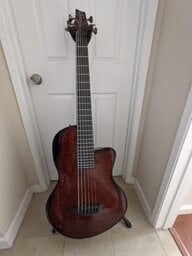
If you feel confident in your intonation, then by all means go unlined. Classical string players do it, so why can't we?
There are three options for fretless basses:
1) lines - I personally don't see the point to having lines. I don't look at the fingerboard, I look at the top edge of the fingerboard (there will often be dots there). So for this reason, you could go with...
2) side dots, and no lines. Dots can be a big help, and it leaves a blank fingerboard which I think is prettier. And for the daredevils among us, there is the option of having...
3) nothing. This is rare, and I've never seen a fretless bass like this (if someone has seen one other than a custom order, I'd be interested to know about it).
You said your intonation is "not perfect" which leads me to believe that your intonation is at least decent. If that is the case, then you don't need lines, because as you said, it will come with practice.
Here is my personal problem with lines. When I play a lined fretless, I get hung up on the visual aspect of it, and it hinders my playing and actually hurts my intonation. These basses were set up well and all the lines were where they should be, but as soon as I took my eyes off the fingerboard, my intonation improved. I may be the only person for whom this is true, so don't think I'm condemning lines.
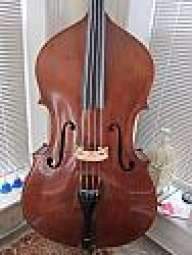
I play double bass and I used to play cello, so I have had experience on fretless instruments. So I am definitely biased toward unlined fingerboards. I don't even look at the double bass fingerboard when I play; dots or lines would be useless there. (I've seen some young beginning string players with stickers for dots, but I never had them). In fact, I am so confident in my intonation that the custom fretless I'm having built will have option 3 - nothing.
But if you haven't had experience on fretless instruments, I see nothing wrong with dots or lines, and if they work for you, then go ahead.
[EDITED to fix awkward wording]






 ) This way if an unlined doesn't work out for you, you won't feel like you're "giving in" to using lines. My first fretless was unlined (I liked the looks better), but in the end I was more comfortable on lined.