• TalkBass has been independent since 1998. Add your voice.
    Create a free account to reply to discussions, view embedded media, and browse with fewer display ads.
    Join freeLog in
    Want zero display ads or expanded classifieds tools? Compare plans.

Bonding aluminum to wood.

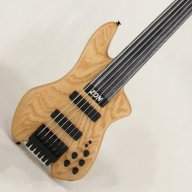
It can be done. This is a Pangborn fretless bass from the early 80's that has an aluminium fingerboard. The fingerboard was recently reattached and has been in place for about a year without problems. I don't recall the type of adhesive that was used though. Pangborn is long gone, but Vigier still makes both guitars and basses using fingerboards made of "delta metal", which is some kind of alloy. Why not shoot Patrice Vigier an e-mail and ask him what he would recommend. I don't think aluminimum is very practical for the reasons others have outlined in depth.
I remember those Pangborn basses - very cool. I was thinking about those as I read through this thread. That's a great looking bass.

Really rare and unusual these days. You should definitely review it in the basses forum if you haven't done so already.
 
With differenses in thermal coefficient in mind, how would a floating fingerboard behave?
Fixed at the bridge and hold in place along the neck by some sort of slide.
If you did that, you would negate the termal expansion issue, which is good. But the downside is that the fretboard would no longer be structurally part of the neck, so to get a standard degree of stiffness in the neck would require CF rods or steel rods. Or, maybe a neck made of ipe or other superstiff wood, or unusually thick.
 
If you did that, you would negate the termal expansion issue, which is good. But the downside is that the fretboard would no longer be structurally part of the neck, so to get a standard degree of stiffness in the neck would require CF rods or steel rods. Or, maybe a neck made of ipe or other superstiff wood, or unusually thick.
You are right, but thats easy to get around.
My concern is more on the tonal aspect of my suggestion. To have a fingerboard that is not a part of the "vibration transmitting structure" (in lack of words :)).

Edit to my previous post: Fixed at the nut - not the bridge of course.
 
Nordskov said:
You are right, but thats easy to get around.
My concern is more on the tonal aspect of my suggestion. To have a fingerboard that is not a part of the "vibration transmitting structure" (in lack of words :)).

Edit to my previous post: Fixed at the nut - not the bridge of course.
I was afraid you might be talking about the tone.

I think the best supportable answer would be that if there is reduced coupling, there could be a negative effect. But it might depend greatly on the degree of reduction.

You might see if you can find any comments on tone by novatone switchboard owners.
 
I was afraid you might be talking about the tone.
:D

You might see if you can find any comments on tone by novatone switchboard owners.
The only comments I can find is about reduction in neck thickness when retrofitting. Everybody advise against it as the trussrod might tear the wood.
But no tonal comparison.

I read that the original Novatone used magnets to attach the fingerboard. That would be much easier than a slide, but could pull the strings.

I hope the alu fingerboard is worth the hasle.