• TalkBass has been independent since 1998. Add your voice.
    Create a free account to reply to discussions, view embedded media, and browse with fewer display ads.
    Join freeLog in
    Want zero display ads or expanded classifieds tools? Compare plans.

Booya Tube Preamp /DI

I think Fang took upon himself a load he could not bear.

He was trying to defend the person behind Booya Amps.

I perceived most of the negative comments to be about the website.

The rest were simply questions.

Booya Amps has a crap website (at this point), which I guess you get what you pay for (sometimes).

That should have no bearing on the actual quality of their products (hopefully).

Assuming the quote was correct ...

"Our EQ doesn't boost frequencies, its a vintage style tone stack- very similar to an old Bassman, with a few tweaks. The preamp voicing has a ton of midrange and the mid control offers a pretty large sweep of gain in those frequencies."

... what he actually said seems contradictory to me (maybe a language issue?) in that boost and gain are usually the same thing (at least to my brain).

A Bassman EQ does indeed boost frequencies (at least the Bass and Treble controls do).

"a vintage style tone stack" - tells us almost nothing as well.

Not sure what to make of all that.

I wouldn't mind trying out the Filament B, but possessing a Two Notes Opus, I don't think I have a 'need' for the Filament B.

Hopefully, the owner will use some of this feedback in a constructive way to improve both the website and his communicating the details of the unit's operation.
 
It looks like @Fang quit TB. When your account goes inactive, your handle gets a strike through. Also happens if you get banned. Either way, it sucks Fang (Chuck Hammer) is gone. He’s a legit legend in the guitar synth world.

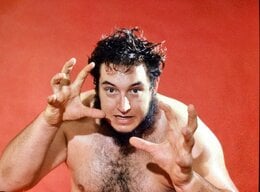
For those that didn't know, this is who he is:

I believe he was being sincere when he said he's just trying to hip us to something new that he likes. I don't believe he was being a shill. Also, he wasn’t here to answer any questions on behalf of booya. I emailed Jamie and he got back to me within 24 hrs. Oh well, a really serious musician and producer chased off.
No there is someone on the admin side deleting accounts for talking about bass gear..if I get deactivated we know why, maybe time to have a open free speech platform.
 
  • Like
Reactions: Ritter667
No there is someone on the admin side deleting accounts for talking about bass gear..if I get deactivated we know why, maybe time to have a open free speech platform.
There are no deletions for talking about gear. There has been a history of shills and we even had one guy with a fake account talking about himself and was really odd. What the Admins have is IP address. And if one account comes from the same IP, either a fan is sharing computers with the builder or the builder is shilling. Try X, they claim to have free speech.
 
No there is someone on the admin side deleting accounts for talking about bass gear..if I get deactivated we know why, maybe time to have a open free speech platform.
People don't get banned for talking about bass gear. All of the staff are volunteers. Do you think we spent our free time deactivating accounts for talking about gear? No.

People get deactivated for breaking the rules. Kinda like you're doing right now.

Now let's keep the thread on track and discuss the gear, (like you're allowed to do). Any other deviation from that will get the thread closed.
 
Jamie from Booya got back to me yesterday. Here’s what he said about the EQ section:

Our EQ doesn't boost frequencies, its a vintage style tone stack- very similar to an old Bassman, with a few tweaks. The preamp voicing has a ton of midrange and the mid control offers a pretty large sweep of gain in those frequencies.”
I’m just following along, but I’m not understanding the sentence “Our EQ doesn’t boost frequencies, it’s a vintage style tone stack”.

Can someone explain what this means and how it works? Never heard this before.

Thanx.
 
  • Like
Reactions: steverosati
I’m just following along, but I’m not understanding the sentence “Our EQ doesn’t boost frequencies, it’s a vintage style tone stack”.

Can someone explain what this means and how it works? Never heard this before.

Thanx.
It means the tone stack is passive. Like on a passive bass the tone control is cut only, but on an active bass you can boost and cut.
 
It means the tone stack is passive. Like on a passive bass the tone control is cut only, but on an active bass you can boost and cut.
The Fender tone stack is passive, but the circuitry basically only allows very minimal cuts and huge boosts with the Bass and Treble control knobs, while the Midrange is cut only - it is generally closest to flat with knobs at 2 / 10 / 2 (numerically, not reference to clock positions).

So... to say that their EQ doesn't boost frequencies, while saying it is a vintage style tone stack, is confusing to me as I'm not aware of any vintage style tone stacks that work like that (but I could definitely be wrong).
 
  • Like
Reactions: WRM
It looks like @Fang quit TB. When your account goes inactive, your handle gets a strike through. Also happens if you get banned. Either way, it sucks Fang (Chuck Hammer) is gone. He’s a legit legend in the guitar synth world.

For those that didn't know, this is who he is:

I believe he was being sincere when he said he's just trying to hip us to something new that he likes. I don't believe he was being a shill. Also, he wasn’t here to answer any questions on behalf of booya. I emailed Jamie and he got back to me within 24 hrs. Oh well, a really serious musician and producer chased off.
Another one, you mean...

Rule #1 and all...
 
Last edited:
  • Like
Reactions: steverosati
I think Fang took upon himself a load he could not bear.

He was trying to defend the person behind Booya Amps.

I perceived most of the negative comments to be about the website.

The rest were simply questions.

Booya Amps has a crap website (at this point), which I guess you get what you pay for (sometimes).

That should have no bearing on the actual quality of their products (hopefully).

Assuming the quote was correct ...

"Our EQ doesn't boost frequencies, its a vintage style tone stack- very similar to an old Bassman, with a few tweaks. The preamp voicing has a ton of midrange and the mid control offers a pretty large sweep of gain in those frequencies."

... what he actually said seems contradictory to me (maybe a language issue?) in that boost and gain are usually the same thing (at least to my brain).

A Bassman EQ does indeed boost frequencies (at least the Bass and Treble controls do).

"a vintage style tone stack" - tells us almost nothing as well.

Not sure what to make of all that.

I wouldn't mind trying out the Filament B, but possessing a Two Notes Opus, I don't think I have a 'need' for the Filament B.

Hopefully, the owner will use some of this feedback in a constructive way to improve both the website and his communicating the details of the unit's operation.
The Fender tone stack is passive, but the circuitry basically only allows very minimal cuts and huge boosts with the Bass and Treble control knobs, while the Midrange is cut only - it is generally closest to flat with knobs at 2 / 10 / 2 (numerically, not reference to clock positions).

So... to say that their EQ doesn't boost frequencies, while saying it is a vintage style tone stack, is confusing to me as I'm not aware of any vintage style tone stacks that work like that (but I could definitely be wrong).
The classic Fender/TMB tonestack (and all its variations that formed the basis for most guitar preamp tonestacks from Marshall to Orange to countless others) is passive and so fundamentally incapable of boosting- it is totally comprised of pass filters without amplification, so it can only filter off signal to ground (cut) and can't add anything (boost). If you were to add a switch that bypassed a Fender tonestack then you would get a huge signal boost regardless of settings. It isn't set up so that you get a "flat" signal with all knobs at 10 though (there is significant filtering/signal-loss even with all pots on 10), its very arrangement is nonlinear/interactive and voiced very heavily- the way it is set up is such that the closest thing to "neutral" you can get is with the Bass and Treble most of the way off and Mid up full. This doesn't mean that Bass and Treble are "boost only" (that is just probably an easier way to visualize how to dial it in if you are looking for a "neutral" sound), but that the nature of the filter stacks is that they cut midrange at most settings (as well as bass in most versions of the circuit- the treble is usually the strongest part of the curve due to way the circuit is arranged, the Treble pot can almost work like a balance between highs and everything else).

Oddly enough, the original James tonestack used for the Bass and Treble controls on other amps (the basis for the Ampeg tonestacks) that acts more like an active Treble/Bass was also passive- just much less interactive and more "linear". It is still technically incapable of "boost" unless you look at the center portion (which involves a full-frequency -20dB drop in signal) as the "neutral" which is how most people think of it.

What does happen since the tonestack comes before some gain stages is that pushing any of the tonestack controls up adds gain to the next tube stage.

Here's a visualization of all EQ controls on "5" from an early Fender tonestack (there are tons of variations on this circuit, so this probably isn't an exact representation of the product we are talking about but will be similar in this context). Notice how the graph is all in -dBs, meaning this is all subtractive filtering rather than additive boosting to get this classic scoop. Dialing the Bass and Treble down and turning up the mids to get closer to "flat" will mean even more signal loss across the entire frequency range (using the below linked TSC calculator, the "flat" setting of 2-10-2 cuts the entire frequency range from 0dB to nearly -20dB).
And here is a cool website where you can play around with different circuits and settings (many of which are variations on this type of tonestack): TSC in the web
1745020294852.png
 
Last edited:
A passive tone stack can be augmented with active circuitry to appear to effectively boost. It depends very much on the implementation and augmentation.
 
  • Like
Reactions: Matt O and WRM
A passive tone stack can be augmented with active circuitry to appear to effectively boost. It depends very much on the implementation and augmentation.
This whole conversation in context is all semantic, so I was trying to clarify what the referenced claims probably mean in the context of a Fender tonestack. The designer said "Our EQ doesn't boost frequencies", which is likely technically correct depending on the perspective chosen. Most people that approach one of these tonestacks as a player instead try to find a neutral point where the EQ is mostly representing a flat line (oblivious to the fact that that flat line is several dB's below the signal that entered that EQ stage since the EQ itself is only capable of destructive shaping) then call any movement above that attenuated "neutral" a "boost". Of course adding gain stages after the destructive EQ is part of the Fender preamp design so the overall signal is amplified vs your passive bass signal- it is just done in a different way than a modern active EQ system.
 
Last edited:
The classic Fender/TMB tonestack (and all its variations that formed the basis for most guitar preamp tonestacks from Marshall to Orange to countless others) is passive and so fundamentally incapable of boosting- it is totally comprised of pass filters without amplification, so it can only filter off signal to ground (cut) and can't add anything (boost). If you were to add a switch that bypassed a Fender tonestack then you would get a huge signal boost regardless of settings. It isn't set up so that you get a "flat" signal with all knobs at 10 though (there is significant filtering/signal-loss even with all pots on 10), its very arrangement is nonlinear/interactive and voiced very heavily- the way it is set up is such that the closest thing to "neutral" you can get is with the Bass and Treble most of the way off and Mid up full. This doesn't mean that Bass and Treble are "boost only" (that is just probably an easier way to visualize how to dial it in if you are looking for a "neutral" sound), but that the nature of the filter stacks is that they cut midrange at most settings (as well as bass in most versions of the circuit- the treble is usually the strongest part of the curve due to way the circuit is arranged, the Treble pot can almost work like a balance between highs and everything else).

Oddly enough, the original James tonestack used for the Bass and Treble controls on other amps (the basis for the Ampeg tonestacks) that acts more like an active Treble/Bass was also passive- just much less interactive and more "linear". It is still technically incapable of "boost" unless you look at the center portion (which involves a full-frequency -20dB drop in signal) as the "neutral" which is how most people think of it.

What does happen since the tonestack comes before some gain stages is that pushing any of the tonestack controls up adds gain to the next tube stage.

Here's a visualization of all EQ controls on "5" from an early Fender tonestack (there are tons of variations on this circuit, so this probably isn't an exact representation of the product we are talking about but will be similar in this context). Notice how the graph is all in -dBs, meaning this is all subtractive filtering rather than additive boosting to get this classic scoop. Dialing the Bass and Treble down and turning up the mids to get closer to "flat" will mean even more signal loss across the entire frequency range (using the below linked TSC calculator, the "flat" setting of 2-10-2 cuts the entire frequency range from 0dB to nearly -20dB).
And here is a cool website where you can play around with different circuits and settings (many of which are variations on this type of tonestack): TSC in the web
View attachment 7206027
You are correct.
Semantically, the frequencies are shaped by passive electrical devices to that the frequencies are shaped in a certain way - and the controls are cut only.
If the result of the circuitry with no cut of the controls is a huge midrange dip, then you could say that the circuit passes (not boosts) more bass and treble, for the end user who only know the results and not the circuitry, the effect audibly, is it sounds like the bass and treble are boosted.
But you are correct, my original statements were incorrect from an electrical standpoint.
 
Thanks @sunbeast and @John D Harris for these clarifications. I've often read discussions on TB about so-called passive tone stacks that could nonetheless boost. Was always puzzling to me. Now I understand this apparent boost, e.g. with a James/Baxandall stack, is only relative to some average level which is necessarily below the input's. Still, from an end user perspective, with a tone stack that's not bypassable, referring to this as a boost is meaningful. And when these are part of a preamp circuit, then the net could indeed be an actual boost.
 
But shouldn't there some clarification here?

From an ee design perspective, yes passive circuits are cut only.

But from the perspective of the end user, they see a control that either only boosts or cuts(fmv) or boosts and cuts(bax/james).

End users that don't have any ee experience and knowledge will only get confused when we approach this topic through the lense of someone with ee experience.

This was one of my beefs regarding Booya here. Their description is talking to the very few who have ee experience/knowledge while not taking in regard that the multitude of their end users will not. They just want to know what the knob does.
 
Not sure what’s hard to understand and why Booya is taking heat here. Jamie’s reply to me made perfect sense and I’m not an EE.

Passive = caps and resistors. EQ balance achieved with controllable frequency “pass through” circuits.

Active = most likely uses transistors, caps, and resistors . EQ balance achieved by selectively adding gain to the controllable frequency circuits. Requires additional voltage.

Think of it this way:

Precision bass = passive. Tone control is a treble pass through or cut. Cutting treble makes it sound more “bassy”.

Stingray = active. Tone controls can add or cut gain. Needs a battery. You can make your bass sound more “bassy” by adding bass without having to attenuate the treble circuit.

The issue I have with passive 3 bands like the Bassman is the mids choices you get are basically flat or scoop. I am not a fan of scooped mids, so I leave the mid knob on a Bassman dimed at all times. It might as well not be there at all, imo. A selectable/sweepable active mid control is what I would prefer. The Booya is not that.
 
  • Like
Reactions: steverosati
But shouldn't there some clarification here?

From an ee design perspective, yes passive circuits are cut only.

But from the perspective of the end user, they see a control that either only boosts or cuts(fmv) or boosts and cuts(bax/james).

End users that don't have any ee experience and knowledge will only get confused when we approach this topic through the lense of someone with ee experience.

This was one of my beefs regarding Booya here. Their description is talking to the very few who have ee experience/knowledge while not taking in regard that the multitude of their end users will not. They just want to know what the knob does.
It’s tough- many companies that release products with the Fender tonestack will indeed call the Bass and Treble “boost only”, which is useful to many consumers based on their limited understanding even if not technically true. The Noble preamp is one of these (the “Midrange” on the Noble is hardwired internally to a set value, but it is a Fender passive tonestack at its base). I think the reason that not all people that use this circuit explain it as “boost only” is because that circuit has been around since before Fender made amplifiers and has been talked about ad nauseum in forums so it has enough reputation that many people who don’t know a capacitor from a resistor still have heard the marketing about what the Fender stack actually does (particularly in the guitar market, it’s somewhat less prevalent in the bass market in favor of either James stack due to Ampeg or other active EQ types). From my perspective it is useful to know what it is actually doing so that players don’t just set all the controls at 5 and call it “flat” but also wonder why it sounds so much different than all their modern amps (mojo via ignorance!). I see this all the time on TB in reference to amps with Fender-type tonestacks
 
Last edited: