I went to the Dutch Double Bass festival yesterday and in one of the performances the DB was amplified with a boundary microphone laying on the ground just in front of the bass. Like the ones sometimes used for bass drum. It was a classic string ensemble, with all sound going through foh, and the bass sounded excellent. I’ve never seen this before, is that just me and is this common practice in theater sound for classical music?

Enjoy the benefits of a premium membership!
Upgrade Account
-
TalkBass has been independent since 1998. Add your voice.
Create a free account to reply to discussions, view embedded media, and browse with fewer display ads.
Join free Log in
Want zero display ads or expanded classifieds tools? Compare plans.
You are using an out of date browser. It may not display this or other websites correctly.
You should upgrade or use an alternative browser.
You should upgrade or use an alternative browser.
Double Bass Boundary microphone for double bass
- Thread starter Matthijs
- Start date
More options
Who Replied?
The Remic DB5400 LB isn't actually a boundary microphone, but it has some interesting attributes that allow it to be used in higher volume settings. Take a look at it's polar pattern
and pickup area.
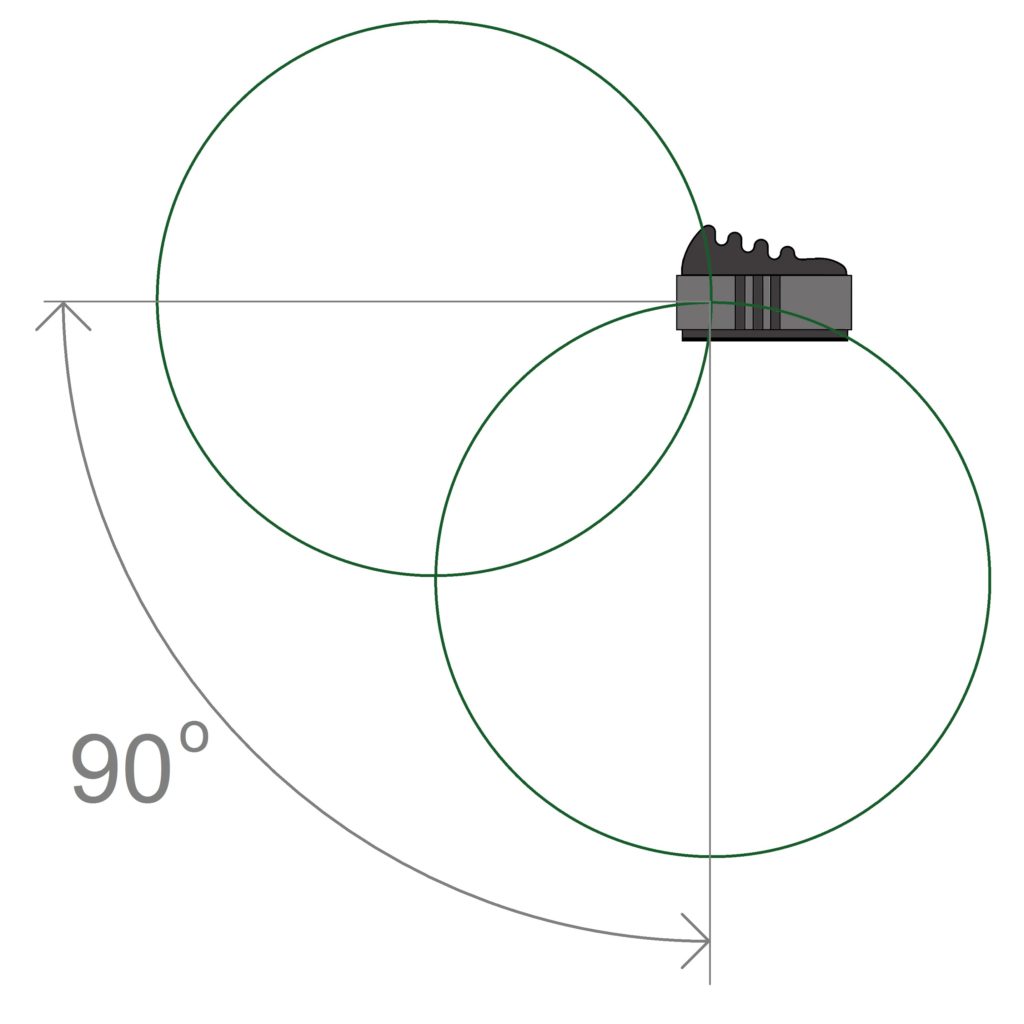

and pickup area.

I like boundary microphones, but I've only used them (Audio Technica U841, half-omni) for group singing around a table. Very natural sound, and the perfect mic for ... singing/playing around a table, or groups in a conference room.
There are half-omni and cardioid varieties. For double bass, I would expect a boundary mic to have a lot of bleed, making it difficult to get much volume before feedback. A better approach might be to put the mic on a table in front of the bass, so that the mic is closer to the bass's top plate; but, the bigger the table, the better the mic will work.
There are half-omni and cardioid varieties. For double bass, I would expect a boundary mic to have a lot of bleed, making it difficult to get much volume before feedback. A better approach might be to put the mic on a table in front of the bass, so that the mic is closer to the bass's top plate; but, the bigger the table, the better the mic will work.


If the mic is being used to pick up a well balanced string ensemble, it could work really well in some settings. Other factors include stage size, how the speakers are set up, how far the audience is from the speakers, and how much amplification is required to deliver the desired SPL to the audience. With classical music, I would expect the volume to be relatively low and the intent of the mic is more to fill out the sound and spread it evenly around the hall, rather than make it significantly louder...I.E. little amplification is required.
Something to keep in mind, the mic will focus on whatever sound source is louder at the mic's capsule. The biggest problem with mic'ing upright bass is the instrument relatively low acoustic volume. If the bass is near a loud instrument like a drum set, the sound of the drums will dominate in the mic signal.
To compensate for this, the mic needs to be very close to the bass. But, even with the mic almost touching the bass, it's still going to pick up a lot of reflect sound from loud instruments like drums and cymbals. To make matters worse, in my experience the sound of cymbals bouncing off the face of an upright back into the mic tends to sound awful.
Big bands tend to be loud. So in order to balance the bass against a big band, quite a bit of amplification is required. The sound coming out of the speaker will travel back to the mic and form a feedback loop. At the very least, this will degrade the signal because of the time and phase delay between the direct sound coming from the bass, and the indirect sound coming from the speaker. If enough gain is used, a feedback loop will form and cause the system to ring uncontrollable until the gain is reduced.
So boundary mic for string quartet could be great. Boundary mic to pickup bass in a big band...probably not a good choice IMHO.
Something to keep in mind, the mic will focus on whatever sound source is louder at the mic's capsule. The biggest problem with mic'ing upright bass is the instrument relatively low acoustic volume. If the bass is near a loud instrument like a drum set, the sound of the drums will dominate in the mic signal.
To compensate for this, the mic needs to be very close to the bass. But, even with the mic almost touching the bass, it's still going to pick up a lot of reflect sound from loud instruments like drums and cymbals. To make matters worse, in my experience the sound of cymbals bouncing off the face of an upright back into the mic tends to sound awful.
Big bands tend to be loud. So in order to balance the bass against a big band, quite a bit of amplification is required. The sound coming out of the speaker will travel back to the mic and form a feedback loop. At the very least, this will degrade the signal because of the time and phase delay between the direct sound coming from the bass, and the indirect sound coming from the speaker. If enough gain is used, a feedback loop will form and cause the system to ring uncontrollable until the gain is reduced.
So boundary mic for string quartet could be great. Boundary mic to pickup bass in a big band...probably not a good choice IMHO.

Thanks for the insight. I think the circumstances at this show were perfect for using a boundary mic. There was some distance to the public. The whole string section was seated in a semi circle with the bass player outside of the circle to the right, behind the two cello’s. The volume was pretty loud though for classical music. It was a well dampened theater, my guess would be about 500 seats.
I realise this setup would be pretty useless in my bigband. It did make me think about this as an alternative recording setup. I would never have thought it would lead to such a balanced sound. Might have been a bit on the warm and dark side, but that also could have been the bass itself. The low end was massive without being boomy or unnatural. The high end professional theatre amplification probably also helped.
When the opportunity presents itself I’d like to try this at home.
I realise this setup would be pretty useless in my bigband. It did make me think about this as an alternative recording setup. I would never have thought it would lead to such a balanced sound. Might have been a bit on the warm and dark side, but that also could have been the bass itself. The low end was massive without being boomy or unnatural. The high end professional theatre amplification probably also helped.
When the opportunity presents itself I’d like to try this at home.
If the mic is being used to pick up a well balanced string ensemble, it could work really well in some settings. Other factors include stage size, how the speakers are set up, how far the audience is from the speakers, and how much amplification is required to deliver the desired SPL to the audience. With classical music, I would expect the volume to be relatively low and the intent of the mic is more to fill out the sound and spread it evenly around the hall, rather than make it significantly louder...I.E. little amplification is required.
Something to keep in mind, the mic will focus on whatever sound source is louder at the mic's capsule. The biggest problem with mic'ing upright bass is the instrument relatively low acoustic volume. If the bass is near a loud instrument like a drum set, the sound of the drums will dominate in the mic signal.
To compensate for this, the mic needs to be very close to the bass. But, even with the mic almost touching the bass, it's still going to pick up a lot of reflect sound from loud instruments like drums and cymbals. To make matters worse, in my experience the sound of cymbals bouncing off the face of an upright back into the mic tends to sound awful.
Big bands tend to be loud. So in order to balance the bass against a big band, quite a bit of amplification is required. The sound coming out of the speaker will travel back to the mic and form a feedback loop. At the very least, this will degrade the signal because of the time and phase delay between the direct sound coming from the bass, and the indirect sound coming from the speaker. If enough gain is used, a feedback loop will form and cause the system to ring uncontrollable until the gain is reduced.
So boundary mic for string quartet could be great. Boundary mic to pickup bass in a big band...probably not a good choice IMHO.
Thanks for the insight. I think the circumstances at this show were perfect for using a boundary mic. There was some distance to the public. The whole string section was seated in a semi circle with the bass player outside of the circle to the right, behind the two cello’s. The volume was pretty loud though for classical music. It was a well dampened theater, my guess would be about 500 seats.
I realise this setup would be pretty useless in my bigband. It did make me think about this as an alternative recording setup. I would never have thought it would lead to such a balanced sound. Might have been a bit on the warm and dark side, but that also could have been the bass itself. The low end was massive without being boomy or unnatural. The high end professional theatre amplification probably also helped.
When the opportunity presents itself I’d like to try this at home.
Another mic I think would work well for this group configuration.
[Invalid or Expired Link Removed]
AKG C422 or 426B setup in mid-side stereo. If you don't now mid-side mixes either omni and figure 8 or cardioid and figure 8 with three channels. The figure 8 is sent to two channels with the polarity reversed on one channel. This results in a stereo pickup pattern.
Ref: Mid/Side (MS) Mic Recording Basics | Universal Audio (uaudio.com)
I used a C422 for several tours reinforcing a concert band. The C422 was just in placed low in front of the conductor to pickup the front line which included the principal woodwind players: clarinet, oboe, flute, bassoon, etc. It was intended essentially as a sweetener as I ran a Decca Tree with outriggers bit behind the conductor for the overall mix.
Of course I can't bring my myself to buy one given how much they typically sell for...also they have been discontinued for many years.
If I was doing this sort of work regularly I might consider a more reasonably priced stereo mic like an Avantone CK40.
I think the OP was referring to classical music. Micing in that scenario is pretty straight forward. Any number of solutions can work well.


