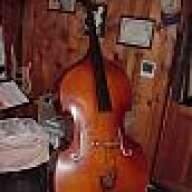
My teacher was checking out my bass closely today, and asked me how old the bridge was. I didn't think it had ever been changed and it is a 50 year old Wilfer . He suggested that the wood on bridges might go dead after a long period. He recently had a bridge made and said it made a big diffence in the sound, which he attributted to the quality of the bridge and set-up , but also the newly cut bridge .
Interestingly I had a chat with Don Underwood (Bass pu inventor ) a few years back and he expressed the same idea . .I don't want to misquote him- but I believe he felt the string pressure compressed the cells of the wood over a period of time and deadened the sound.
I believe both my teacher and Mr Underwood felt that this only applied to bridges (although my teacher did mention something about bass bars)
Just curious if anyone out there(luthiers or otherwise) might like to weight in on this . Thanx
Interestingly I had a chat with Don Underwood (Bass pu inventor ) a few years back and he expressed the same idea . .I don't want to misquote him- but I believe he felt the string pressure compressed the cells of the wood over a period of time and deadened the sound.
I believe both my teacher and Mr Underwood felt that this only applied to bridges (although my teacher did mention something about bass bars)
Just curious if anyone out there(luthiers or otherwise) might like to weight in on this . Thanx