• TalkBass has been independent since 1998. Add your voice.
    Create a free account to reply to discussions, view embedded media, and browse with fewer display ads.
    Join freeLog in
    Want zero display ads or expanded classifieds tools? Compare plans.

Double Bass BROKEN NECK

Hello all

Long time reader first time poster.

I have sustained some fairly serious damage but basically have no money to repair or replace.

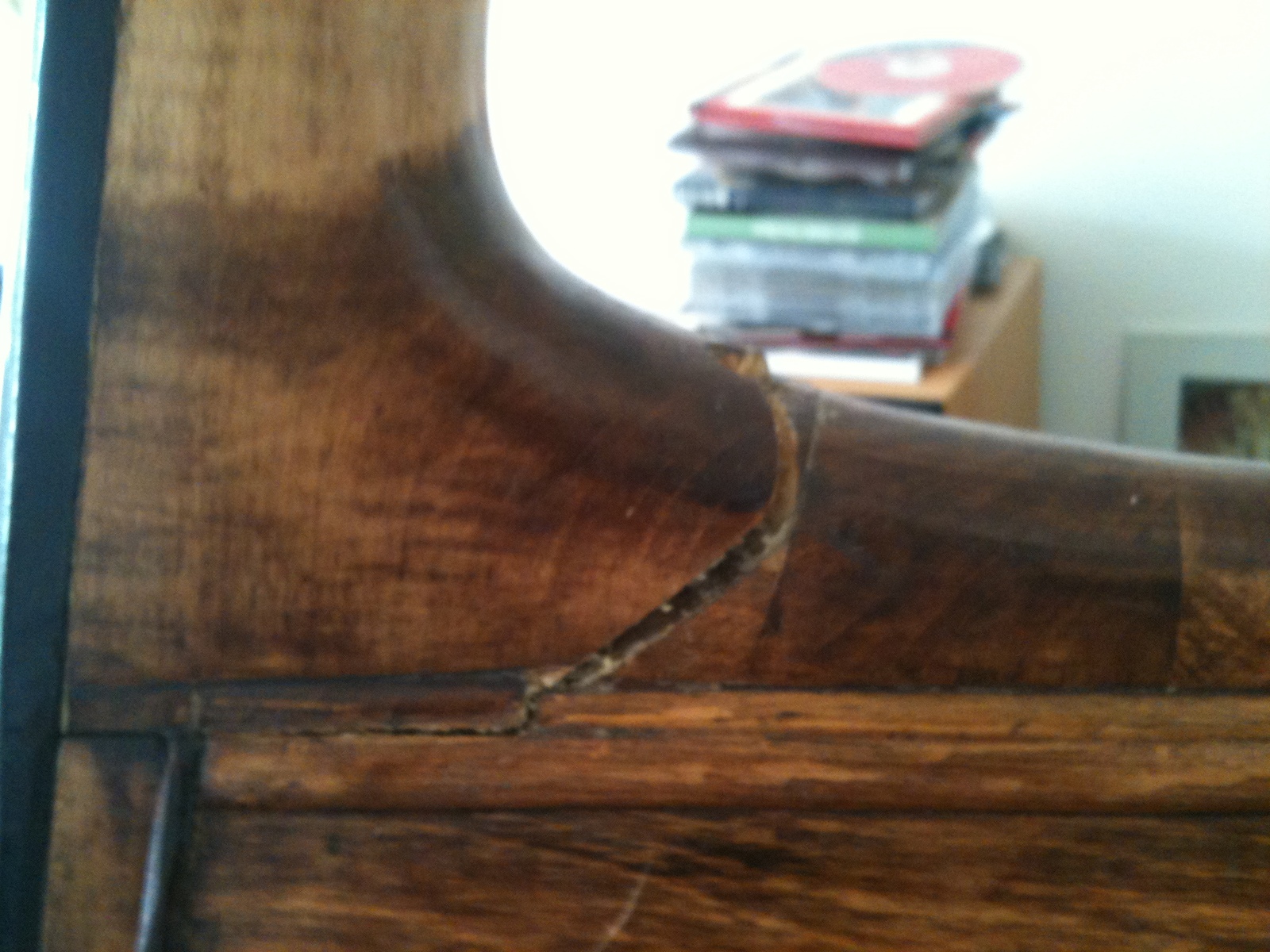
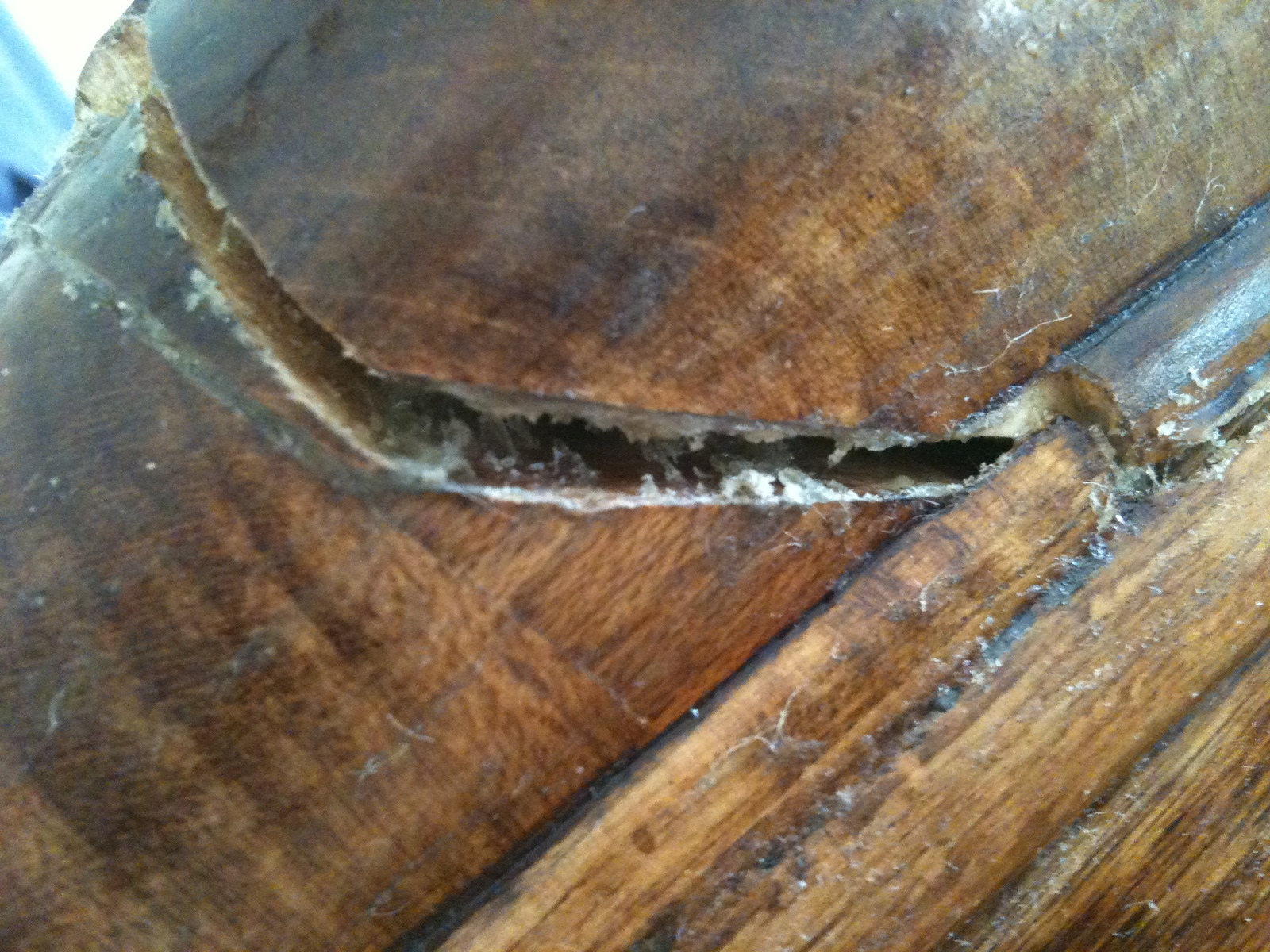
I got the bass cheap because it was cracked at the neck and had a dodgy repair job. See pictures - basically it came apart over time, was glued, didn't hold so the guy stuck a screw in there. Then it held, but a new crack appeared from where the screw went in outwards. This crack got glued too and was holding but gradually came apart over time and it's now only just playable with such high action. Now I've tightened up the strings a bit to pull it forward another milimetre or two to get a look inside for these photos.

I LOVE this bass, I love the way it looks, the way it plays (or used to play), the way it sounds and it's character. It was made out of a couple of piano soundboards apparently. Also it only cost £500. I basically have no budget at all to repair it so I'm looking for any tips to try and do this myself. As I understand, I need to get all the old glue out of there, probably reinforce it with something and reglue and clamp. I could do with as much advice as possible on how to get the glue (araldite) out of there, then should I rough it up by sanding it a bit? Should I reinforce somehow and if so what with? What glue should I use to reseal it? Do people think it'll even hold? I'm basically up for trying anything anyway since the neck seems more or less ruined, it can't get worse!

Thank you all so much in advance for any assistance you can provide.

Photos!

front.jpg

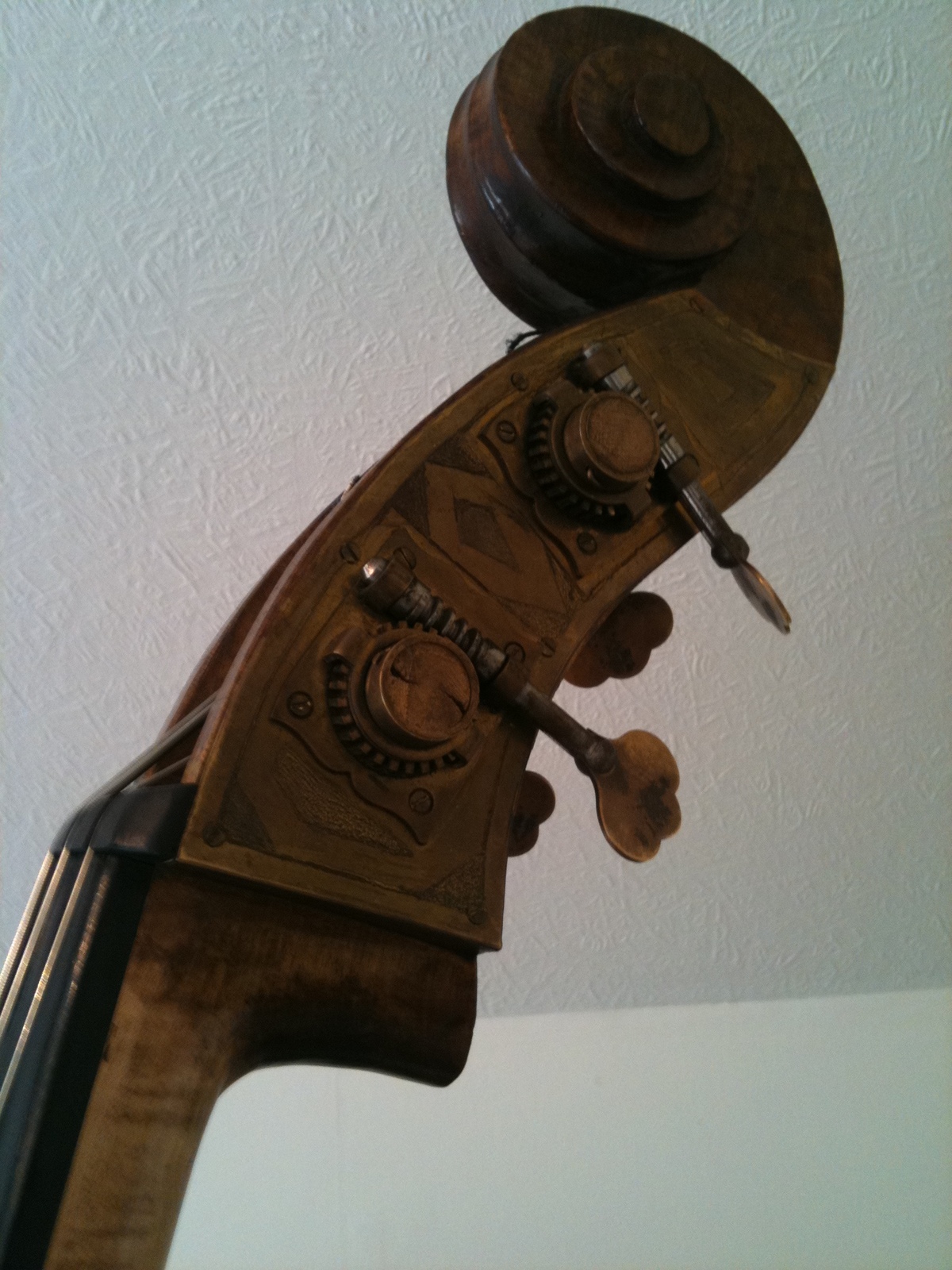
head.jpg

crack1.jpg

crack2.jpg

crack3.jpg
 
It's repairable. Where are you located? I think you need to remove the front of the neck from the bass. It shouldn't be too difficult if the previous repairs were done with hide glue. some moist heat will help loosen it up. Then clean up the joints (neck break & the mortice) completely and carefully. If you're lucky everything will key together perfectly. If not the most important connection is the break. You can shim the mortice if need be. You need to use wood glue on the break and hide glue on the mortice. You're also going to need quite a few clamps. And you'll have to be creative with the clamps because there are very few flat, parallel surfaces to clamp to. I use a combination of the quickgrip hand clamps and cargo straps. The later used around the perimeter of the body just to hold the other clamps in place.

Give it several days to dry then reinforce the repair with a steel rod from the back button to the fingerboard. Look it up in Chuck T.'s book.
Good Luck.
 
It looks like the the break has same non-hide glue in it, so make sure you REALLY clean that out before re-gluing.

The bass looks similar to the one I built: Many-piece top, gamba corners, similar color, similar wood strips around the neck mortise, large overhangs, laminated ribs... and old hat pegs installed in reverse :).

Link Removed

I wish you luck with the repairs, as I'm sure that bass brings you lots of joy.

George
 
no offense to 360, but i feel drilling through the button is kinda hacky. that break looks high enough to be reinforced from the top, UNDER the fingerboard. it will be hidden, and you wont have to compromise the integrity of the button, which provides alot of strength in resisting the string tension.
 
+1 on Kurt's advice. Maybe more tiresome but the final outcome is going to worth the extra effort.

Agreed as well. The button is a crucial part of the neck reinforcement, it shouldn't be compromised. I like to use 3 to 5 bamboo dowels to reinforce the neck repair. I also hide these dowels behind the fingerboard so the fingerboard needs to come off. They are more flexible than a hardwood counterpart but also very strong lengthwise. Also, I've found T-88 epoxy works best to glue the neck pieces back together. Sure you lose the ability to reverse the repair but those are two pieces of wood that you don't want coming back apart anyways. The T-88 is also gap-filling..
 
Thanks very much to you all for your advice.

I could do with more detailed instructions, I'll probably give a repair a go and report each step along the way for those of you interested in following the process.

So it looks like the general consensus is:

1. Clean out all the epoxy from the break - what's the best way to do this? heat? acetone/nail varnish remover? just chip it away?

2. Glue the break - wood glue or epoxy?

3. Remove fingerboard, using heat - what kind of heat are we talking? hair drier?

4. Drill through from beneath fingerboard, through the break and reinforce. What do we reckon, steel or dowel? how far beyond the break do I need to go?

5. Put fingerboard back on with hide glue, clamp the whole thing, leave for a few days

Does this sound about right to everyone?
Any and every little tip is very much appreciated.
Happy to post more photographs too.

Thanks again!
 
Agreed as well. The button is a crucial part of the neck reinforcement, it shouldn't be compromised. I like to use 3 to 5 bamboo dowels to reinforce the neck repair. I also hide these dowels behind the fingerboard so the fingerboard needs to come off. They are more flexible than a hardwood counterpart but also very strong lengthwise. Also, I've found T-88 epoxy works best to glue the neck pieces back together. Sure you lose the ability to reverse the repair but those are two pieces of wood that you don't want coming back apart anyways. The T-88 is also gap-filling..

I really like the bamboo dowel/stake idea. I work with bamboo a lot, and that stuff is strong!

George
 
Here's my suggestion. If you're going to try to save that neck you need to get the rest of the neck heel out of the neck mortise. Don't ruin your bass by putting a screw through the button. The joint is contaminated at this point, 24 hour cure epoxy is the only glue that has a chance of working. Remove the fingerboard. After getting the remaining part of the neck out, clean the joint and fit the two parts together. Glue the break, then reinforce the break with a big spline.
 
Maybe I'm oversensitive, but all the DIY advice here makes my skin crawl. This appears to be a nice bass with a serious repair needed. It seems to me the only sensible option is to save, beg, borrow or whatever to get the work properly done.
 
Maybe I'm oversensitive, but all the DIY advice here makes my skin crawl. This appears to be a nice bass with a serious repair needed. It seems to me the only sensible option is to save, beg, borrow or whatever to get the work properly done.

You're right, this is a pretty serious endeavor. If it's a nice enough bass, the ideal way would be to just carve a whole new neck. Otherwise, in my opinion, an epoxy joint for this kind of repair is pretty much the only stable option..
 
I hope I am not a lone voice in this regard, but I would not recommend the use of epoxy for this repair. Nor would I recommend using reinforcing dowels and never screws, hidden or otherwise.

Hide glue properly prepared is stronger than the wood it is bonding. It's a pretty good void filler as well. It is the right tool for the job. Not easy to work (it must be applied hot and the joint assembled before the glue cools) with but worth the effort.

Epoxy can creep under stress. It's tough, but not hard. And once you use epoxy on a joint, it will be a hellishly difficult job to repair again should the need arise.

Unless you are experienced in using hot hide glue, I recommend employing someone who is.
 
Instead of drilling through the back button you could screw a 3/8 lag screw countersunk under the fingerboard in line with the back button. then 2 additional small #8 screws countersunk under the the lag ( to form a triangular configuration. ) Be sure to drill the proper pilot holes for each screw

I wouldn't use bamboo or wood dowels. I would use titebond wood glue at the break and hide glue on the mortice. This is based on personal experience.

If the fingerboard was properly installed you should be able to work a spatular under it and pry it off carefully. Start at the nut or the other end. You don't need a hair dryer.
 
I'm not trying to be argumentative, I'm fairly new to working with hide glue, and I see this as an opportunity to learn something. So here are my questions:

Nor would I recommend using reinforcing dowels and never screws, hidden or otherwise.

Why not dowels? The bamboo/wooden dowel would be used to reinforce the break - a part that was never, ever supposed to be 2 parts. I understand the argument for not using a dowel for repairs that are supposed to be reversible, but I don't see the reason for not using it here.

Hide glue properly prepared is stronger than the wood it is bonding.

I keep reading/hearing that, but I have a hard time with that information. I love hide glue, and that is what I used when I built my upright bass. I also made a few test joints with scrap wood. Even with the strongest mix that I made, properly prepared, applied, and cured, I was able to break the joint apart (with considerable force), and the joint gave up before wood did. This is, from my understanding, one of the benefits of hide glue - a safety valve. It's plenty strong, but when something is going to go, it better be the joint than the wood around it. So how can we claim that it is both stronger than wood, and that it breaks cleanly (without taking the wood with it) at the same time? I understand the different ratios of glue:water (thin for top, thicker for neck joint, etc etc). But like I said, even with very thick mix, the glue gave up before the wood in my test cases.

Again, I understand completely why hide glue is the best thing for these types of instruments, and I love working with it. Just trying to get some clarity.

George
 
It appears to me that there have been a couple of heel grafts on this bass before if not a neck graft. looking at the failure it also looks a bit like it was glued with something like hot glue (not hide) or silicone. If it were my bass, I think I would remove the failed area and graft in some new wood. if i were going to pin it I would use a tapered wooden pin and make sure there was good surface contact over the entire glue surface.

I would stay away from screws and or bolts, but that's jut me.
 
Good questions, George.

First, about the dowels. Consider that you are orienting the wood grain of the dowel perpendicular to that in the neck. On first consideration this may seem like a good idea, but when you drill the hole for the dowel, you are removing wood and thus weakening the structure. When you insert the dowel, because it is perpendicular to the grain, a significant portion of the the dowel will be interfacing with end grain of the neck. Glue will not hold well to end grain. So at best you are getting good adhesion only on 50% of the dowel surface. And to do so you weakened the neck. Ever wonder why chairs made with a mortise and tenon joint stay together better than those made with dowel joints? Often the surface area of the two joints are the same. But on the mortise and tenon joint there is a lot more long-fiber interface than on the dowelled one.

And about hide glue and wood strength, there have been numerous studies showing the strength of the glue compared to wood. But truly, it is a moot point. The better comparison is between different glues. And if it's flexibility you're after, there are better choices than hide glue. But that's not what we want in a bass. Brittle glue is good for the instrument because is it strong, but will break under a sharp knock. And as you suggest, that's better than having the wood fail.
 
Good questions, George.

First, about the dowels. Consider that you are orienting the wood grain of the dowel perpendicular to that in the neck. On first consideration this may seem like a good idea, but when you drill the hole for the dowel, you are removing wood and thus weakening the structure. When you insert the dowel, because it is perpendicular to the grain, a significant portion of the the dowel will be interfacing with end grain of the neck. Glue will not hold well to end grain. So at best you are getting good adhesion only on 50% of the dowel surface. And to do so you weakened the neck. Ever wonder why chairs made with a mortise and tenon joint stay together better than those made with dowel joints? Often the surface area of the two joints are the same. But on the mortise and tenon joint there is a lot more long-fiber interface than on the dowelled one.

Interesting, I didn't think of the cross-grain adhesion thing. Thanks for the info. In this case, I viewed it more like a leverage type of a thing - I'd have a hard time imagining that particular break ever coming loose again with a dowel in it. As for removing wood to accommodate the dowel - I think what Cody had in mind was thin bamboo stakes - requiring very small holes. We're talking millimeters (right?) Not a thick dowel.

And about hide glue and wood strength, there have been numerous studies showing the strength of the glue compared to wood. But truly, it is a moot point. The better comparison is between different glues. And if it's flexibility you're after, there are better choices than hide glue. But that's not what we want in a bass. Brittle glue is good for the instrument because is it strong, but will break under a sharp knock. And as you suggest, that's better than having the wood fail.

Well yeah, I understand all that - again, for joints that might come apart, intentionally or unintentionally - hide glue all the way. There are many other benefits, such as acoustical properties, etc.

I do like Titebond II and III for permanent joints (things that weren't meant to be joints in the first place :) ), although I've read that even Titebond is not exactly "permanent" - I guess nothing is. And that is yet another good reason to use hide glue - it cleans up easily.

I guess the only thing I'm still not convinced about is the "stronger than wood" argument for hide glue - but that is only from very limited experience, so I trust the opinion of others.

George
 
It looks like a poorly made joint. No glue, screws or dowels can save it until the joinery flaws are corrected.

Check the quality of the whole joint (heel ht. mortise, neck block, the fit) before discussing glue choices. I would suspect there could be some problems there.

Is there a block under the fingerboard, in the third picture down from the top?
 

Latest posts