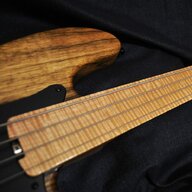
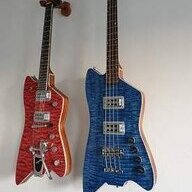
If you were to angle the neck end of the fretboard and neck the other way, i.e. approximately in line with the body horns, you would gain quite a bit of surface area in the neck joint area. Just a thought.For reference, the design we are going for:

TalkBass has been independent since 1998. Add your voice.
Create a free account to reply to discussions, view embedded media, and browse with fewer display ads.
Join free Log in
Want zero display ads or expanded classifieds tools? Compare plans.
If you were to angle the neck end of the fretboard and neck the other way, i.e. approximately in line with the body horns, you would gain quite a bit of surface area in the neck joint area. Just a thought.For reference, the design we are going for:
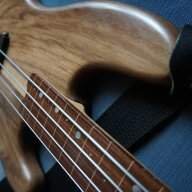
If you were to angle the neck end of the fretboard and neck the other way, i.e. approximately in line with the body horns, you would gain quite a bit of surface area in the neck joint area. Just a thought.


It just means make the neck heel longer and pocket longer. Leave the fingerboard normal length and the extended neck pocket will be covered by the pick guard.@TFM94 Gorgeous bass you build there!
Good point with the pickguard, although I'm not so familiar with set necks/tenon&mortise, so that might be a challenge.


Is that fretboard glued together out of two pieces? It looks like about 40% of it on the left is a different board with a very visible join at each end.
It just means make the neck heel longer and pocket longer. Leave the fingerboard normal length and the extended neck pocket will be covered by the pick guard.
Kinda sorta like this
View attachment 4355996 View attachment 4355997
OK, so you mean we can still use bolts?
Yep, here's a bolt-on that I built with an tenon that extends under the neck pickup and pickguard:OK, so you mean we can still use bolts?
Works either way, both a set neck or bolt-on would benefit from an extended tenon. It isn't harder to make than a usual heel and pocket, you just need a longer neck blank.OK, so you mean we can still use bolts?